

The World Cup has once again given us unforgettable moments. Some teams celebrated with tears of joy, while others walked off the pitch heartbroken. Across Africa, fans packed viewing centres, gathered around TVs at home, and proudly wore their team’s colours. For a few weeks, football brought us together.
But whether your favourite team won or lost, one truth remains: life is full of victories and defeats. As Christians, God calls us to respond to both with faith, humility, and hope.
Here are seven Bible verses that show us how to handle both winning and losing, on the pitch and in everyday life.
1. Stay Humble When You Win
Proverbs 16:18 (NIV)
“Pride goes before destruction, a haughty spirit before a fall.”
Winning feels amazing. Whether it’s passing your exams, landing your dream job, growing your business, or watching your team lift the World Cup, success is worth celebrating. But success should never make us think we’re better than others.
The best champions stay humble, remembering that every opportunity and talent comes from God. Celebrate your victories, but never let pride replace gratitude.
2. Don’t Let Defeat Define You
Micah 7:8 (NIV)
“Though I have fallen, I will rise. Though I sit in darkness, the Lord will be my light.”
Every World Cup has heartbreaking exits. One mistake, one penalty miss, and the dream is over. Yet many great players come back stronger.
Life is no different. Maybe you didn’t get into university, your business didn’t work out, or you missed an opportunity. Your setback is not your identity. With God, every ending can become a new beginning.
3. Celebrate Others Without Jealousy
Romans 12:15 (NIV)
“Rejoice with those who rejoice; mourn with those who mourn.”
Not everyone can win the trophy. Sometimes you’ll be cheering while someone else is celebrating their breakthrough.
In today’s social media culture, it’s easy to compare your life with someone else’s success. Instead of feeling jealous, learn to celebrate others. Your season will come too.
4. Play With Integrity
Colossians 3:23 (NIV)
“Whatever you do, work at it with all your heart, as working for the Lord.”
Fans remember incredible goals, but they also remember players who showed honesty, respect, and sportsmanship.
Whether you’re in the classroom, the workplace, or creating content online, don’t chase shortcuts. Do your best because you’re serving God, not just people.
5. Trust God’s Timing
Ecclesiastes 3:1 (NIV)
“There is a time for everything, and a season for every activity under the heavens.”
Some footballers wait years before playing on the world’s biggest stage. Success rarely happens overnight.
Many young Africans dream of scholarships, jobs, businesses, or opportunities abroad. If things seem delayed, don’t lose hope. God’s timing is always better than our own.
6. Remember That Teamwork Matters
Ecclesiastes 4:9 (NIV)
“Two are better than one, because they have a good return for their labour.”
No player wins the World Cup alone. Every goal begins with teamwork.
The same is true in life. Build friendships that strengthen your faith, encourage your dreams, and help you grow closer to Christ. We were never meant to do life alone.
7. Live for the Eternal Prize
1 Corinthians 9:24–25 (NIV)
“Run in such a way as to get the prize… They do it to get a crown that will not last, but we do it to get a crown that will last forever.”
World Cup champions lift a trophy that will eventually belong to someone else. Records are broken, and new champions rise.
But following Jesus leads to a reward that never fades. While it’s okay to celebrate earthly achievements, our greatest goal should always be living a life that honours God.
Final Whistle
The World Cup may be over, but life’s match continues.
You’ll experience victories worth celebrating and defeats that test your faith. You’ll have moments when you’re cheering and moments when you’re wondering what’s next.
Whatever season you’re in, remember this: God is more interested in your character than your scoreboard.
So whether you’re winning or losing, studying or job hunting, building a business or chasing a dream, play your part with humility, integrity, and faith.
Because in Christ, the greatest victory isn’t lifting a trophy—it’s finishing the race well. (2 Timothy 4:7)

A champion is made long before kick-off. Drawing on a footballer’s preparation, this World Cup devotional teaches the seven foundations of following Christ, from training in godliness to feeding daily on God’s Word. One short lesson a day for the tournament’s opening week.
1. Nobody Lifts the Trophy by Accident
The world sees only the ninety minutes on the pitch, never the thousands of hours that made them possible. Faith is the same, built in the quiet habits of prayer, Scripture, and obedience when no one is watching.
1 Timothy 4:7 “Train yourself to be godly.”
Start this World Cup season by training your soul, not only watching the game.
2. Every Team Has a Coach
Even the most gifted players need a coach to see what they cannot, to correct mistakes and prepare them for what lies ahead. God leads us in the same way, through His Word, His Spirit, and the wisdom of faithful mentors.
Proverbs 3:5 “Trust in the Lord with all your heart and lean not on your own understanding.”
Today, surrender your own game plan and let God call the play.
3. Know the Rules of the Game
No matter how gifted a player is, ignoring the rules costs the match, because the game rewards those who play it right. The Christian life has a rulebook too, and God’s Word is not a cage but the path to a lasting victory.
2 Timothy 2:5 “Anyone who competes as an athlete does not receive the victor’s crown except by competing according to the rules.”
Open the Word today and learn the rules that lead to the prize.
4. Red Cards Have Consequences
One reckless moment can change an entire match, as a flash of anger, pride, or carelessness can cost the whole team. Sin carries the same weight, for God forgives freely, yet our choices still leave their mark.
Numbers 32:23 “You may be sure that your sin will find you out.”
Guard your steps today, because self-control protects far more than just you.
5. Warm Up in the Quiet Hours
No player walks onto the pitch cold, for the match is shaped in the warm-up, long before the whistle. Jesus Himself rose early to pray, preparing in the quiet before the demands of the day.
Mark 1:35 “Very early in the morning, while it was still dark, Jesus got up, left the house and went off to a solitary place, where he prayed.”
Begin tomorrow on your knees before you begin it on your feet.
6. Wear the Right Kit
No team takes the field without its kit, where every piece has a purpose and playing without it invites injury. God gives believers spiritual armour for the battles each day brings.
Ephesians 6:11 “Put on the full armor of God, so that you can take your stand against the devil’s schemes.”
Dress for the day’s spiritual match before you step into it.
7. Feed on the Right Fuel
An athlete who eats poorly fades in the second half, because the body runs on what it is fed. The soul is no different, sustained not by bread alone but by the Word of God.
Matthew 4:4 “Man shall not live on bread alone, but on every word that comes from the mouth of God.”
This Sunday, feed your spirit as carefully as a champion feeds their body.
Conclusion
Champions are built long before the trophy is lifted, and so is a lasting faith. This week we trained, learned the rules, prayed, dressed for the day, and fed on God’s Word. With the foundation laid, we are ready for whatever the tournament brings.
Consistent training, discipline, and preparation long before match day. In the Christian life, this means developing daily habits of prayer, Scripture reading, and obedience.
1 Timothy 4:7 – “Train yourself to be godly.”
A coach provides guidance, correction, and direction. Likewise, God guides us through His Word, His Spirit, and godly mentors.
To trust God completely and not rely solely on our own understanding.
To stand firm against temptation and the enemy’s schemes.
The Word of God, which strengthens and sustains spiritual life.
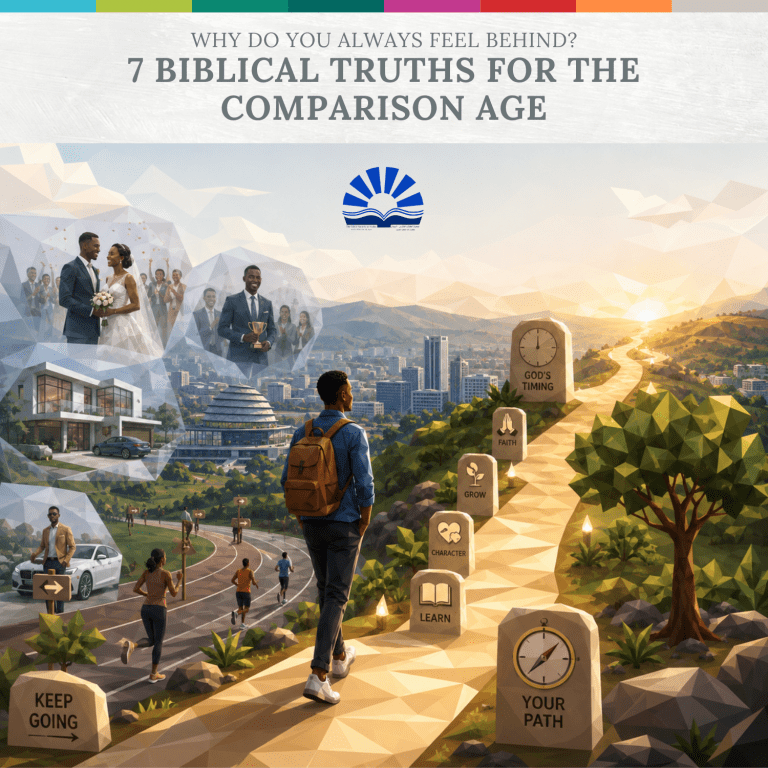
Feeling “behind” in life is a feeling, not a fact, manufactured almost entirely by comparison. The Bible reframes the whole question: you are not late, you are not defective, and you cannot fall behind a plan you did not write. These seven truths replace comparison anxiety with God’s timing, your God-given worth, and the freedom to run your own race.
Everyone seems to be ahead of you. The promotions, the weddings, the houses, the highlight reels. Scroll long enough and you start to believe the lie that you missed your moment. You didn’t. Here are seven truths that pull the plug on that feeling for good.
1. Your Pace Is Not Your Problem
Everyone seems to be ahead of you. Married, promoted, settled, thriving. The feed never stops reminding you. But “behind” is a feeling, not a fact, and comparison is where it is born.
Galatians 6:4-5 (NIV)
“Each one should test their own actions. Then they can take pride in themselves alone, without comparing themselves to someone else, for each one should carry their own load.”
Close the app. Measure today against your own yesterday, not against a stranger’s curated best. Your load is yours to carry, and yours alone to be proud of.
2. Your Timing Isn’t Broken
You are not late. You are not early. You are exactly where a season placed you. The pressure to catch up assumes there is one universal schedule. There isn’t.
Ecclesiastes 3:1 (NIV)
“There is a time for everything, and a season for every activity under the heavens.”
Winter is not a failed summer. If this is your waiting season, wait well. The harvest has its own calendar, and rushing it only ruins the crop.
3. The Highlight Reel Is Lying to You
Envy whispers that everyone else has it figured out. They don’t. You are comparing your raw footage to their final cut, and it is quietly eating you alive.
Proverbs 14:30 (NIV)
“A heart at peace gives life to the body, but envy rots the bones.”
Notice the cost. Envy does not only steal your joy; it corrodes your health. Trade the scroll for gratitude and watch your shoulders drop.
4. You Were Made on Purpose
Feeling behind assumes you are a defective version of someone better. You are not a rough draft. You were authored with intention, detail, and delight.
Psalm 139:14 (NIV)
“I praise you because I am fearfully and wonderfully made; your works are wonderful, I know that full well.”
Your worth was never tied to your milestones. Before the achievements, before the applause, you were already wonderfully made. Start there.
5. Your Future Is Already Mapped
The fear underneath “behind” is simple. What if I miss it? What if the good life passes me by? Scripture answers with a promise, not a panic.
Jeremiah 29:11 (NIV)
“‘For I know the plans I have for you,’ declares the Lord, ‘plans to prosper you and not to harm you, plans to give you hope and a future.’”
You cannot fall behind a plan you did not write. The same God who set the seasons is holding your future. Walk forward with open hands.
6. Contentment Is a Skill, Not a Mood
Contentment is not something you stumble into when life finally cooperates. Paul learned it in a prison cell. It is a muscle, trained in the gap between what you have and what you want.
Philippians 4:11 (NIV)
“I am not saying this because I am in need, for I have learned to be content whatever the circumstances.”
Practice it small today. Thank God for what is unfinished, for what is still in motion, for what has not arrived yet. Contentment grows where comparison used to live.
7. Run Your Own Race
Stop watching the lanes beside you. Runners who look sideways lose speed and lose heart. Your finish line is your own, and it is still ahead of you.
Hebrews 12:1 (NIV)
“Therefore, since we are surrounded by such a great cloud of witnesses, let us throw off everything that hinders and the sin that so easily entangles. And let us run with perseverance the race marked out for us.”
Drop the weight of comparison. Fix your eyes forward. Perseverance, not pace, is what carries you home.
You Were Never Behind. You Were Comparing.
You were never behind. You were comparing your story to a stranger’s edit, your winter to someone else’s summer, your raw draft to their highlight reel. Timing is not your enemy. Envy is. Lay it down. Run your own race, at your own pace, held by a God who already knows how it ends. You are not late. You are right on time.
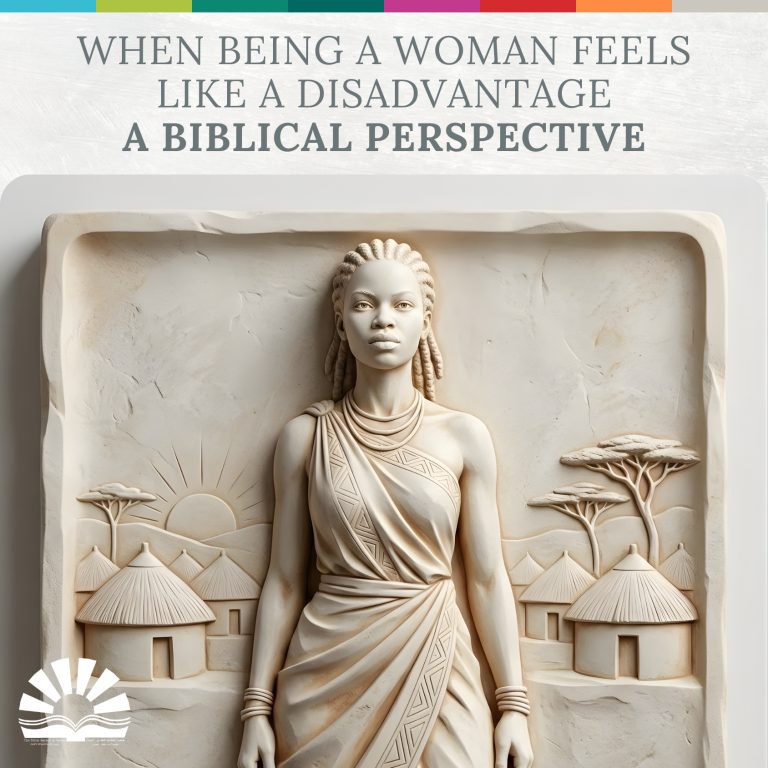
Many women, especially young women, quietly wrestle with this thought:
“Is being a woman a disadvantage?”
It can feel that way when:
- your voice is overlooked
- your abilities are doubted
- your safety feels fragile
- your value is reduced to appearance
- your timeline is controlled by social pressure
- your sacrifices go unnoticed
But Scripture tells a very different story. From the beginning, God established women with dignity, authority, purpose, and spiritual strength. Let’s walk through 7 Bible verses that speak directly to seasons when being a woman feels like a disadvantage.
1. Genesis 1:27 — Your Value Was Established at Creation
“So God created mankind in his own image, in the image of God he created them; male and female he created them.” (NIV)
Before society formed opinions about women, God formed identity. Both male and female were created in His image, equal in worth, equal in dignity, equal in spiritual value.
This means your value is not cultural, it is created. Not negotiated, declared. When the world minimizes women, creation itself speaks otherwise.
2. Judges 4:4–5 — God Raises Women Leaders
“Now Deborah, a prophet, the wife of Lappidoth, was leading Israel at that time.” (NIV)
Deborah was not hidden. She was not secondary. She was a national leader, judge, and prophet.
When leadership spaces feel closed to women, Deborah’s story reminds us: God is not limited by human bias. He appoints based on calling, not gender expectations.
Your leadership is not a mistake. Your voice is not out of place.
3. Psalm 139:14 — You Are Not a Design Error
“I praise you because I am fearfully and wonderfully made.” (NIV)
When being a woman feels like a burden instead of a blessing, this verse calls you back to truth: you are not an afterthought. Not an inferior version. Not a weaker model.
You are intentional design.
Your emotions, intuition, resilience, and nurturing strength are not flaws, they are features.
4. Luke 8:1–3 — Jesus Publicly Valued Women
“…the Twelve were with him, and also some women… These women were helping to support them out of their own means.” (NIV)
In a culture where women were often excluded, Jesus welcomed them into His mission circle. He taught them, traveled with them, and honored their contributions.
Jesus did not treat women as background characters, but as partners in purpose.
If you ever feel spiritually sidelined, remember: Jesus pulled women closer, not further away.
5. Proverbs 31:25 — Strength Is Feminine Too
“She is clothed with strength and dignity; she can laugh at the days to come.” (NIV)
Biblical womanhood is not a weakness. It is strength with dignity.
This woman is not fearful of the future, she faces it with confidence. Not because life is easy, but because her foundation is secure.
Strength is not unfeminine. Strength is biblical.
6. Galatians 3:28 — Your Spiritual Standing Is Equal
“There is neither Jew nor Gentile, neither slave nor free, nor is there male and female, for you are all one in Christ Jesus.” (NIV)
Before God, your access, inheritance, and spiritual identity are not limited by gender.
You are not spiritually second-class. Not spiritually delayed. Not spiritually restricted.
In Christ, you stand fully included.
7. John 20:16–18 — A Woman First Carried the Resurrection Message
Jesus said to her, “Mary.” … Mary Magdalene went to the disciples with the news: “I have seen the Lord!” (NIV)
The first recorded witness and messenger of the resurrection was a woman.
At the most important announcement in history, Jesus chose a woman to carry the news.
When the world questions whether women should speak, lead, or proclaim truth, the resurrection story answers clearly.
Final Encouragement: When It Feels Hard to Be a Woman
Yes, challenges women face are real. Inequality, pressure, vulnerability, and misunderstanding exist. But disadvantage is not destiny.
Biblically:
- Women are image-bearers
- Leaders
- Witnesses
- Supporters of mission
- Carriers of strength
- Voices of truth
- Chosen messengers
When being a woman feels like a disadvantage, remember, in God’s story, women are never optional. They are essential.
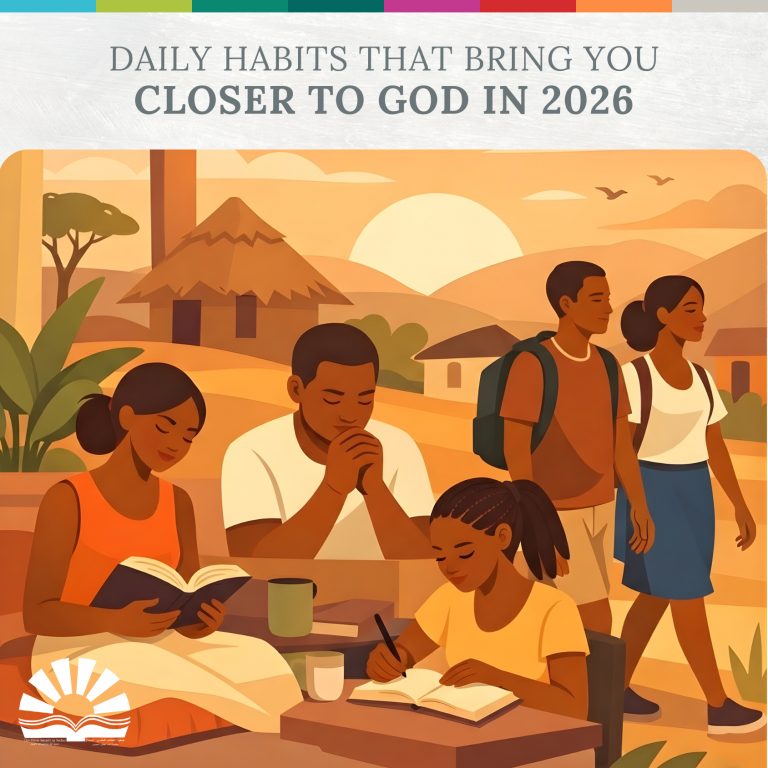
Starting a new year is exciting, but it can also feel overwhelming. School, work, social media, and responsibilities can easily take priority over our spiritual lives. The good news? Growing closer to God doesn’t have to be complicated. It’s about small, consistent habits that transform your heart, mind, and daily life.
Here are 7 daily habits for 2026, backed by Scripture, to help you stay connected with God in a way that actually sticks.
1. Start Your Day With Prayer
Verse: “Do not be anxious about anything, but in every situation, by prayer and petition, with thanksgiving, present your requests to God.” — Philippians 4:6
Starting your day with God sets the tone. A simple 5–10 minute prayer in the morning, even while getting ready, can help you approach the day with peace instead of stress.
Youth Tip: Send a “good morning” text to God, share your plans, hopes, or worries. It’s like opening a direct line with the One who really listens.
2. Read the Bible, Even If It’s Just a Verse
Verse: “Your word is a lamp to my feet and a light to my path.” — Psalm 119:105
You don’t need to read a whole chapter to feel close to God. Even one verse can guide your decisions, inspire you, and give clarity during the day.
Youth Tip: Use a Bible app with daily verse notifications or highlight a verse on your phone wallpaper, it’s a reminder God is with you everywhere.
3. Practice Gratitude Daily
Verse: “Give thanks in all circumstances; for this is God’s will for you in Christ Jesus.” — 1 Thessalonians 5:18
Gratitude keeps your heart focused on God, not just what’s going wrong. Taking a moment each day to thank God, even for small things, changes your perspective and mood.
Youth Tip: Keep a “Gratitude Reel” or a digital journal. Snap a photo of one thing you’re thankful for daily and reflect on it at night.
4. Serve Others in Small Ways
Verse: “Do not merely look out for your own personal interests, but also for the interests of others.” — Philippians 2:4
Serving doesn’t have to be big. Holding a door, checking on a friend, or helping a classmate is faith in action. Every small act reflects God’s love.
Youth Tip: Set a daily “service challenge”: one small act of kindness each day, online or offline.
5. Speak Words That Build Up
Verse: “Do not let any unwholesome talk come out of your mouths, but only what is helpful for building others up according to their needs.” — Ephesians 4:29
Your words, texts, posts and comments have power. Choosing to encourage, compliment, or lift someone up daily is a habit that draws you closer to God.
Youth Tip: Before posting or texting, ask: “Will this reflect God’s love?”
6. Reflect & Journal
Verse: “But his delight is in the law of the Lord, and on his law he meditates day and night.” — Psalm 1:2
Taking 5–10 minutes at the end of the day to reflect on what went well, what challenged you, or where God showed up helps you see His work in your life.
Youth Tip: Use a digital journal, notes app, or even voice memos. Reflection is key to growth.
7. Surround Yourself With Your Faith Tribe
Verse: “As iron sharpens iron, so one person sharpens another.” — Proverbs 27:17
Faith grows in community. Spending time with friends who encourage your relationship with God, even through texts or online calls, helps you stay accountable and inspired.
Youth Tip: Start a group chat or weekly Zoom/Bible hangout to share encouragement, prayer requests, or favorite verses.
Final Reflection for 2026
Getting closer to God doesn’t require big gestures or a perfect schedule. It’s about small, consistent habits that shape your thoughts, words, and actions.Challenge for 2026: Pick one habit this week. Start small. Add another next week. Watch your connection with God grow in real life, not just in theory.

December comes with a whole vibe, Christmas playlists, last-minute shopping, secret Santa stress, and that one cousin who finishes the Christmas drinks before Christmas actually arrives.
But there’s something else that happens every year too:
Gifts fade.
Excitement fades.
But God’s Word? It stays.
Think about it.
You can get someone sneakers today, and they’ll be creased by New Year.
A perfume? Finished by March.
A phone? Outdated in 6 months.
But a Bible, that’s a gift that grows with a person.
It enters every season of their life.
It speaks when people stay silent, comforts when life gets heavy, and guides when the path isn’t clear.
This Christmas, before you pick the usual gifts, here’s why gifting someone a Bible is the ultimate long-term investment, backed by 7 powerful Bible verses, each with a meaningful narrative.
1. It Never Gets Old — It Grows With You
“The grass withers and the flowers fall, but the word of our God endures forever.” — Isaiah 40:8 (NIV)
Every trend ends.
Every season changes.
But God’s Word? It has outlived empires, cultures, wars, generations and it’s still speaking today.
When someone receives a Bible, they’re not getting something that fades.
They’re receiving something that matures with them from youth to adulthood, from uncertainty to confidence, from questions to clarity.
A Bible is the only gift where the older it gets, the more valuable it becomes.
2. It Lights Up the Path When Life Gets Confusing
“Your word is a lamp for my feet, a light on my path.” — Psalm 119:105 (NIV)
Life is full of “I’m not sure what to do next” moments, choosing a career, choosing friends wisely, choosing peace when drama keeps knocking.
A Bible doesn’t just inspire, it illuminates.
It gives direction when someone feels stuck, lost or overwhelmed.
It’s like giving them a spiritual flashlight that never runs out of battery.
This gift says:
“You don’t have to walk through life blind. God will guide you.”
3. It Brings Peace When the World Is Too Loud
“Great peace have those who love your law.” — Psalm 119:165 (NIV)
Between social pressure, expectations, deadlines, and personal struggles, peace can feel rare.
But Scripture has this calming, grounding effect.
It quiets anxiety.
It softens the noise of life.
It reminds the heart who’s still in control.
Giving someone a Bible is giving them the gift of peace on demand, anytime, anywhere.
4. It Strengthens You When Plans Don’t Go Your Way
“Many are the plans in a person’s heart, but it is the Lord’s purpose that prevails.” — Proverbs 19:21 (NIV)
We make plans.
Life changes them.
Sometimes brutally.
A Bible reminds us that God is writing a bigger, better story than the one we imagined.
When someone’s heart breaks, when doors close, or when life takes unexpected turns,
Scripture holds them up and pushes them forward.
It’s the gift that whispers:
“God’s not done with you yet.”
5. It’s a Weapon in the Middle of Life’s Battles
“Take the sword of the Spirit, which is the word of God.” — Ephesians 6:17 (NIV)
Life can fight dirty, fear, self-doubt, spiritual attacks, comparison, emotional pressure.
But the Bible isn’t passive. It’s not just comforting, it’s powerful. It’s a weapon.
It gives strength, authority, and truth when a person is under pressure.
When you give someone a Bible, you’re not handing them a book.
You’re handing them a sword, one that helps them fight back.
6. It Gives Real Hope — Not the Temporary Kind
“For everything that was written… was written to teach us, so that through the endurance taught in the Scriptures and the encouragement they provide we might have hope.” — Romans 15:4 (NIV)
Hope is hard to find these days.
People smile publicly but are secretly exhausted.
Social media is loud, expectations are high, and disappointments hit deep.
Scripture restores hope, not the motivational quote type of hope,
but deep, anchored hope that survives storms.
A Bible becomes a lifeline when someone feels like giving up.
It tells them, “This darkness isn’t the end. God is working.”
7. It Transforms a Life From the Inside Out
“For the word of God is alive and active.” — Hebrews 4:12 (NIV)
No novel, no diary, no self-help book can do what the Bible does.
It breaks chains, heals wounds, renews minds, and shapes destinies.
The Bible doesn’t sit on a shelf, it works.
It enters a person’s thoughts, decisions, relationships, confidence, and purpose.
Giving someone a Bible is giving them a chance to meet God for themselves,
and nothing beats that.
So Why Give a Bible This Christmas?
Because every other gift expires.
But God’s Word:
- Guides.
- Heals.
- Strengthens.
- Encourages.
- Transforms.
- Anchors.
- Stays.
You’re not giving a moment.
You’re giving a lifetime.
You’re giving something eternal.
Give someone a Bible this Christmas, It hits different, not just today, but forever.**

The Bible isn’t just an old book on a shelf. It’s God’s message to you, a guide for the challenges of school, friendships, social media, and life in general. Owning a Bible means having wisdom, hope, and direction right at your fingertips.
Here are seven scriptures that show why having the Bible is life-changing, even for today’s youth.
1. Psalm 119:105 – “Thy word is a lamp to my feet and a light to my path.”
Life can feel like walking in the dark, decisions about friends, exams, or even your future can be confusing. The Bible lights the way, helping you choose what’s right and avoid pitfalls. Think of it as your personal GPS from God.
2. 2 Timothy 3:16-17 – “All scripture is inspired by God and profitable for teaching, for reproof, for correction, and for training in righteousness; that the man of God may be complete, equipped for every good work.”
The Bible is like a life hack book from God. It teaches, corrects, and prepares you for every challenge, whether it’s staying honest online, helping a friend, or making decisions about your career.
3. Hebrews 4:12 – “For the word of God is living and active, sharper than any two-edged sword, piercing to the division of soul and spirit, of joints and marrow, and discerning the thoughts and intentions of the heart.”
The Bible can speak directly into your heart. Feeling anxious, frustrated, or lost? The Word exposes the real issues and points you toward peace and clarity, like a spiritual filter for life.
4. Joshua 1:8 – “This book of the law shall not depart from your mouth; you shall meditate on it day and night, so that you may be careful to do according to all that is written in it; for then you will make your way prosperous, and then you will have good success.”
Success isn’t just about grades or followers. Meditating on God’s Word daily helps you develop focus, discipline, and wisdom, the kind of success that lasts.
5. Psalm 19:7 – “The law of the Lord is perfect, reviving the soul; the testimony of the Lord is sure, making wise the simple.”
Feeling drained after a long day at school or work? Reading the Bible refreshes your spirit. It gives energy, hope, and clarity, better than scrolling endlessly on social media.
6. Proverbs 30:5 – “Every word of God proves true; he is a shield to those who take refuge in him.”
In a world full of fake news, peer pressure, and uncertainty, the Bible is your ultimate source of truth. Having it nearby is like having a shield that protects you from lies and bad influences.
7. Matthew 4:4 – “Man does not live by bread alone, but by every word that comes from the mouth of God.”
You feed your body every day, but your soul needs feeding too. The Bible gives spiritual energy, confidence, peace, and joy, so you can face life with strength and purpose.
Conclusion:
Today, the Bible isn’t just a book, it’s a tool, a mentor, and a lifeline. Owning it empowers you to make wise choices, stay grounded, and live a life full of hope.
This Bible Month, let’s make it our mission to ensure every young person has access to God’s Word because having the Bible in your hands changes everything.

When we think of world-changing figures, we often imagine adults with power, wealth, or fame. But sometimes, all it takes is a teenager with faith, determination, and courage. Mary Jones, a 15-year-old girl from Wales in the late 1700s, is a perfect example.
Mary was not rich. She had no influence. Yet her heart burned with a desire that would leave a lasting mark on history: she wanted her own Bible in her own language. Bibles were rare, expensive, and hard to come by in her village. But Mary’s story teaches us that age is no barrier when God is in the equation.
“Let no one despise your youth, but set the believers an example in speech, in conduct, in love, in faith, in purity.” – 1 Timothy 4:12
From the age of 10, Mary began saving every penny she could earn. For six long years, she collected coins, carefully storing them until she finally had enough. Her hunger for God’s Word was relentless, a hunger that Scripture promises will be satisfied:
“Blessed are those who hunger and thirst for righteousness, for they shall be satisfied.” – Matthew 5:6
At 15, she set off on a journey that would test her faith and determination. The nearest place to buy a Bible was 25 miles away in Bala. With no shoes and only the money she had saved, Mary walked over rivers, hills, and rocky paths because she believed God’s Word was worth the effort.
“I can do all things through him who strengthens me.” – Philippians 4:13
When she finally arrived, she was met with disappointment: all the Bibles were already promised to others. Many would have turned back. But not Mary. She persisted, trusting that God’s plan was greater than her moment of despair:
“But those who wait for the Lord shall renew their strength; they shall mount up with wings like eagles; they shall run and not be weary; they shall walk and not faint.” – Isaiah 40:31
Seeing her determination and tears, Reverend Thomas Charles gave Mary one of the remaining Bibles. That moment marked the fulfillment of her dream and the beginning of something much bigger.
“Commit your work to the Lord, and your plans will be established.” – Proverbs 16:3
Mary’s story didn’t stop with a single Bible in her hands. Her passion inspired the founding of the British and Foreign Bible Society, which went on to distribute Bibles worldwide. One teenager’s faith had sparked a global movement.
“For nothing will be impossible with God.” – Luke 1:37
Mary Jones reminds us that age is no limit to impact. Her courage, determination, and love for God’s Word continue to challenge young people today. Each of us has a “25-mile walk” to make for God, whether it’s sharing His Word, helping someone in need, or living out faith courageously.
“Do not be slothful in zeal, be fervent in spirit, serve the Lord.” – Romans 12:11
The question is: what will you do with your passion, your faith, and your courage?

We live in a world where almost everything is just a click away — opinions, substances, validation, or distractions. For the youth, the pressure to experiment, fit in, or numb out is massive. From parties to pills, vaping to pornography, hookup culture to hustler mindsets, there’s this silent rule that says, “Do what you want, no one cares.”
But you know what? God cares. And deep down, so do you. Here’s how you can stand firm and thrive in a culture that keeps telling you to let go.
1. 1 Corinthians 10:13 — “No temptation has overtaken you except what is common to mankind…”
You’re not alone in this.
Whether it’s the pressure to try drugs, get high to escape stress, or be someone you’re not just to fit in, you’re not weird or weak for struggling. Everyone faces temptation. The verse promises that God will always provide a way out. Sometimes that “way out” is a friend’s text, a parent’s question, or just that inner voice saying “Don’t do it.”
Story: Thomas tried weed at 16 because everyone at the party was doing it. He thought he’d be cooler, braver. But instead, he ended up anxious and ashamed. Years later, he discovered this verse and realized temptation didn’t define him, God had always offered a better choice.
2. Romans 12:2 — “Do not conform to the pattern of this world…”
The world screams, “Normalize it!”
God whispers, “Renew your mind.”
Peer pressure often starts with small things: music, jokes, drinks, risky DMs. But one compromise leads to another. This verse reminds us not to copy what the world says is okay. Transformation begins in the mind. What you feed your thoughts with — that’s what shapes your life.
Story: Margaret stopped following certain pages on Instagram — they weren’t evil, just misleading. After a month of feeding her mind differently, she felt lighter, freer, and more confident in who God said she was.
3. James 4:7 — “Submit yourselves, then, to God. Resist the devil, and he will flee from you.”
You have authority.
Temptation isn’t just a feeling — it’s spiritual warfare. You don’t fight it alone. Submitting to God isn’t weakness; it’s your superpower. The moment you decide to stand firm, hell trembles.
Story: Mike kept falling into late-night habits online. But once he started praying before going to bed and installing accountability apps, the grip lessened. When you resist consistently, the temptation doesn’t stick around.
4. Proverbs 1:10 — “My son, if sinful men entice you, do not give in to them.”
Not all friendships are safe.
Sometimes it’s not the drugs or the drinking — it’s the friend group behind it. God calls us to courage — to walk away from those leading us astray. It’s better to lose fake friends than to lose yourself.
Story: Jonathan left his crew after realizing they were slowly dragging him into a life he didn’t want. It hurt at first. But a few months later, he found real friends at church who uplifted him, not trapped him.
5. Galatians 5:1 — “It is for freedom that Christ has set us free…”
Jesus didn’t die for you to live in chains.
Addiction is real — whether it’s substances, screens, sex, or approval. But freedom is not just possible — it’s promised. You’re not stuck. God’s power can break cycles that feel permanent.
Story: Grace was addicted to pills. She didn’t think prayer or therapy would work — until she tried both. Healing didn’t happen overnight, but every day, she felt the chains loosen.
6. 2 Timothy 2:22 — “Flee the evil desires of youth and pursue righteousness…”
Run to something better.
Sometimes we focus too much on what to avoid and forget what we should chase: purpose, peace, community, God. You’re not just saying no to temptation — you’re saying yes to something way better.
Story: Trish stopped clubbing every weekend. Not because someone forced her, but because she found passion in leading youth worship. Her “no” gave birth to a bigger “yes.”
7. Psalm 119:9 — “How can a young person stay on the path of purity? By living according to your word.”
The Bible is your map.
In a culture where boundaries are blurred, God’s Word becomes a GPS for purity, purpose, and peace. The more you read it, the more you recognize the lies you’ve been believing. Scripture rewires your heart.
Story: Morris began with one verse a day. Just one. A month later, he felt like he was finally walking in light after years of being lost in fog.
Final Thoughts: You Were Born to Stand Out
This “anything goes” generation will try to cancel your convictions, mock your morals, and twist your truth. But God called you to be different — not to judge, but to shine.
Temptation will always knock. But with God’s Word in your heart, community by your side, and the Spirit guiding your steps, you don’t have to open that door.
You are stronger than the pressure.
You are not alone.
You are chosen.
Struggling with more than just temptation? Discover how faith can help you overcome addiction. There’s hope beyond the habit. Learn how God’s power can help you overcome addiction.

Our phones are practically an extension of our hands. TikTok, Instagram, YouTube — we scroll, we double tap, we post. But here’s a thought: what if every swipe, every story, every share could make a difference? What if your online presence could actually change someone’s day… or even their life?
The Bible doesn’t mention TikTok or trending hashtags, but it does give us timeless wisdom on how to live — and yes, that includes how we show up online.
Here’s how 7 powerful Bible verses can guide us from just scrolling to actually serving:
1. 1 Timothy 4:12 – “Don’t let anyone look down on you because you are young, but set an example for the believers in speech, in conduct, in love, in faith and in purity.”
Some people think you have to “grow up” to make an impact. Not true. Your voice matters now. The way you comment, the memes you post, the language you use in your captions — it all sets an example. Be the one who brings encouragement, not just more noise.
2. Ephesians 4:29 – “Do not let any unwholesome talk come out of your mouths, but only what is helpful for building others up.”
It’s so easy to roast someone online, join a cancel trend, or drop a “clap back” comment. But every word we post has power. What if we flipped it? What if your comments built people up instead of tearing them down? You might be the only kind word someone sees that day.
3. Matthew 5:14 – “You are the light of the world. A town built on a hill cannot be hidden.”
Social media can feel dark sometimes — cyberbullying, negativity, toxic trends. But light always wins over darkness. Your faith-filled posts, uplifting reels, and hopeful stories can shine like a beacon. Don’t hide your light. Someone out there needs to see it.
4. Proverbs 18:21 – “The tongue has the power of life and death.”
Think of your posts as seeds. Are you planting seeds of life or seeds of hurt? A single encouraging DM, a prayer shared in your stories, or a Scripture on your feed can breathe life into someone’s weary heart. Use your words to heal, not harm.
5. Colossians 3:17 – “And whatever you do, whether in word or deed, do it all in the name of the Lord Jesus.”
Yes — this even includes your TikToks. That trend you’re doing? That tweet you’re drafting? That bio on your profile? Everything online reflects who you are. Ask yourself: Does this honor God? Would I post this if Jesus followed me?(Spoiler: He does.)
6. Philippians 2:4 – “Not looking to your own interests but each of you to the interests of the others.”
It’s easy to post just for likes, clout, or validation. But what if you used your platform to notice others? Sharing a friend’s art, posting about a cause you care about, or raising awareness for someone in need — that’s serving with your feed.
7. Galatians 6:9 – “Let us not become weary in doing good, for at the proper time we will reap a harvest if we do not give up.”
Sometimes, you’ll post encouragement and it’ll feel like no one cares. You’ll share positive content and only get a few likes. But don’t quit. Your words, prayers, and kindness are making ripples you can’t see. Keep sowing good — God promises a harvest.
So… What Now?
Your online presence is powerful. It can tear down or build up, spread drama or share hope, fuel chaos or bring peace. Every post is a choice.
This month, try asking yourself before you hit “share”:
– Will this bring light?
– Will this lift someone up?
– Will this reflect the love of Jesus?
Because when we move from scrolling to serving, social media stops being just entertainment — it becomes ministry.

A Fresh Look for a Generation Seeking Real Faith
You’ve probably seen the list on a church wall, a t-shirt, or a Pinterest post:
Love. Joy. Peace. Patience. Kindness. Goodness. Faithfulness. Gentleness. Self-Control.
That’s the fruit of the Spirit (Galatians 5:22–23).
But here’s the thing: these aren’t just “nice Christian traits” you try to copy. They’re evidence that something supernatural is growing inside you, something the Holy Spirit is actively forming. Let’s break them down one by one in a way that speaks to real life.
1. LOVE
“Dear children, let us not love with words or speech but with actions and in truth.” – 1 John 3:18
We live in a world where love is often performative. It’s in captions and emojis, but not always in action. The Holy Spirit teaches us to love people even when they’re difficult, unlovable, or don’t benefit us.
Real love:
- Listens before speaking
- Forgives even when it hurts
- Stays when it’s easier to walk away
2. JOY
“Though you have not seen him, you love him… you are filled with an inexpressible and glorious joy.” – 1 Peter 1:8
Joy is different from happiness. It’s not tied to a vibe, a relationship, or a goal. Joy is deep and steady.
You can be battling anxiety and still carry joy. You can be broke and still feel joy. Why? Because joy is rooted in who God is, not what life looks like.
3. PEACE
“You will keep in perfect peace those whose minds are steadfast, because they trust in you.” – Isaiah 26:3
Peace isn’t passive. It’s fierce trust in the middle of chaos.
For young people constantly hit with bad news, mental pressure, and overthinking, peace feels rare. But the Holy Spirit anchors us when the world spins. Peace shows up in how we handle pressure, stay grounded in prayer, and choose surrender over control.
4. PATIENCE
“Be completely humble and gentle; be patient, bearing with one another in love.” – Ephesians 4:2
We’re an instant generation, streaming, deliveries, dating apps. We’re wired for now.
But spiritual maturity grows in the slow seasons. Patience is learning to:
- Wait without whining
- Love people who don’t “get it” yet
- Trust God’s timeline, not your own
It’s not natural, but it’s powerful and deeply needed in a culture obsessed with speed.
5. KINDNESS
“God’s kindness is intended to lead you to repentance.” – Romans 2:4
Kindness isn’t just random acts. It’s intentional compassion.
It’s DM-ing someone just to check in.
It’s being gentle when you have every reason to be cold.
It’s choosing not to clap back even when you could go viral.
Kindness is powerful because it reflects the kindness God showed us.
6. GOODNESS
“Do not be overcome by evil, but overcome evil with good.” – Romans 12:21
Goodness is about integrity when no one’s watching.
It’s not about being a “good person”, it’s about choosing what’s right, even when it costs you.
It’s:
- Being honest when you could cut corners
- Calling out injustice, even if it’s unpopular
- Living with purity in a world that celebrates compromise
7. FAITHFULNESS
“His master replied, ‘Well done, good and faithful servant!’” – Matthew 25:21
This one’s about showing up in relationships, in responsibilities, and in your walk with God.
Faithfulness says:
- “I’ll keep praying, even when I feel nothing.”
- “I’ll show up for my friends when it’s not convenient.”
- “I’ll follow through on what I said.”
In a culture that glorifies jumping ship, faithfulness is countercultural—and deeply beautiful.
8. GENTLENESS
“Let your gentleness be evident to all.” – Philippians 4:5
Gentleness isn’t weakness. It’s controlled strength.
In a world where loud = power, the Spirit teaches us a quieter strength.
Gentleness shows up when:
- You disagree without disrespecting
- You lead without dominating
- You correct without crushing
Jesus was gentle with the broken and we’re called to be like Him.
9. SELF-CONTROL
“Like a city whose walls are broken through is a person who lacks self-control.” – Proverbs 25:28
Without self-control, everything else crumbles.
It’s the Spirit saying:
- “Don’t send that text.”
- “Pause before you scroll.”
- “Say no when you know it’s not worth it.”
This fruit guards your peace, protects your witness, and empowers you to make decisions that align with your purpose not your impulse.
Final Thoughts: Fruit Takes Time
You don’t become a walking, talking Fruit Basket overnight.
But if you stay rooted in Jesus, the Holy Spirit will grow this fruit in you gradually, powerfully, and authentically.
You might not see it every day. But others will.
And in a world craving something real, the Spirit’s fruit is the loudest quiet message you’ll ever carry.
Ask Yourself:
- Which fruit comes easiest for me?
- Which one is God stretching in me right now?
- How can I lean into the Spirit more today?
Next Step:
If you’re serious about growth, start a “Fruit Check” journal every week, reflect on one fruit and ask:
“How did I live this out or not this week?”
Spiritual growth isn’t about perfection. It’s about progress. And you don’t walk it alone, the Spirit walks with you.
When we think of great love stories in the Bible, Zechariah and Elizabeth often stand in the shadows of more well-known couples like Ruth and Boaz or Jacob and Rachel. Yet, their story is one of deep love, unwavering faith, and patience in the face of life’s greatest trials. This love season, let’s reflect on their journey and what it teaches us about godly love.
1. A Love Built on Righteousness
Zechariah and Elizabeth were not just an ordinary couple. The Bible describes them as righteous, walking blamelessly before God. Their love was founded on their shared devotion to the Lord.
“Both of them were righteous in the sight of God, observing all the Lord’s commands and decrees blamelessly.” – Luke 1:6
Their relationship teaches us that a strong marriage is not just about romance but about walking together in faith and obedience to God.
2. A Marriage Tested by Waiting
For years, Zechariah and Elizabeth longed for a child, but Elizabeth remained barren. Despite the cultural shame and personal pain, their love endured. They didn’t turn against each other or against God. Instead, they continued to serve Him faithfully.
“Hope deferred makes the heart sick, but a longing fulfilled is a tree of life.” – Proverbs 13:12
Their story reminds us that true love stands strong, even in seasons of waiting and disappointment.
3. An Answer to Their Prayers
One day, while serving as a priest in the temple, Zechariah received an angelic visitation. The angel Gabriel announced that Elizabeth would bear a son, John the Baptist, who would prepare the way for the Lord.
“But the angel said to him: ‘Do not be afraid, Zechariah; your prayer has been heard. Your wife Elizabeth will bear you a son, and you are to call him John.’” – Luke 1:13
God’s timing is perfect. When we trust Him, He blesses us in ways beyond our expectations.
4. A Love Strengthened Through Trials
Zechariah initially doubted the angel’s message, and as a result, he was struck mute until the prophecy was fulfilled. Imagine Elizabeth’s role in this period—caring for her husband, encouraging him, and preparing for their long-awaited child.
“Two are better than one, because they have a good return for their labor: If either of them falls down, one can help the other up.” – Ecclesiastes 4:9-10
A strong marriage means supporting each other even when faith wavers.
5. Rejoicing in God’s Blessing
When Elizabeth finally conceived, she rejoiced, knowing that God had lifted her reproach.
“The Lord has done this for me. In these days he has shown his favour and taken away my disgrace among the people.” – Luke 1:25
Their story shows us that God’s blessings come in His perfect time, and when they do, they bring great joy.
6. A Legacy of Faith and Obedience
When their son was born, the community expected them to name him after Zechariah. But in obedience to God’s instruction, they named him John. Zechariah’s speech was restored, and he praised God.
“Immediately his mouth was opened and his tongue set free, and he began to speak, praising God.” – Luke 1:64
Love thrives when it is rooted in obedience to God’s will.
7. The Power of a Love That Glorifies God
Zechariah and Elizabeth’s love story wasn’t just about romance; it was about being part of God’s greater plan. Their faith and endurance led to the birth of John the Baptist, the forerunner of Jesus Christ.
“But seek first his kingdom and his righteousness, and all these things will be given to you as well.” – Matthew 6:33
When couples seek God first, their love becomes a testimony of His faithfulness.

Avoiding stress during exams is essential for maintaining focus, performing well, and staying healthy. Here’s a biblical, practical, and actionable guide to managing stress effectively during exam time:
1. Start with Prayer and Trust in God
- Philippians 4:6-7 – “Do not be anxious about anything, but in every situation, by prayer and petition, with thanksgiving, present your requests to God.”
Tip: Whenever you feel overwhelmed, pause and pray. Surrender your worries to God.
Action:
- Start and end your study sessions with a short prayer.
- Keep a prayer journal where you express your concerns and ask God for peace.
2. Stay Organized with a Study Plan
- 1 Corinthians 14:40 – “But everything should be done in a fitting and orderly way.”
Tip: A well-organized study schedule prevents last-minute cramming and reduces stress.
Action:
- Break your syllabus into manageable chunks, covering a little every day.
- Use tools like a study timetable or to-do list to track progress.
3. Take Care of Your Body
- 1 Corinthians 6:19-20 – “Your body is a temple of the Holy Spirit… Therefore, honor God with your bodies.”
Tip: Eating well, exercising, and sleeping enough will help your brain function better.
Action:
- Exercise: Take short walks or do light stretches between study sessions.
- Sleep: Aim for 7-8 hours of sleep per night to improve concentration.
- Eat Nutritious Foods: Include fruits, vegetables, and water to keep your energy up.
4. Take Breaks and Rest
- Exodus 20:8-10 – “Remember the Sabbath day by keeping it holy…”
Tip: Rest is essential to recharge your brain and avoid burnout.
Action:
- Take 10-15 minute breaks every hour to relax your mind.
- Set aside one day a week to rest and engage in something you enjoy.
5. Avoid Comparison with Others
- Galatians 6:4 – “Each one should test their own actions… without comparing themselves to someone else.”
Tip: Comparing yourself with classmates can lead to unnecessary anxiety. Focus on your progress and efforts.
Action:
- Remind yourself that your journey is unique, and God has a plan for you.
- Celebrate small achievements along the way, like completing a topic or practice test.
6. Practice Deep Breathing and Relaxation Techniques
- Psalm 46:10 – “Be still, and know that I am God.”
Tip: When stress creeps in, breathe deeply and meditate on God’s presence.
Action:
- Deep Breathing: Inhale for 4 seconds, hold for 4 seconds, and exhale for 4 seconds. Repeat several times.
- Play soft, relaxing worship music while you study or during breaks.
7. Stay Positive and Speak Life Over Yourself
- Proverbs 18:21 – “The tongue has the power of life and death…”
Tip: Replace negative thoughts with positive affirmations rooted in Scripture.
Action:
- Speak aloud Scriptures like: “I can do all things through Christ who strengthens me” (Philippians 4:13).
- Avoid saying things like “I will fail” or “This is too hard.” Instead, say, “I am prepared, and God is with me.”
8. Engage in Fellowship with Others
- Ecclesiastes 4:9-10 – “Two are better than one… If one falls down, the other can help him up.”
Tip: Talk to family, friends, or mentors when you feel overwhelmed.
Action:
- Join a study group for encouragement.
- Share your concerns with someone who can pray with you and provide guidance.
9. Limit Distractions and Focus on the Present
- Matthew 6:34 – “Do not worry about tomorrow, for tomorrow will worry about itself.”
Tip: Avoid worrying about the future or dwelling on past mistakes. Stay focused on what you can do today.
Action:
- Set specific times to study without distractions from social media or phone notifications.
- Tackle one subject or task at a time to avoid overwhelm.
10. Trust God with the Outcome
- Proverbs 3:5-6 – “Trust in the Lord with all your heart and lean not on your own understanding…”
Tip: After you’ve done your best, trust God to handle the rest.
Action:
- After each exam, pray and thank God for the strength to finish.
- Avoid overanalyzing your performance, trust that God’s plan is perfect.
Conclusion
Managing stress during exams is about trusting God, planning wisely, taking care of yourself, and staying focused on the present. Remember that success is not just about grades—it’s about learning, growing, and relying on God’s strength. Following this guide will help you stay calm, focused, and productive throughout the exam season. You’ve got this! God is with you every step of the way.

Love and relationships are important aspects of life, especially for younger generations navigating friendships, family dynamics, dating, and social connections. In a world where love is often portrayed in a confusing, fleeting, or superficial way, the Bible offers clear and timeless wisdom on what love truly means and how to build healthy relationships.
Here are seven Bible verses that will help guide you through the complexities of love and relationships.
1. 1 Corinthians 13:4-7 — “Love is patient, love is kind. It does not envy, it does not boast, it is not proud. It does not dishonor others, it is not self-seeking, it is not easily angered, it keeps no record of wrongs. Love does not delight in evil but rejoices with the truth. It always protects, always trusts, always hopes, always perseveres.”
In a world that sometimes focuses on instant gratification and fleeting emotions, the Bible reminds us that love is more about giving than receiving. Love isn’t just a feeling; it’s a choice to act with kindness and humility, even when it’s hard.
2. Matthew 22:37-39 — “Jesus replied: ‘Love the Lord your God with all your heart and with all your soul and with all your mind.’ This is the first and greatest commandment. And the second is like it: ‘Love your neighbor as yourself.’”
Jesus simplifies love and relationships into two commandments: loving God first and then loving others. When your relationships are rooted in love for God, they will naturally reflect a love that values and respects others.
3. Proverbs 17:17 — “A friend loves at all times, and a brother is born for a time of adversity.”
Friendships and community are crucial, especially for the younger generation navigating through life’s challenges. Genuine friends love in every season, not just when it’s easy or convenient. They are there to support you during difficult times, and they offer strength and encouragement when you need it most.
4. 1 John 4:18 — “There is no fear in love. But perfect love drives out fear, because fear has to do with punishment. The one who fears is not made perfect in love.”
Many young people experience anxiety, fear, or insecurity in relationships, whether it’s fear of rejection, fear of not being enough, or fear of vulnerability. But this verse reminds us that real love, the kind of love God gives, casts out fear. In healthy relationships, love should create a sense of safety, not fear or insecurity. When you’re in a relationship that reflects God’s love, you will feel valued and cherished, not afraid or anxious.
5. Ephesians 4:2-3 — “Be completely humble and gentle; be patient, bearing with one another in love. Make every effort to keep the unity of the Spirit through the bond of peace.”
In a world where arguments and conflict are common, these verses from Ephesians encourage us to practice humility, patience, and unity in our relationships. It’s not always easy, but maintaining peace and working toward understanding are key aspects of healthy connections. Love isn’t about always being right; sometimes it’s about listening, understanding, and choosing peace over conflict.
6. Song of Solomon 8:4 — “Do not arouse or awaken love until it so desires.”
For young people, particularly in the context of dating and romantic relationships, this verse offers wisdom about timing and patience. Culture often pressures young people to rush into relationships or equates physical attraction with love. However, the Bible encourages us to wait for the right timing, to allow love to grow naturally and genuinely, without rushing into anything prematurely. This ensures that relationships are based on genuine connection and mutual respect.
7. Romans 12:10 — “Be devoted to one another in love. Honor one another above yourselves.”
Instead of asking, “What can I get out of this relationship?” we are encouraged to honor and respect others, putting their needs ahead of our own. True love is about devotion and commitment, not just convenience or personal gain. When you prioritize honoring others, you build relationships that are strong, meaningful, and lasting.
Conclusion
Navigating love and relationships as a young person can be challenging, especially in a world filled with mixed messages about what love is and how relationships should work. However, these Bible verses provide a clear and countercultural view of love: one that is selfless, patient, kind, and enduring. Love isn’t just about feelings, it’s about action, commitment, and putting others before yourself. When your relationships are rooted in these principles, they will flourish in ways that bring fulfillment, joy, and peace. So, take these truths with you as you navigate love and relationships, always remembering that God’s love is the foundation of all healthy connections.
School can be tough, whether you’re dealing with classes, friends, or figuring yourself out. The Bible offers timeless wisdom that can guide you through these experiences. Here are seven biblical wisdom nuggets, accompanied by scripture, to help you sail smoothly through school.
1. Seek God’s Wisdom First
Proverbs 2:6 (NIV): “For the Lord gives wisdom; from his mouth come knowledge and understanding.”
Before diving into your studies, seek God’s wisdom. Acknowledge that true knowledge comes from Him. When you prioritize God’s wisdom, you gain insights that go beyond textbooks, helping you make better decisions in both academic and personal matters.
2. Be Diligent and Hardworking
Proverbs 13:4 (NIV): “A sluggard’s appetite is never filled, but the desires of the diligent are fully satisfied.”
Success in school requires effort and perseverance. Laziness will lead to unfulfilled goals, but diligence brings rewards. Whether it’s studying for exams or working on projects, approach each task with a mindset of diligence, knowing that hard work pays off.
3. Practice Integrity in All Things
Proverbs 10:9 (NIV): “Whoever walks in integrity walks securely, but whoever takes crooked paths will be found out.”
Integrity means being honest and having strong moral principles, even when no one is watching. Cheating on an exam or copying homework may seem like a shortcut, but it ultimately leads to trouble. Uphold integrity in your academic pursuits, and you’ll walk with confidence.
4. Surround Yourself with Wise Friends
Proverbs 13:20 (NIV): “Walk with the wise and become wise, for a companion of fools suffers harm.”
The company you keep influences your behavior and choices. Surround yourself with friends who uplift you, encourage your growth, and share your values. Wise friends will challenge you to be better and help you stay on the right path.
5. Trust in God’s Plan
Jeremiah 29:11 (NIV): “For I know the plans I have for you,” declares the Lord, “plans to prosper you and not to harm you, plans to give you hope and a future.”
School can be overwhelming with its uncertainties and pressures. Trust that God has a plan for your life, even when things don’t go as expected. Whether you face disappointments or setbacks, believe that God is guiding you toward a hopeful future.
6. Manage Your Time Wisely
Ephesians 5:15-16 (NIV): “Be very careful, then, how you live—not as unwise but as wise, making the most of every opportunity, because the days are evil.”
Time management is crucial for balancing studies, extracurricular activities, and personal time. Use your time wisely, avoiding procrastination. Prioritize tasks and make the most of every opportunity to learn and grow.
7. Pray About Everything
Philippians 4:6-7 (NIV): “Do not be anxious about anything, but in every situation, by prayer and petition, with thanksgiving, present your requests to God. And the peace of God, which transcends all understanding, will guard your hearts and your minds in Christ Jesus.”
Prayer is a powerful tool in navigating school life. Whether you’re stressed about an upcoming test or unsure about your future, bring your concerns to God in prayer. Prayer brings peace and clarity, helping you stay focused and calm in all situations.
Conclusion
Applying these biblical wisdom nuggets to your school life can significantly enhance your experience. By seeking God’s wisdom, practicing diligence, maintaining integrity, surrounding yourself with wise friends, trusting in God’s plan, managing your time wisely, and praying about everything, you can navigate the challenges of school with confidence and grace. Remember, God is with you every step of the way, ready to guide and support you.
The season of harvest is a time of gratitude, reflection, and abundance. For farmers, it signifies the end of a season of hard work, when crops are gathered, and the fruits of labor are celebrated. Spiritually, it reminds us of God’s faithfulness and the importance of sowing seeds of righteousness in our lives. The Bible speaks of harvest not just as an agricultural event but as a symbol of spiritual growth, provision, and God’s blessings.
Here are seven Bible verses that reflect the beauty, meaning, and significance of harvest time:
1. Galatians 6:9
“Let us not become weary in doing good, for at the proper time we will reap a harvest if we do not give up.”
Just as the harvest comes after a season of hard labor, our spiritual harvest will come if we remain steadfast in our efforts to live righteously. God’s timing is perfect, and we must trust that our diligence will bear fruit.
2. Matthew 9:37-38
“Then he said to his disciples, ‘The harvest is plentiful but the workers are few. Ask the Lord of the harvest, therefore, to send out workers into his harvest field.’”
Here, Jesus calls on us to be workers in this field, sharing the good news of salvation and helping to bring others into the kingdom of God. Harvest time is not just about receiving but also giving — sharing God’s love with the world.
3. Psalm 126:5-6
“Those who sow with tears will reap with songs of joy. Those who go out weeping, carrying seed to sow, will return with songs of joy, carrying sheaves with them.”
We may endure seasons of sorrow, but God promises that those who faithfully sow, even through hardship, will one day reap a harvest of joy. There is hope in the midst of trials, and the harvest will be a time of celebration.
4. Proverbs 10:5
“He who gathers crops in summer is a prudent son, but he who sleeps during harvest is a disgraceful son.”
Just as a farmer must be attentive during the harvest to gather his crops, we must be alert and ready to seize the spiritual opportunities that God places before us. Laziness and neglect lead to missed blessings, but diligence ensures that we reap the benefits of our labor.
5. 2 Corinthians 9:10
“Now he who supplies seed to the sower and bread for food will also supply and increase your store of seed and will enlarge the harvest of your righteousness.”
God is the provider of all things, and He ensures that those who sow will have what they need to reap a harvest. Not only does He provide materially, but He also increases the harvest of righteousness in our lives, enabling us to grow in character, faith, and good works. Our trust in God’s provision is important to experiencing His abundance.
6. James 3:18
“Peacemakers who sow in peace reap a harvest of righteousness.”
When we sow seeds of peace and righteousness, we reap a harvest of goodness and integrity. Just as the farmer carefully chooses what to plant, we must be mindful of the seeds we sow in our relationships and daily actions.
7. John 4:35
“Don’t you have a saying, ‘It’s still four months until harvest’? I tell you, open your eyes and look at the fields! They are ripe for harvest.”
The time for action is now, not later. The fields are ripe, and God is calling us to step into His work, sharing His love and truth with those who are ready to receive it. There is an urgency in the harvest, and we are called to respond.
Conclusion
Harvest time is a powerful reminder of God’s faithfulness and the spiritual principles of sowing and reaping. Whether we are harvesting crops or gathering the fruits of our spiritual labor, we are called to trust in God’s provision and timing. As we reflect on these Bible verses, may we be inspired to continue sowing seeds of righteousness, peace, and faithfulness, knowing that in due season, we will reap a bountiful harvest.

The Bible is rich with wisdom regarding the power of our words. Throughout Scripture, we are reminded that the tongue—though small—holds the capacity to uplift, destroy, heal, or harm. The words we speak can shape destinies, mend relationships, or cause deep wounds. Let’s explore seven Bible verses that illuminate the profound power of the tongue.
1. Proverbs 18:21 – “Death and life are in the power of the tongue, and those who love it will eat its fruits.”
The words we choose to speak can bring encouragement, love, and healing, or they can cause hurt, division, and destruction. The “fruits” we reap from our words reflect their power—whether for good or ill.
2. James 3:5-6 – “So also the tongue is a small member, yet it boasts of great things. How great a forest is set ablaze by such a small fire! And the tongue is a fire, a world of unrighteousness.”
Although it is a small part of the body, the tongue can cause significant harm, much like a small spark can ignite an entire forest fire. James warns believers of the dangers of careless speech, reminding us that words can spread like wildfire, causing damage that can be difficult to undo.
3. Proverbs 12:18 – “There is one whose rash words are like sword thrusts, but the tongue of the wise brings healing.”
Words spoken in haste or anger can cut deeply, inflicting pain and damage similar to physical wounds. Conversely, wise and thoughtful words can bring comfort, peace, and restoration, highlighting the importance of controlling our speech and choosing our words carefully.
4. Ephesians 4:29 – “Let no corrupting talk come out of your mouths, but only such as is good for building up, as fits the occasion, that it may give grace to those who hear.”
We are urged to avoid corrupting or harmful talk and instead speak in ways that edify and encourage others. Words have the power to build up or tear down, and we are encouraged to use our speech to impart grace and support to those around us.
5. Proverbs 15:4 – “A gentle tongue is a tree of life, but perverseness in it breaks the spirit.”
A gentle tongue, like a tree of life, offers nourishment, strength, and growth. In contrast, perverse or harsh speech can crush a person’s spirit, leading to discouragement and despair. The verse encourages us to speak with kindness and gentleness, fostering life and growth in others.
6. Matthew 12:36-37 – “I tell you, on the day of judgment people will give account for every careless word they speak, for by your words you will be justified, and by your words you will be condemned.”
Jesus’ words in Matthew are a sobering reminder of the accountability we have for our speech. Every word we speak—careless or otherwise—will be subject to judgment. Our words reflect our hearts, and they play a role in our justification or condemnation. This verse underscores the importance of being mindful of our speech, knowing that it has eternal consequences.
7. Proverbs 16:24 – “Gracious words are like a honeycomb, sweetness to the soul and health to the body.”
Words that are kind, loving, and considerate are likened to honeycomb—sweet and nourishing, bringing joy and health to both the speaker and the listener. The verse encourages us to speak in ways that bring sweetness and well-being to others, reflecting the love and grace of God through our words.
Conclusion
The Bible consistently teaches that the tongue, though small, wields immense power. It can bring life or death, healing or harm, joy or sorrow. As followers of Christ, we are called to use our words wisely, to speak life, and to reflect God’s love through our speech. By guarding our tongues and choosing our words carefully, we can positively influence those around us and honor God with our speech.

The day is coming to an end. Before you go to sleep, take a moment to read the word of God. Pray. Lift up what you are thankful for, any worries, pray for God’s blessing as you go to sleep.
- Psalm 4:8 In peace I will both lie down and sleep; for you alone, O LORD, make me dwell in safety.
Leave the stress of the day and any worries in the hands of God. He will give you peace.
- Proverbs 3:24 If you lie down, you will not be afraid; when you lie down, your sleep will be sweet.
There can be a lot around us in our lives with our home, work, family, stress, worries and fear. Trust that God wants you to have a good sleep. We can face any challenge better if we are well rested.
- Psalm 23:2-3 He makes me lie down in green pastures. He leads me beside still waters. He restores my soul. He leads me in paths of righteousness for his name’s sake.
Trust God to lead you to rest, peace, renewed strength and energy. God wants good for us.
- Matthew 6:34 Therefore do not be anxious about tomorrow, for tomorrow will be anxious for itself. Sufficient for the day is its own trouble.
Commit your way to God. When we are led by him, we can let our worries go. Instead of being anxious about what may or may not happen tomorrow, pray to God that his will be done.
- Psalm 63:5-6 My soul will be satisfied as with fat and rich food, and my mouth will praise you with joyful lips, when I remember you upon my bed, and meditate on you in the watches of the night
Before you sleep, it is good to take the time to read the Bible and to pray to God. It satisfies our soul.
- Exodus 33:14 And he said, “My presence will go with you, and I will give you rest.”
God is with you. If you don’t know God’s presence, seek him with all your heart. Be at peace in the presence of God.
- Psalm 116:7 Return, O my soul, to your rest; for the LORD has dealt bountifully with you.
God is a generous God. May his peace, rest and love be with you in abundance.

The day is coming to an end. Before you go to sleep, take a moment to read the word of God. Pray. Lift up what you are thankful for, any worries, pray for God’s blessing as you go to sleep.
- Psalm 4:8 In peace I will both lie down and sleep; for you alone, O LORD, make me dwell in safety.
Leave the stress of the day and any worries in the hands of God. He will give you peace.
- Proverbs 3:24 If you lie down, you will not be afraid; when you lie down, your sleep will be sweet.
There can be a lot around us in our lives with our home, work, family, stress, worries and fear. Trust that God wants you to have a good sleep. We can face any challenge better if we are well rested.
- Psalm 23:2-3 He makes me lie down in green pastures. He leads me beside still waters. He restores my soul. He leads me in paths of righteousness for his name’s sake.
Trust God to lead you to rest, peace, renewed strength and energy. God wants good for us.
- Matthew 6:34 Therefore do not be anxious about tomorrow, for tomorrow will be anxious for itself. Sufficient for the day is its own trouble.
Commit your way to God. When we are led by him, we can let our worries go. Instead of being anxious about what may or may not happen tomorrow, pray to God that his will be done.
- Psalm 63:5-6 My soul will be satisfied as with fat and rich food, and my mouth will praise you with joyful lips, when I remember you upon my bed, and meditate on you in the watches of the night;
Before you sleep, it is good to take the time to read the Bible and to pray to God. It satisfies our soul.
- Exodus 33:14 And he said, “My presence will go with you, and I will give you rest.”
God is with you. If you don’t know God’s presence, seek him with all your heart. Be at peace in the presence of God.
- Psalm 116:7 Return, O my soul, to your rest; for the LORD has dealt bountifully with you.
God is a generous God. May his peace, rest and love be with you in abundance.
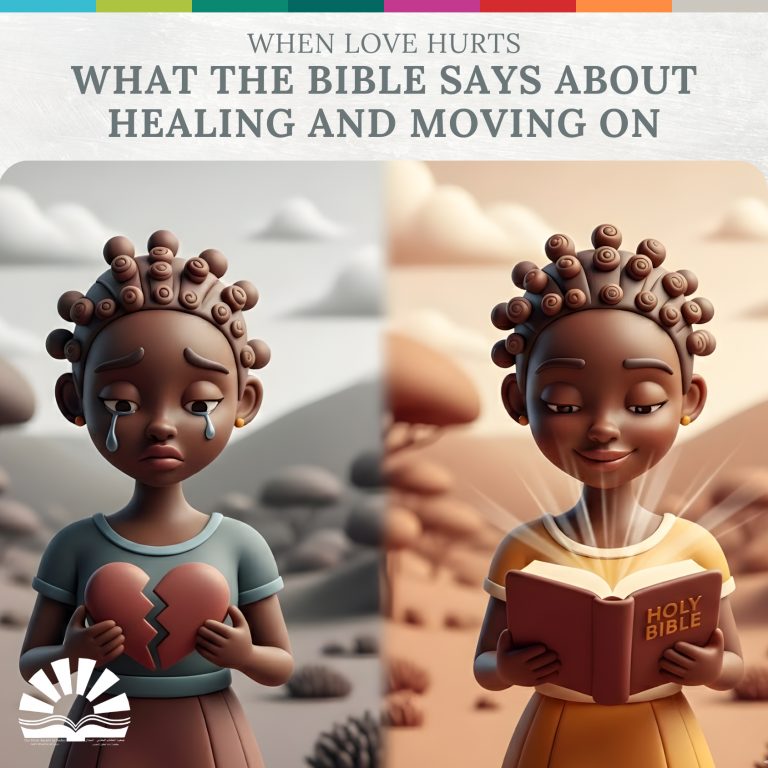
Heartbreak doesn’t always come with closure. Sometimes it’s a breakup. Sometimes it’s betrayal, ghosting, unreturned feelings, or loving someone who couldn’t love you back. For many young people, emotional pain is silent, but heavy.
The Bible doesn’t ignore heartbreak. God sees the tears, the confusion, and the questions. Scripture offers not quick fixes, but real steps toward healing, restoration, and hope.
1. Acknowledge the Pain—God Can Handle It
Verse: “The Lord is close to the brokenhearted and saves those who are crushed in spirit.”
— Psalm 34:18
Healing doesn’t start with pretending you’re okay. God doesn’t ask you to minimize your pain or rush your healing. He draws near to those who are hurting, not those who hide it.
Relatable truth: Crying doesn’t mean you’re weak, it means you’re human.
2. Give Yourself Permission to Grieve
Verse: “Blessed are those who mourn, for they will be comforted.”
— Matthew 5:4
Grief isn’t only about death, it’s about loss. Lost dreams. Lost trust. Lost connection. Jesus acknowledges grief as part of healing, not something to avoid.
Relatable truth: Healing doesn’t mean forgetting, it means processing.
3. Guard Your Heart While It Heals
Verse: “Above all else, guard your heart, for everything you do flows from it.”
— Proverbs 4:23
After heartbreak, it’s easy to reopen wounds by replaying memories, stalking profiles, or seeking closure from the same place that caused pain. Guarding your heart may mean setting boundaries, even digital ones.
Relatable truth: Sometimes healing requires distance, not answers.
4. Release What You Can’t Control
Verse: “Cast all your anxiety on him because he cares for you.”
— 1 Peter 5:7
You can’t control how someone treated you or why things ended, but you can choose where you place your pain. God invites you to hand Him what you can’t fix.
Relatable truth: Closure doesn’t always come from people, it comes from God.
5. Choose Forgiveness, Not Bitterness
Verse: “Be kind and compassionate to one another, forgiving each other, just as in Christ God forgave you.”
— Ephesians 4:32
Forgiveness doesn’t excuse the hurt, it frees your heart from being stuck in it. Holding onto bitterness keeps the wound open. Forgiveness is often a process, not a moment.
Relatable truth: Forgiveness is for your peace, not their comfort.
6. Let God Restore Your Identity
Verse: “I have loved you with an everlasting love.”
— Jeremiah 31:3
Heartbreak can make you question your worth. God reminds you that His love isn’t based on performance, attraction, or someone else’s choice. You are still chosen, valued, and loved.
Relatable truth: Someone walking away doesn’t reduce your value.
7. Trust God With What’s Next
Verse: “He heals the brokenhearted and binds up their wounds.”
— Psalm 147:3
Healing takes time, but God promises restoration. Moving on doesn’t mean erasing the past, it means allowing God to shape your future without being chained to pain.
Relatable truth: Healing doesn’t rush, but it does come.
Final Reflection for Young Hearts
Heartbreak is painful, but it doesn’t get the final word. God does.
Moving on doesn’t mean you stop caring. It means you stop letting pain control your future. With God, healing becomes possible, not overnight, but step by step.If you’re hurting right now, pray this simple prayer:
“God, help me heal what I don’t understand and release what I can’t change.”
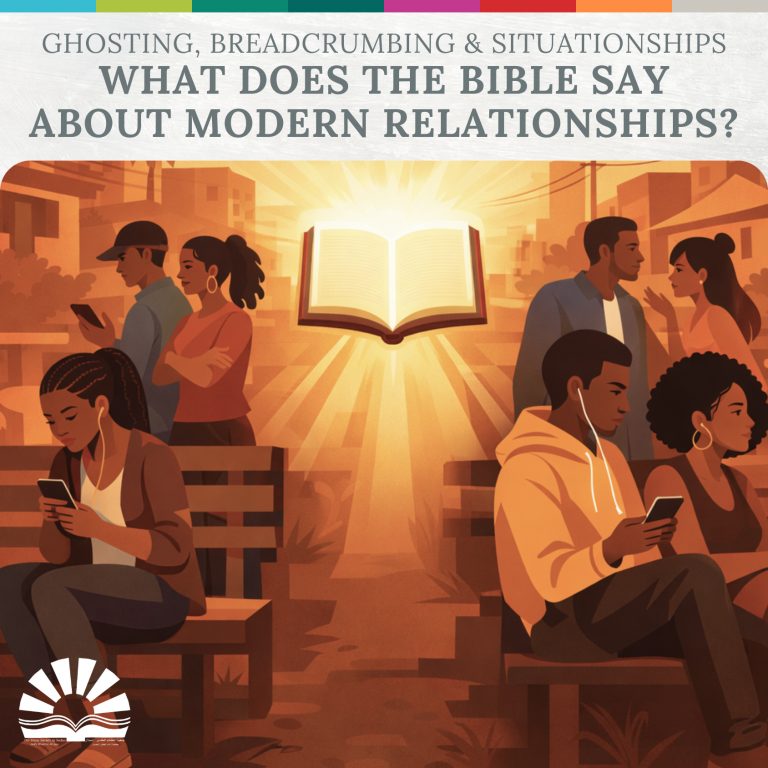
In today’s dating world, people disappear without explanation, send mixed signals to keep you emotionally attached, or stay in undefined “almost-relationships.” These experiences can leave hearts confused, anxious, and questioning self-worth. But what does Jesus, who cared deeply about love, truth, and people’s hearts, say about this?
Let’s explore this through Scripture.
1. Jesus Values Truth, Not Mixed Signals
Verse: “Let your ‘Yes’ be yes, and your ‘No,’ no.” — Matthew 5:37 (NIV)
Breadcrumbing thrives on uncertainty, just enough attention to keep someone hoping. Jesus teaches clarity and honesty. Leading someone on emotionally while avoiding commitment goes against His call to be truthful and straightforward.
If intentions are unclear, it’s not love, it’s confusion.
2. Disappearing Without Explanation Hurts Real People
Verse: “So in everything, do to others what you would have them do to you.” — Matthew 7:12 (NIV)
Ghosting may feel easier than having a difficult conversation, but Jesus calls us to empathy. How would you want to be treated if the roles were reversed?
Love considers the emotional impact of our actions.
3. God Is Not the Author of Confusion
Verse: “For God is not a God of disorder but of peace.” — 1 Corinthians 14:33 (NIV)
Situationships often come with anxiety, insecurity, and constant overthinking. If a connection consistently brings confusion rather than peace, it may not be aligned with God’s design for relationships.
Peace is a sign of God’s presence; confusion is a warning sign.
4. Guard Your Heart in Undefined Relationships
Verse: “Above all else, guard your heart, for everything you do flows from it.” — Proverbs 4:23 (NIV)
When you invest emotionally in someone who won’t commit, your heart is at risk. Jesus never taught us to ignore our emotional well-being in the name of “love.”
Protecting your heart is wisdom, not weakness.
5. Love Is Patient and Kind—Not Manipulative
Verse: “Love is patient, love is kind… it is not self-seeking.” — 1 Corinthians 13:4–5 (NIV)
Breadcrumbing is often self-centered—keeping someone around for attention, validation, or convenience. Biblical love seeks the good of the other person, not personal gain.
If it benefits one person at the expense of another, it isn’t love.
6. Your Worth Is Not Defined by Someone’s Inconsistency
Verse: “I have loved you with an everlasting love.” — Jeremiah 31:3 (NIV)
Being ghosted can make someone feel disposable. Jesus reminds us that God’s love doesn’t disappear, go silent, or show up only when convenient.
God’s love is consistent—even when people are not.
7. Jesus Calls Us to Love with Integrity
Verse: “The Lord detests lying lips, but he delights in people who are trustworthy.” — Proverbs 12:22 (NIV)
Situationships often avoid labels to escape responsibility. Jesus calls His followers to integrity—being honest about intentions, emotions, and expectations.
Trust is built on honesty, not ambiguity.
So… What Would Jesus Say?
Jesus would likely challenge us to:
- Be clear, kind, and honest
- Stop playing with emotions
- Choose peace over confusion
- Value people more than convenience
- Remember that love never leaves people feeling disposable
Final Reflection for Youth
If a relationship needs constant decoding, it may not be God-centered. Real love reflects God’s character, truthful, consistent, and respectful.Before staying in a situationship, ask:
“Is this bringing me peace, or slowly draining my heart?”

We live in a generation where relationships often begin with a notification. A reply, a reaction, or a late-night DM can spark emotional connections faster than ever before. While technology has made communication easier, it has also blurred boundaries, created confusion, and sometimes replaced real commitment with convenience.
The Bible may not mention social media or messaging apps, but it speaks clearly about love, honesty, intention, and the condition of the heart, all of which are deeply relevant to online relationships today.
1. God Cares About Your Heart, Even Behind a Screen
Verse: “Above all else, guard your heart, for everything you do flows from it.”
— Proverbs 4:23 (NIV)
Online conversations can feel safe because there’s physical distance, but emotional closeness can develop quickly. Late-night chats, deep conversations, and constant messaging can slowly open your heart before trust, commitment, or clarity are established.
God’s instruction to guard your heart isn’t about being cold, it’s about being wise. When your heart is unprotected, your peace, focus, and identity can be affected.
Reflection: Just because someone has access to your DMs doesn’t mean they deserve access to your heart.
2. Honesty Matters More Than Filters and Vibes
Verse: “The Lord detests lying lips, but he delights in people who are trustworthy.”
— Proverbs 12:22 (NIV)
Online spaces make it easy to exaggerate, hide intentions, or present a “perfect” version of yourself. But love built on half-truths, vague intentions, or emotional pretending eventually collapses.
Biblical love values authenticity. God is pleased when relationships are grounded in truth, even when honesty feels uncomfortable.
Reflection: If a relationship depends on pretending, it isn’t sustainable, or God-honouring.
3. Love Communicates Clearly, Not Confusingly
Verse: “Let your ‘Yes’ be yes, and your ‘No,’ no.”
— Matthew 5:37 (NIV)
One of the biggest struggles in online relationships is unclear communication, mixed signals, inconsistent replies, and undefined intentions. Jesus teaches clarity because confusion creates emotional strain.
Clarity is not rude. It’s respectful. Being honest about intentions saves hearts from unnecessary hurt.
Reflection: If someone keeps you guessing, ask whether confusion is being used as control.
4. Words Carry Weight—Even When Typed
Verse: “Do not let any unwholesome talk come out of your mouths, but only what is helpful for building others up.”
— Ephesians 4:29 (NIV)
Texting removes tone, facial expression, and context, which can easily lead to misunderstanding. It also lowers accountability, people say things online they wouldn’t say face-to-face.
God calls us to use words that uplift, protect dignity, and bring life. This applies to jokes, flirting, arguments, and emotional conversations online.
Reflection: If your message wouldn’t bring healing or encouragement, it may not be worth sending.
5. Love Is Not Self-Seeking or Emotionally Manipulative
Verse: “Love… is not self-seeking.”
— 1 Corinthians 13:5 (NIV)
Breadcrumbing, emotional check-ins with no commitment, and keeping someone around for attention are common in digital relationships. These behaviours meet personal needs but ignore the emotional cost to others.
Biblical love considers how actions affect another person’s heart. If connection exists only when it’s convenient, it’s not love, it’s self-interest.
➡ Reflection: Love asks, “Is this good for them?” not just “Does this feel good to me?”
6. Your Worth Is Not Measured by Replies or Reactions
Verse: “I have loved you with an everlasting love.”
— Jeremiah 31:3 (NIV)
Being left on read, ignored, or suddenly ghosted can make someone question their value. Online silence can feel personal, even when it isn’t.
God’s love, however, is consistent and unwavering. It doesn’t fluctuate with moods, availability, or interest. Your worth remains secure in Him.
Reflection: Someone’s inconsistency does not cancel God’s constant love for you.
7. God’s Love Brings Peace, Not Constant Anxiety
Verse: “For God is not a God of disorder but of peace.”
— 1 Corinthians 14:33 (NIV)
If an online relationship constantly causes overthinking, insecurity, or emotional stress, it’s worth pausing. God’s design for love includes peace, stability, and clarity.
While no relationship is perfect, persistent anxiety is a signal that something may be misaligned with God’s heart for you.
Reflection: Peace is often God’s way of confirming you’re on the right path.
Final Reflection for Today’s Generation
Online relationships are real, and emotions formed through screens matter. But the Bible reminds us that love should be intentional, honest, respectful, and life-giving, whether offline or online.
Before investing deeper, ask yourself:
“Is this relationship helping me grow or slowly draining my peace?”
God’s love sets the standard, clear, consistent, and rooted in truth.

Today, school life doesn’t only happen in the classroom. It happens on phones, tablets, laptops, WhatsApp groups, Google searches, TikTok, and online learning platforms. The internet helps us learn faster, connect with friends, and discover new ideas, but it can also expose us to things we are not ready for.
That’s why digital safety matters. Being safe online is not just about avoiding danger; it’s about making wise choices, protecting your mind, and knowing when to ask for help. The Bible may not talk about smartphones, but it teaches principles that help us live wisely, even online.
- Guarding the Mind
Proverbs 4:23 (NIV)
“Above all else, guard your heart, for everything you do flows from it.”
What children watch, listen to, and engage with online shapes their thinking and behaviour. Parents and guardians must guide children to protect their minds from harmful content.
Practical action:
Use parental controls and talk openly about what is appropriate online.
- Choosing Wise Content
Philippians 4:8 (NIV)
“Whatever is true, whatever is noble, whatever is right, whatever is pure… think about such things.”
Not everything trending online is good for children. This verse encourages intentional choices about content.
Practical action:
Encourage educational, positive, and age-appropriate digital content.
- Online Behaviour Matters
Ephesians 4:29 (NIV)
“Do not let any unwholesome talk come out of your mouths…”
The way children speak online, comments, messages, and posts should reflect kindness and respect.
Practical action:
Teach children that words typed online carry the same weight as words spoken.
- Being Careful Who We Trust Online
Proverbs 13:20 (NIV)
“Walk with the wise and become wise, for a companion of fools suffers harm.”
Online friends are still influences. Children must be taught that not everyone online has good intentions.
Practical action:
Teach children never to share personal information or meet online strangers.
- Accountability in Digital Spaces
Luke 16:10 (NIV)
“Whoever can be trusted with very little can also be trusted with much…”
Trust with devices comes with responsibility. Digital discipline builds character.
Practical action:
Set clear rules on screen time, apps, and online behaviour.
- Seeking Help When in Trouble
Proverbs 12:15 (NIV)
“The way of fools seems right to them, but the wise listen to advice.”
Children should feel safe to report cyberbullying, inappropriate content, or online threats.
Practical action:
Create a safe environment where children can talk without fear of punishment.
- God’s Protection Over Our Children
Psalm 121:7–8 (NIV)
“The Lord will keep you from all harm—he will watch over your life.”
While we take practical steps, we also trust God to protect children in a digital world.
Practical action:
Pray regularly with children about their online activities and safety.
Closing Reflection (Short Prayer)
Lord, guide our children as they learn and grow in a digital world. Give parents wisdom, children discernment, and protect them from harm—online and offline. Amen.
Navigating the complexities of life can be challenging, especially for young people who are still finding their way. The Bible offers timeless wisdom and guidance that can help shape a fulfilling and purposeful life. Here are some key Biblical tips for young people:
1. Seek Wisdom and Understanding
Proverbs 4:7 – “The beginning of wisdom is this: Get wisdom. Though it cost all you have, get understanding.”
The pursuit of wisdom is highly valued in the Bible. Wisdom helps in making informed decisions, understanding the world better, and living a life that is pleasing to God. Young people are encouraged to seek wisdom and understanding, not only through formal education but also through life experiences and learning from others.
2. Honor Your Parents
Ephesians 6:1-3 – “Children, obey your parents in the Lord, for this is right. ‘Honor your father and mother’—which is the first commandment with a promise—’so that it may go well with you and that you may enjoy long life on the earth.'”
Respecting and honoring parents is a fundamental principle in the Bible. It fosters healthy family relationships and sets a foundation for a respectful attitude towards authority and elders.
3. Guard Your Heart
Proverbs 4:23 – “Above all else, guard your heart, for everything you do flows from it.”
The heart, in Biblical terms, is the center of one’s being, encompassing emotions, desires, and thoughts. Guarding your heart means being mindful of what influences you—your thoughts, feelings, and actions. It involves being cautious about the company you keep, the content you consume, and the activities you engage in.
4. Flee from Temptation
1 Corinthians 10:13 – “No temptation has overtaken you except what is common to mankind. And God is faithful; he will not let you be tempted beyond what you can bear. But when you are tempted, he will also provide a way out so that you can endure it.”
Temptations are a part of life, but the Bible reassures that there is always a way to overcome them. Young people are encouraged to recognize their weaknesses, seek God’s strength, and make conscious efforts to avoid situations that might lead to sin.
5. Develop a Prayerful Life
Philippians 4:6 – “Do not be anxious about anything, but in every situation, by prayer and petition, with thanksgiving, present your requests to God.”
Prayer is a powerful tool for maintaining a close relationship with God. It helps in finding peace, gaining strength, and seeking guidance. A prayerful life enables young people to stay connected to their faith and find solace in difficult times.
6. Cultivate Good Friendships
Proverbs 13:20 – “Walk with the wise and become wise, for a companion of fools suffers harm.”
The company you keep significantly influences your character and decisions. The Bible encourages surrounding yourself with wise and good-hearted individuals who uplift and encourage you to grow in faith and virtue.
7. Serve Others
Galatians 5:13 – “You, my brothers and sisters, were called to be free. But do not use your freedom to indulge the flesh; rather, serve one another humbly in love.”
Service to others is a core principle in Christianity. It teaches humility, compassion, and selflessness. Young people are encouraged to look beyond their own needs and contribute positively to the lives of others.
Conclusion
The Bible offers invaluable guidance for young people striving to live meaningful and virtuous lives. By seeking wisdom, honoring parents, guarding their hearts, fleeing from temptation, developing a prayerful life, cultivating good friendships, serving others, living with integrity, trusting in God’s plan, and staying humble, young people can navigate the complexities of life with faith and purpose.
When Love Hurts: What the Bible Says About Healing and Moving On
Heartbreak doesn’t always come with closure. Sometimes it’s a breakup. Sometimes it’s betrayal, ghosting, unreturned feelings, or loving someone who couldn’t love you back. For many young people, emotional pain is silent, but heavy.
Ghosting, Breadcrumbing & Situationships: What Does the Bible Say About Modern Relationships?
Modern dating terms like ghosting and situationships often bring confusion and hurt. Explore how biblical principles of integrity, honesty, and love apply to these struggles and find healing in God's truth.
Love in the Age of DMs: What the Bible Says About Online Relationships
We live in a generation where relationships often begin with a notification. A reply, a reaction, or a late-night DM can spark emotional connections faster than ever before.
Digital Safety for Students: 7 Bible Tips to Stay Safe Online
Today, school life doesn’t only happen in the classroom. It happens on phones, tablets, laptops, WhatsApp groups, Google searches, TikTok, and online learning platforms.
7 Biblical Tips for Young People: A Guide to Living a Meaningful Life
Prayer is a powerful tool for maintaining a close relationship with God. It helps in finding peace, gaining strength, and seeking guidance. A prayerful life enables young people to stay connected to their faith and find solace in difficult times.
Heartbreak doesn’t always come with closure. Sometimes it’s a breakup. Sometimes it’s betrayal, ghosting, unreturned feelings, or loving someone who couldn’t love you back. For many young people, emotional pain is silent, but heavy.
Modern dating terms like ghosting and situationships often bring confusion and hurt. Explore how biblical principles of integrity, honesty, and love apply to these struggles and find healing in God's truth.
We live in a generation where relationships often begin with a notification. A reply, a reaction, or a late-night DM can spark emotional connections faster than ever before.
Today, school life doesn’t only happen in the classroom. It happens on phones, tablets, laptops, WhatsApp groups, Google searches, TikTok, and online learning platforms.
Prayer is a powerful tool for maintaining a close relationship with God. It helps in finding peace, gaining strength, and seeking guidance. A prayerful life enables young people to stay connected to their faith and find solace in difficult times.