

God does not only speak through sound, but also through creation, actions, and signs. His voice reaches every heart, including the Deaf community, reminding us that His Word is not bound to speech alone.
1. Psalm 19:2 – “Day after day they pour forth speech; night after night they reveal knowledge.”
Creation itself is a sermon without words. The sunrise, the rustling trees, the starry skies — all proclaim God’s greatness without a single sound. For those who cannot hear, the beauty of creation becomes a living reminder that God’s voice is visible in the world around us.
2. Romans 1:20 – “For since the creation of the world God’s invisible qualities—his eternal power and divine nature—have been clearly seen…”
Even without spoken language, God’s power and presence are clear through what He has made. This verse shows us that God built communication into creation itself — it speaks to the eyes and the heart as much as to the ears.
3. Mark 7:33–35 – “After he took him aside, away from the crowd, Jesus put his fingers into the man’s ears. Then he spit and touched the man’s tongue… At this, the man’s ears were opened.”
Jesus did not simply say, “Be healed.” He used touch and action to communicate with a Deaf man. This reminds us that God understands all forms of communication and meets us where we are, even without words.
4. John 13:14–15 – “Now that I, your Lord and Teacher, have washed your feet, you also should wash one another’s feet.”
Here, Jesus speaks through action. By washing His disciples’ feet, He gave a powerful lesson on humility and love without preaching a sermon. His actions carried God’s message clearly, even in silence.
5. Habakkuk 2:11 – “The stones of the wall will cry out, and the beams of the woodwork will echo it.”
Even lifeless objects can ‘speak’ God’s truth. This shows that communication with God goes beyond sound. Silence itself, or even creation’s stillness, can testify to His justice and holiness.
6. Acts 2:6 – “When they heard this sound, a crowd came together… because each one heard their own language being spoken.”
On the day of Pentecost, the Holy Spirit ensured that everyone heard the gospel in their own language. Today, this includes sign languages. God makes His Word accessible to every person, no matter how they communicate.
7. Isaiah 29:18 – “In that day the deaf will hear the words of the scroll, and out of gloom and darkness the eyes of the blind will see.”
God promises a day of full inclusion. The Deaf will experience His Word, and His truth will shine where there was once silence. This verse is a beautiful picture of hope, reminding us that God’s love is for all.
Closing Reflection
God speaks through more than words. He speaks through creation, actions, signs, and the language of the heart. The Deaf remind us that hearing is not the only way to experience God — His voice is visible, tangible, and present in every language, including sign language. His message is clear: “I love you. You belong to Me.”
Theme verse: “We hear them declaring the wonders of God in our own tongues!” – Acts 2:11
Picture this: you’re at a massive global festival — music blasting, people in colorful outfits, food stalls with smells from every country. You hear bits of conversation all around you — French, Korean, Shona, Spanish — but none of it really lands with you because it’s not your language. Then suddenly, over the noise, you hear someone speaking your exact dialect — telling a story that feels like it was written for you. Instantly, you feel seen, understood, and connected.
That’s what happened on the Day of Pentecost in Acts 2. The Holy Spirit didn’t just drop a universal language from the sky, He gave the disciples the ability to speak the heart languages of everyone there. It was the first miraculous translation of the Gospel, and it set the tone for how God’s Word would travel through history: personal, accessible, and in every language under heaven.
Here are 7 Bible verses showing how God values every language — and why translation is still His heartbeat today.
1. Acts 2:4 – “All of them were filled with the Holy Spirit and began to speak in other tongues as the Spirit enabled them.”
This moment wasn’t about showing off supernatural skills; it was about connection. Imagine a livestream where the subtitles instantly appear in every viewer’s language without a glitch. That’s the Pentecost miracle. God could have picked one “holy” language and told the world to learn it, but instead, He said, “I’ll come to you where you are.” He knew that the fastest way to someone’s heart is to speak in words they’ve known since childhood — the ones their grandmother used when telling bedtime stories, the ones they use when they cry or pray.
2. Acts 2:11 – “We hear them declaring the wonders of God in our own tongues!”
The crowd didn’t just hear “religious talk.” They heard the wonders of God — in words they didn’t have to translate in their heads. It’s the difference between watching a movie dubbed in your language versus struggling through with broken subtitles. When the message comes in your mother tongue, it feels like it was crafted for you. That day, God wasn’t just talking to people — He was talking with them, in the very vocabulary that shaped their identity.
3. Revelation 7:9 – *”…from every nation, tribe, people and language, standing before the throne…” *
Heaven will not be a one-language zone. It will be the most diverse, colorful gathering ever — every accent, every rhythm, every dialect praising the same God. Translation work today is like a sneak preview of that day. Every time a new Bible translation is completed, it’s another rehearsal for the heavenly choir, making sure every voice can join in without needing someone else to interpret for them.
4. Genesis 11:9 – “That is why it was called Babel — because there the Lord confused the language of the whole world.”
At Babel, language differences pushed people apart. But at Pentecost, God flipped the script — languages became bridges, not barriers. Translation work continues that miracle. It takes something that could divide us and turns it into a point of connection. If Babel was the scattering, Pentecost — and every Bible translation today — is the gathering.
5. Romans 10:14 – “How can they believe in the one of whom they have not heard?”
You can’t believe a message you’ve never understood. That’s why translation is more than a technical process, it’s a lifeline. It’s like getting urgent news in a language you actually comprehend, instead of in one that leaves you guessing. Faith grows when the Gospel comes to you without a language barrier blocking the way.
6. 1 Corinthians 14:9 – “Unless you speak intelligible words… how will anyone know what you are saying?”
Ever been in a group chat where everyone is using inside jokes or slang you don’t know? You feel left out, even if the conversation is meant to include you. God’s Word is too important to be “lost in translation.” That’s why He makes sure it’s not just available, but understandable, so that no one has to scroll past the greatest message ever told because it feels out of reach.
7. Matthew 28:19–20 – *”Go and make disciples of all nations…” *
“All nations” isn’t just geography ,it’s culture, it’s language, it’s the way people think and express themselves. The Great Commission is, at its core, a Great Translation Mission. Jesus’ final command is an open invitation to take His words into every linguistic space.
Final Challenge
God is not a distant voice speaking in a code you have to crack. He’s the one who speaks your slang, your memes, your mother tongue, your unfiltered prayers. This World Translation Day, remember: God doesn’t wait for you to learn His language, He comes speaking yours. And when you share His Word, you’re joining that same mission, making sure no one misses the message because they couldn’t understand it.
-
The 1927 Gospel of Mark in Sudanese Arabic: A Legacy of Its Time
When we think of Bible translations in Sudan, our minds often go to the many languages of the Nuba Mountains and beyond.Yet, nearly a century ago, a bold and unusual experiment was undertaken in Khartoum and Omdurman—a translation that still speaks to the history of Bible mission work in Sudan. The Gospel of Mark in…
-
From Nubia to Now: The Gospel of Mark and the Lord’s Prayer in Nobiin
When you hear the word Nubia, what comes to mind? For many, it’s the golden sands along the Nile, the echoes of pyramids and temples, or the proud heritage of one of Africa’s earliest civilisations. But Nubia is also a land where the Bible has deep roots, stretching back in history. Today, in the middle…
-
From Eden to the Nuba Mountains: The Heiban New Testament
When you open a Bible in the Heiban language, you’re not just holding a translation—you’re stepping into a story that begins at the very dawn of the Scriptures. From Cush to the Nuba Mountains The Bible first mentions the land of Cush in Genesis 2:13, when the river Gihon is said to flow out from…
-
God Speaks My Language: How Faith Connects Across Every Tongue and Culture
Theme verse: “We hear them declaring the wonders of God in our own tongues!” – Acts 2:11 Picture this: you’re at a massive global festival — music blasting, people in colorful outfits, food stalls with smells from every country. You hear bits of conversation all around you — French, Korean, Shona, Spanish — but none…
“They devoted themselves to the apostles’ teaching and to fellowship, to the breaking of bread and to prayer.”
— Acts 2:42 (NIV)
Let’s be real, church today can feel… complicated. Lights, livestreams, hashtags, trendy merch, opinions, expectations. For the younger generation, sometimes it feels like faith is more filtered than fire-filled.
But what if we hit rewind and went back to where it all started — the Book of Acts, where the Church wasn’t an event, a building, or a Sunday plan, but a Spirit-led movement?
Here’s what the Early Church got right — and what we desperately need to rediscover today.
1. Faith Was Fueled by Fire, Not Formality
Acts 2:4 – “All of them were filled with the Holy Spirit and began to speak in other tongues…”
The first believers weren’t just “churchgoers.” They were people radically filled with the Holy Spirit. They didn’t blend in — they stood out. There was no hype, no platform. Just fire.
We don’t need more events. We need an encounter. When Gen Z and Millennials connect with the Holy Spirit personally, faith stops being a performance and becomes power.
2. They Did Life Together, Not Just Services
Acts 2:46 – “They broke bread in their homes and ate together with glad and sincere hearts.”
This wasn’t about Sunday mornings. It was about everyday moments — meals, struggles, prayer circles, real friendships. Church wasn’t just a gathering. It was a family.
Today’s challenge: We’re more connected than ever digitally but lonelier than ever emotionally. Real community doesn’t live on IG Stories — it lives in open homes, honest convos, and intentional fellowship.
3. They Shared What They Had Freely
Acts 4:34-35 – “There were no needy persons among them… they shared everything they had.”
The early believers didn’t wait for GoFundMe. They became the provision. Radical generosity was normal — not just tithing, but selling stuff to meet others’ needs.
You don’t have to sell your car. But what if you bought someone groceries, funded a Bible project, or covered a classmate’s fees? That’s the real vibe of early church giving.
4. They Preached Truth, Not Popular Opinion
Acts 4:20 – “We cannot help speaking about what we have seen and heard.”
Peter and John didn’t adjust their message to fit the crowd. They spoke boldly even when it cost them. The early Church wasn’t built on comfort, but conviction.
Today’s younger generation care deeply about justice and truth. But real boldness comes when we speak God’s truth with love — not for likes, but for lives.
5. They Changed the World Without a Building
Acts 17:6 – “These men who have turned the world upside down have come here also!” (ESV)
The early believers had no cathedral, no microphones, no social media. Yet they turned cities upside down — with faith, fire, and fierce love.
You’ve got more tools — but do you have the same urgency? You don’t need a pulpit to lead. Your voice, your faith, your obedience can disrupt darkness.
6. They Were Spirit-Led, Not Algorithm-Driven
Acts 8:29 – “The Spirit told Philip, ‘Go to that chariot and stay near it.’”
Philip didn’t wait for a sign to go viral. He obeyed the Holy Spirit’s whisper. That encounter led to the Gospel reaching Africa. One moment. One obedient move.
You’re already being led by algorithms, peer pressure, content loops. What if you hit pause and let God lead instead?
7. They Were Ordinary People with Extraordinary Power
Acts 4:13 – “They were unschooled, ordinary men… but they had been with Jesus.”
No theology degree. No stage presence. Just Spirit-filled faith and time spent with Jesus. That’s what set them apart.
You don’t need to be perfect. Just available. Your obedience, your yes, your authenticity — that’s what God uses to change the world.
You don’t have to recreate Acts 2 — but you can reflect it.
The Church today needs believers who are:
- Bold like Peter
- Generous like Barnabas
- Servant-hearted like Stephen
- Spirit-led like Philip
You were never meant to just attend church. You were meant to be the Church — fiery, fearless, and full of purpose.
The Holy Spirit is not just an abstract concept or a mystical force; He is a personal and powerful presence in the life of every believer. Understanding His role and allowing Him to actively work in our lives is essential for spiritual growth and victorious Christian living. In this article, we will delve into the transformative influence of the Holy Spirit, supported by biblical narratives and reflections, and see how He continues to work in the lives of believers today.
1. The Holy Spirit as Our Guide
One of the most profound ways the Holy Spirit works in a believer’s life is by guiding us through the complexities of life. Jesus promised this guidance when He said:
John 16:13 (RSV) – “When the Spirit of truth comes, he will guide you into all the truth; for he will not speak on his own authority, but whatever he hears he will speak, and he will declare to you the things that are to come.”
Consider the story of Philip and the Ethiopian eunuch (Acts 8:26-40). Philip, led by the Spirit, approached the chariot and explained the Scriptures, resulting in the eunuch’s conversion and baptism. This narrative highlights how sensitive obedience to the Spirit’s guidance can lead to profound outcomes.
Today, believers can experience the Holy Spirit’s guidance in everyday decisions—whether in career choices, relationships, or ministry. Many testify of the Spirit’s prompting to reach out to someone in need or speak a word of encouragement at just the right moment.
2. The Spirit Who Empowers
The empowerment of the Holy Spirit is vividly portrayed at Pentecost. After Jesus’ ascension, the disciples were unsure and fearful. But when the Spirit descended upon them, they were transformed into bold witnesses.
Acts 1:8 (RSV) – “But you shall receive power when the Holy Spirit has come upon you; and you shall be my witnesses in Jerusalem and in all Judea and Samaria and to the end of the earth.”
Peter, who once denied Christ, boldly preached, leading to the conversion of about three thousand people (Acts 2:14-41). The Spirit’s power equips ordinary people to perform extraordinary acts of faith.
This empowerment is evident when believers boldly share their faith despite challenges or speak truth in situations where silence seems easier. The Spirit gives us courage to act according to God’s will.
3. The Spirit as Comforter
Life’s challenges can leave us weary and disheartened. The Holy Spirit, however, comes as a Comforter, assuring us of God’s presence in our pain.
John 14:16-17 (RSV) – “And I will pray the Father, and he will give you another Counselor, to be with you forever, even the Spirit of truth.”
When Paul faced persecution and hardship, he found comfort through the Spirit’s inner strengthening (2 Corinthians 1:3-5). This divine comfort enabled him to endure and continue his mission.
In modern life, believers find comfort when overwhelmed by grief, loss, or uncertainty. Through prayer and worship, the Holy Spirit brings peace that surpasses understanding, reminding us that we are never alone.
4. The Spirit of Transformation
Paul emphasizes the transformative work of the Holy Spirit in believers:
Romans 8:11 (RSV) – “If the Spirit of him who raised Jesus from the dead dwells in you, he who raised Christ Jesus from the dead will give life to your mortal bodies also through his Spirit which dwells in you.”
When the Spirit transforms a believer, old habits, sins, and weaknesses are replaced with new life, marked by the fruit of the Spirit (Galatians 5:22-23). This transformation is not instantaneous but a continual process as we yield to His work.
In today’s context, transformation might involve overcoming addiction, finding hope amidst despair, or growing in patience and love. Believers experience gradual yet profound change as they submit daily to the Spirit’s leading.
5. The Holy Spirit and Fellowship
Unity among believers is one of the key works of the Holy Spirit:
1 Corinthians 12:13 (RSV) – “For by one Spirit we were all baptized into one body—Jews or Greeks, slaves or free—and all were made to drink of one Spirit.”
The early church exemplified this unity. Despite differences in background and social status, they were of one heart and mind (Acts 4:32). The Holy Spirit cultivates a spirit of love and collaboration within the body of Christ.
In today’s diverse church communities, the Spirit continues to break down barriers of race, culture, and background, fostering unity and love among believers. Small groups, communal worship, and service projects often become places where the Spirit knits hearts together.
6. The Spirit of Intercession
One of the profound ways the Holy Spirit helps believers is through intercession. When we face situations where words fail us, the Spirit steps in, praying on our behalf.
Romans 8:26 (RSV) – “Likewise the Spirit helps us in our weakness; for we do not know how to pray as we ought, but the Spirit himself intercedes for us with sighs too deep for words.”
This powerful assurance means that even in moments of despair or confusion, when prayer seems impossible, the Holy Spirit prays for us according to the will of God. Modern believers often experience this in moments of deep worship or crisis when words are inadequate. Trusting that the Spirit intercedes brings comfort and peace.
7. The Spirit as the Giver of Spiritual Gifts
The Holy Spirit equips believers with spiritual gifts to build up the church and serve God effectively. These gifts are diverse, ranging from wisdom and knowledge to healing and prophecy.
1 Corinthians 12:4-7 (RSV) – “Now there are varieties of gifts, but the same Spirit; and there are varieties of service, but the same Lord; and there are varieties of working, but it is the same God who inspires them all in every one. To each is given the manifestation of the Spirit for the common good.”
Believers are encouraged to seek and develop their spiritual gifts, using them to serve others and glorify God. Whether in church leadership, creative ministries, or everyday acts of kindness, the Spirit empowers believers to make a difference.
Living by the Spirit
The Christian life is not merely about following rules but about being led by the Spirit. It requires daily surrender and openness to His leading. As we allow the Spirit to work within us, our lives bear witness to His power and grace. From guiding and comforting to empowering and transforming, the Holy Spirit is actively involved in every aspect of a believer’s journey.
Today, believers can cultivate sensitivity to the Spirit through prayer, meditation on Scripture, and staying connected to a faith community. As we walk in step with the Spirit, we reflect Christ’s love and power in a world in need of hope.
Day 1 – Jesus Finished It
“After he said this, he was taken up before their very eyes, and a cloud hid him from their sight.” — Acts 1:9 (NIV)
When Jesus ascended into heaven, it wasn’t just a dramatic exit , it was a powerful moment of completion. Everything He came to do from healing the sick to dying on the cross and rising again was now finished. The Ascension confirmed that He had completed His mission and was returning to take His place at the right hand of God.
But here’s what’s exciting: Jesus didn’t leave us to figure things out alone. His going up meant something new was coming, the Holy Spirit. So as we begin this Ascension Week, be encouraged: the One who overcame death didn’t just rise , He rules. He finished the work, and now He’s calling you into it.
What’s one thing you can surrender to Jesus today, knowing He’s already won?
Day 2 – He Went Up to Lift Us Up
“God raised him from the dead and seated him at his right hand in the heavenly realms.” — Ephesians 1:20 (NIV)
Jesus’ Ascension wasn’t just about leaving earth, it was about being lifted to a place of honor and authority. He is now seated at the right hand of the Father, ruling over everything. But here’s the wild part — Scripture says we’re raised with Him (Ephesians 2:6)! That means you’re not living a low-level life anymore.
Your identity isn’t based on your followers, your grades, or your mistakes. It’s based on who Jesus is and what He’s done. The Ascension tells us that Jesus is not only alive, He’s in charge. And that gives us boldness to walk in confidence, knowing our Savior is reigning, and our place with Him is secure.
Today, walk with your head held high — not in pride, but in purpose. Jesus went up so you could rise above.
Day 3 – The Mission is Ours Now
“You will receive power when the Holy Spirit comes on you; and you will be my witnesses.” — Acts 1:8 (NIV)
Before Jesus ascended, He left His final instructions — not a goodbye, but a game plan. His mission didn’t end when He left. It passed to us. We’re not just called to believe in Jesus; we’re called to represent Him.
But here’s the best part, we’re not doing it alone. Jesus promised power through the Holy Spirit. That means you’ve got divine help to speak life, love boldly, and live differently. Your school, your family, your online community — they’re all places where your life can point to Jesus.
Ask yourself today: Who in my world needs hope? And how can I be a witness?
Day 4 – Don’t Just Look Up
“Why do you stand here looking into the sky?” — Acts 1:11 (NIV)
Imagine standing there, watching Jesus rise into the sky. You’d probably be frozen too, eyes wide, heart racing. But then, two angels show up and say, “Why are you just standing here?”
Sometimes, we get so caught up in the spiritual moment — the worship, the high of youth camp, the powerful sermon, that we forget to live it out. The disciples had a mission. So do you. The Ascension isn’t just a wow moment; it’s a wake-up moment.
He’s coming back, but until then, we’ve got work to do. Don’t just look up, step out.
This week, choose action. Love someone. Forgive. Encourage. Start living like your faith matters — because it does.
Day 5 – He’s Praying for You
“Christ Jesus… is at the right hand of God and is also interceding for us.” — Romans 8:34 (NIV)
Jesus didn’t ascend to forget about you. He ascended to represent you. Right now, Jesus is sitting next to the Father — and guess what He’s doing? Praying for you.
He knows your struggles. He hears your silent prayers. He sees what you’re not saying out loud. And He’s talking to the Father on your behalf. You’re not alone in your battles — heaven is backing you up.
When life feels heavy, remember this: Jesus is interceding. You’re seen, known, and supported from above.
Day 6 – We’re Waiting for Power
“Stay in the city until you have been clothed with power from on high.” — Luke 24:49 (NIV)
The disciples wanted to go, but Jesus told them to wait. Why? Because what was coming next needed more than good intentions — it needed power.
Sometimes we want to rush ahead with our own plans. But Jesus teaches us that there’s strength in waiting. In that waiting, He prepares us, shapes us, and fills us. And then, when the time is right, He launches us with power we never knew we had.
If you’re in a season of pause right now, don’t panic. God is preparing to pour something out. Get ready.
Day 7 – He’s Coming Back
“This same Jesus… will come back in the same way you have seen him go into heaven.” — Acts 1:11 (NIV)
The Ascension reminds us that Jesus went up, but the story isn’t over. One day, He’s coming back — not as a suffering servant, but as a victorious King. That truth should shift the way we live today.
Knowing He’s coming again means we live with hope, not fear. We treat others with love, not hate. We don’t waste our time, we make it count. He’s coming back, and we want to be found ready.
Let this week stir your heart with hope. Jesus is not done with the world. And He’s not done with you.
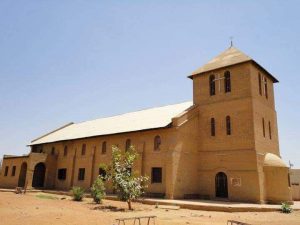
Have you ever wondered if Sudan connects to the ancient stories in the Bible? You may be surprised to learn that the land we call home today has deep ties to both Cush and ancient Egypt—two key regions mentioned in Scripture. Knowing that your country’s history is woven into the Bible can give you a new perspective on your identity and your faith. Let’s explore how Sudan’s biblical connections run through both Cush and Egypt, revealing a heritage that’s been part of God’s story for thousands of years.
A Land of Ancient Power
Upper Egypt refers to the southern part of Egypt, from just south of modern-day Cairo. Ancient Egypt’s southern border shifted during the course of history. South of Egypt we enter the land of Cush, which the Bible associates with modern-day Sudan. The Bible recognizes both Egypt and Cush as powerful regions, and in ancient times, these areas were closely connected through trade, cultural exchange, and even shared rulers.
During certain periods of history, Cushite kings even ruled Egypt, and this blending of cultures has left a lasting impact on both regions. One of the most significant moments in the Bible where this connection is highlighted is through the story of King Tirhakah, a Cushite who ruled Egypt and played a crucial role in the politics of the ancient Near East (Isaiah 37:8-20).
Believers from Cush
One of the most inspiring passages for Sudanese readers is Zephaniah 3:10, where God speaks about a time when His worshipers will come from the land of Cush and beyond.
Zephaniah 3:10 From beyond the rivers of Cush my worshipers, the daughter of my dispersed ones, shall bring my offering.
This shows that the people of Cush, including those from modern-day Sudan, have a special role in God’s plan. The Bible acknowledges the importance of Sudan’s people in worshipping God, and this prophetic vision highlights the fact that Sudan is part of God’s plan for his kingdom.
In this passage, Sudan is more than just a geographical reference—it is a place from where worship and offerings will be brought to God.
A man of faith
The Bible also highlights individuals from the Cush region who had strong faith. One of the most striking stories is that of the Ethiopian eunuch in Acts 8:27-39, who was an important official in the court of Candace (queen) of the Ethiopians. This eunuch was returning from Jerusalem where he had gone to worship, and he was reading from the prophet Isaiah when he met Philip the Evangelist. Philip explained the Scriptures to him, and the eunuch chose to be baptised right away.
Although the passage mentions an Ethiopian, the Greek word may refer to a black man. Cush also means black. Candace may come from the Nubian word for queen. Scholars have different theories on the location of Candace’s country in the region of Sudan and Ethiopia.
This story reminds us that Sudan has a long history of connection to the worship of God. Just as the eunuch eagerly sought to know more about God, Sudanese people today can seek God in the Bible and be inspired to take bold steps in their faith journey.
What Can You Take Away from This?
Sudan’s connection to both ancient Egypt and Cush in the Bible is a reminder of the enduring role your homeland has played in God’s plan. From the powerful kings of Cush who ruled Egypt to the prophetic vision of worshipers coming from beyond the rivers of Cush, the Bible reveals that Sudan’s story is part of God’s greater story.
You are part of a heritage that stretches back to the earliest times recorded in the Bible. The first mention of Cush is already in the description of Eden in Genesis 2:13.
Your land is mentioned in prophecies, historical accounts, and stories of faith. Sudan’s rulers, like Tirhakah, showed strength in times of crisis. Worshipers from Sudan are described as vital in the kingdom of God’s people. And individuals like Candace’s eunuch demonstrated how a personal encounter with the Bible can change your life.
The Bible’s connection to Sudan is not just about the past—it’s about your present and future. God has always had a plan for the people of Sudan, and that plan includes you today.
In Conclusion
Sudan’s biblical heritage through both Egypt and Cush shows that your homeland has always been important in God’s story. From kings and warriors to worshipers and seekers, Sudanese people have played vital roles in the events of the Bible. Sudan is part of a rich Biblical history.
As you explore these biblical passages, let them inspire you to dive deeper into God’s Word. Like Candace’s eunuch, don’t be afraid to ask questions, seek answers, and let the Bible transform your life. Your story is part of God’s story, and the Bible is waiting for you to discover it.

Acts 2:1-4, 38-41 When the day of Pentecost arrived, they were all together in one place. And suddenly there came from heaven a sound like a mighty rushing wind, and it filled the entire house where they were sitting. And divided tongues as of fire appeared to them and rested on each one of them. And they were all filled with the Holy Spirit and began to speak in other tongues as the Spirit gave them utterance. … And Peter said to them, “Repent and be baptized every one of you in the name of Jesus Christ for the forgiveness of your sins, and you will receive the gift of the Holy Spirit. For the promise is for you and for your children and for all who are far off, everyone whom the Lord our God calls to himself.” And with many other words he bore witness and continued to exhort them, saying, “Save yourselves from this crooked generation.” So those who received his word were baptized, and there were added that day about three thousand souls.
When we allow the Holy Spirit to work through us, we can impact others in ways we couldn’t imagine on our own. God opened the minds of Peter and the other apostles to understand the Scriptures. Led by the Holy Spirit, he preached and 3,000 people were baptised in one day.
Question: How can you allow the Holy Spirit to guide you in your daily life?
God Speaks My Language: How Faith Connects Across Every Tongue and Culture
Ever wonder if God really understands you? He does and He speaks your language. From the words you know to the heart you feel, God meets you where you are, guiding, comforting, and connecting across every culture and every tongue.
Hearing God Without Words: Lessons From Scripture and the Deaf Community
God does not only speak through sound, He speaks through creation, actions, silence, and signs. His voice reaches every heart, including the Deaf community, proving that His Word is not bound to speech alone but revealed in every language of love.
Ever wonder if God really understands you? He does and He speaks your language. From the words you know to the heart you feel, God meets you where you are, guiding, comforting, and connecting across every culture and every tongue.
God does not only speak through sound, He speaks through creation, actions, silence, and signs. His voice reaches every heart, including the Deaf community, proving that His Word is not bound to speech alone but revealed in every language of love.
7 Powerful Ways the Holy Spirit Empowers Believers Today
The Holy Spirit is not just an abstract concept or a mystical force; He is a personal and powerful presence in the life of every believer. Understanding His role and allowing Him to actively work in our lives is essential for spiritual growth and victorious Christian living
The Holy Spirit is not just an abstract concept or a mystical force; He is a personal and powerful presence in the life of every believer. Understanding His role and allowing Him to actively work in our lives is essential for spiritual growth and victorious Christian living
Peter: Filled with the Holy Spirit at Pentecost
When we allow the Holy Spirit to work through us, we can impact others in ways we couldn’t imagine on our own. God opened the minds of Peter and the other apostles to understand the Scriptures. Led by the Holy Spirit, he preached and 3,000 people were baptised in one day.
When we allow the Holy Spirit to work through us, we can impact others in ways we couldn’t imagine on our own. God opened the minds of Peter and the other apostles to understand the Scriptures. Led by the Holy Spirit, he preached and 3,000 people were baptised in one day.
7 Eye-Opening Faith Lessons from the Early Church That Still Apply Today
Today’s younger generation care deeply about justice and truth. But real boldness comes when we speak God’s truth with love not for likes, but for lives.You were never meant to just attend church. You were meant to be the Church — fiery, fearless, and full of purpose.
Today’s younger generation care deeply about justice and truth. But real boldness comes when we speak God’s truth with love not for likes, but for lives.You were never meant to just attend church. You were meant to be the Church — fiery, fearless, and full of purpose.