

Not everyone will understand your boundaries, but Scripture shows you can stand firm with kindness. These seven NIV Bible verses teach you to speak truth in love, say a respectful no, pause before reacting, pursue peace, resist people pleasing, guard your heart and choose gentle words without guilt or harshness.
Have you ever said no to someone, only to be called selfish? Maybe you declined a favour, stepped back from a draining friendship or turned down another church commitment.
Suddenly, you’re questioning yourself. Am I wrong for protecting my peace?
Not everyone will understand your boundaries. But you can stand firm in your decisions while treating others with love and respect. Here’s what the Bible says.
1. Speak the Truth in Love
Ephesians 4:15 (NIV)
“Instead, speaking the truth in love…”
Being honest doesn’t mean being harsh. If someone’s behaviour hurts you, explain how you feel without attacking them.
Try this: “I value our friendship, but I need you to respect my decision.”
2. You Don’t Have to Explain Everything
Matthew 5:37 (NIV)
“All you need to say is simply ‘Yes’ or ‘No’…”
You decline an invitation, and suddenly you’re defending your decision. Remember, a respectful no is enough. You don’t need everyone’s approval to make a reasonable choice.
Try this: “Thank you for inviting me, but I won’t be able to make it.”
3. Pause Before You React
James 1:19 (NIV)
“Everyone should be quick to listen, slow to speak and slow to become angry.”
When someone calls you selfish, it’s tempting to fire back. Take a breath, listen and respond calmly. You can stand your ground without turning the conversation into an argument.
4. You Can Disagree and Still Pursue Peace
Romans 12:18 (NIV)
“If it is possible, as far as it depends on you, live at peace with everyone.”
You can communicate respectfully, but you cannot control how others respond. Do your part to make peace without abandoning your values or accepting mistreatment.
5. Stop Living for Everyone’s Approval
Galatians 1:10 (NIV)
“Am I now trying to win the approval of human beings, or of God?”
Afraid your friends will exclude you or your family will misunderstand you? It’s impossible to please everyone. Make wise, faith-centred decisions instead of letting guilt control you.
6. Protect Your Heart
Proverbs 4:23 (NIV)
“Above all else, guard your heart, for everything you do flows from it.”
If someone repeatedly ignores your boundaries, pay attention. You can forgive them while taking time to rebuild trust or creating some distance. Love doesn’t require you to accept repeated disrespect.
7. Choose Your Words Carefully
Proverbs 15:1 (NIV)
“A gentle answer turns away wrath, but a harsh word stirs up anger.”
When someone says, “You’ve changed!” you don’t have to respond with anger. Explain your decision calmly. Being gentle doesn’t mean giving in; it means standing firm without deliberately hurting others.
You Can Be Kind and Still Say No
Not everyone will agree with your boundaries, and that’s okay. Focus on communicating honestly, acting with love and remaining open to correction.
You can forgive without immediately restoring trust. You can say no without being disrespectful. And you can pursue peace without pretending everything is okay.
Reflection: Is there a difficult conversation you’ve been avoiding? How can you approach it with both courage and kindness?
Ask God for wisdom, choose your words carefully and remember: standing firm doesn’t mean you have to stop loving people.

A champion is made long before kick-off. Drawing on a footballer’s preparation, this World Cup devotional teaches the seven foundations of following Christ, from training in godliness to feeding daily on God’s Word. One short lesson a day for the tournament’s opening week.
1. Nobody Lifts the Trophy by Accident
The world sees only the ninety minutes on the pitch, never the thousands of hours that made them possible. Faith is the same, built in the quiet habits of prayer, Scripture, and obedience when no one is watching.
1 Timothy 4:7 “Train yourself to be godly.”
Start this World Cup season by training your soul, not only watching the game.
2. Every Team Has a Coach
Even the most gifted players need a coach to see what they cannot, to correct mistakes and prepare them for what lies ahead. God leads us in the same way, through His Word, His Spirit, and the wisdom of faithful mentors.
Proverbs 3:5 “Trust in the Lord with all your heart and lean not on your own understanding.”
Today, surrender your own game plan and let God call the play.
3. Know the Rules of the Game
No matter how gifted a player is, ignoring the rules costs the match, because the game rewards those who play it right. The Christian life has a rulebook too, and God’s Word is not a cage but the path to a lasting victory.
2 Timothy 2:5 “Anyone who competes as an athlete does not receive the victor’s crown except by competing according to the rules.”
Open the Word today and learn the rules that lead to the prize.
4. Red Cards Have Consequences
One reckless moment can change an entire match, as a flash of anger, pride, or carelessness can cost the whole team. Sin carries the same weight, for God forgives freely, yet our choices still leave their mark.
Numbers 32:23 “You may be sure that your sin will find you out.”
Guard your steps today, because self-control protects far more than just you.
5. Warm Up in the Quiet Hours
No player walks onto the pitch cold, for the match is shaped in the warm-up, long before the whistle. Jesus Himself rose early to pray, preparing in the quiet before the demands of the day.
Mark 1:35 “Very early in the morning, while it was still dark, Jesus got up, left the house and went off to a solitary place, where he prayed.”
Begin tomorrow on your knees before you begin it on your feet.
6. Wear the Right Kit
No team takes the field without its kit, where every piece has a purpose and playing without it invites injury. God gives believers spiritual armour for the battles each day brings.
Ephesians 6:11 “Put on the full armor of God, so that you can take your stand against the devil’s schemes.”
Dress for the day’s spiritual match before you step into it.
7. Feed on the Right Fuel
An athlete who eats poorly fades in the second half, because the body runs on what it is fed. The soul is no different, sustained not by bread alone but by the Word of God.
Matthew 4:4 “Man shall not live on bread alone, but on every word that comes from the mouth of God.”
This Sunday, feed your spirit as carefully as a champion feeds their body.
Conclusion
Champions are built long before the trophy is lifted, and so is a lasting faith. This week we trained, learned the rules, prayed, dressed for the day, and fed on God’s Word. With the foundation laid, we are ready for whatever the tournament brings.
Consistent training, discipline, and preparation long before match day. In the Christian life, this means developing daily habits of prayer, Scripture reading, and obedience.
1 Timothy 4:7 – “Train yourself to be godly.”
A coach provides guidance, correction, and direction. Likewise, God guides us through His Word, His Spirit, and godly mentors.
To trust God completely and not rely solely on our own understanding.
To stand firm against temptation and the enemy’s schemes.
The Word of God, which strengthens and sustains spiritual life.
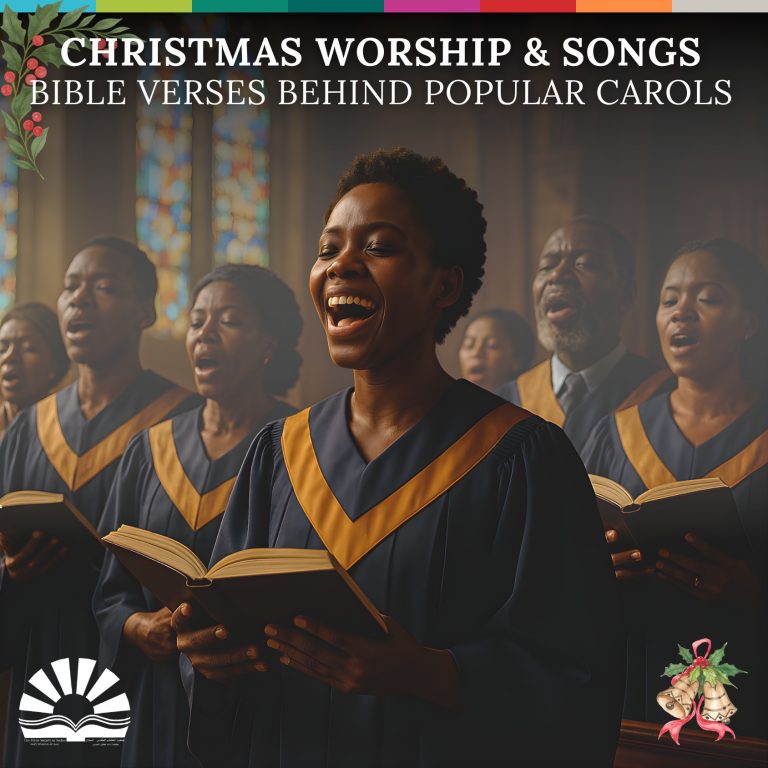
Christmas is more than decorations, gifts, or gatherings, it’s a season filled with worship, joy, and songs that carry deep biblical meaning. Whether it’s a choir singing in church or young people remixing Christmas tunes on TikTok, music remains one of the most powerful ways to celebrate Christ’s birth.
This year, the Bible Society invites youths, families, and worship teams to rediscover the Bible verses that inspired some of the world’s most loved Christmas songs. These songs are more than melodies, they are Scripture woven into rhythms that still move generations.
Below are seven Christmas worship moments to reflect on, sing along to, and share.
1. “Joy to the World” – Inspired by Psalm 98:4 (NIV)
“Shout for joy to the Lord, all the earth, burst into jubilant song with music.”
This song isn’t just a festive anthem, it’s a declaration that the King has come. Young people love its upbeat tone, and many modern remixes keep it fresh and exciting.
2. “O Holy Night” – Inspired by Luke 2:11 (NIV)
“Today in the town of David a Saviour has been born to you; he is the Messiah, the Lord.”
“O Holy Night” captures the awe of Christ’s arrival. Whether sung in church or as a slow acoustic cover, it reminds us that Jesus came to bring hope to a weary world.
3. “Hark! The Herald Angels Sing” – Inspired by Luke 2:13–14 (NIV)
“Suddenly a great company of the heavenly host appeared… ‘Glory to God in the highest heaven, and on earth peace…’”
This carol celebrates the angelic announcement. Many youth choirs give it a lively twist, making it a favourite for Christmas services.
4. “O Come, All Ye Faithful” – Inspired by Matthew 2:11 (NIV)
“On coming to the house, they saw the child with his mother Mary, and they bowed down and worshiped him.”
This song invites all believers, young and old, to worship Christ with gladness. Its message of unity is timeless.
5. “Silent Night” – Inspired by Luke 2:16 (NIV)
“So they hurried off and found Mary and Joseph, and the baby, who was lying in the manger.”
This peaceful carol creates space for stillness in a busy season. Many young creators use it as background music for reflections, Bible verses, or Christmas testimonies.
6. “Angels We Have Heard on High” – Inspired by Luke 2:20 (NIV)
“The shepherds returned, glorifying and praising God for all the things they had heard and seen…”
The song’s joyful “Gloria!” captures the excitement of the shepherds. It’s perfect for youth choirs, dance challenges, and Christmas worship nights.
7. “The First Christmas Song” – Mary’s Song (Magnificat) – Luke 1:46–47 (NIV)
“My soul glorifies the Lord and my spirit rejoices in God my Saviour.”
Long before modern carols, Mary lifted her voice in praise. Her song is the first Christmas worship response, a beautiful reminder that worship begins in the heart.
Why Christmas Worship Matters Today
Music has always been a bridge between generations. Whether sung traditionally or remixed into a fresh and youthful style, Christmas songs remind us of the true message of the season: Jesus came to bring joy, peace, and salvation.
This month, we encourage you to:
Sing your favourite Christmas carol
Read the Bible verse behind it
Reflect on what Christ’s birth means for you today
Share your own Christmas worship moments online
Let’s fill December with voices declaring hope.

Empires have fallen. Generations have passed. Critics have risen and faded, yet the Bible endures.
It has been burned, banned, mocked, and misunderstood, but never defeated.
Why? Because the Word of God is alive, eternal, unbreakable, and unstoppable.
Here are seven Scriptures that reveal why the Bible continues to live on, changing hearts and shaping history.
1. Isaiah 40:8
“The grass withers, the flower fades, but the Word of our God will stand forever.”
Every kingdom that once stood in pride has fallen to dust, but the Word remains.
While human voices fade, God’s voice echoes through the ages, steady, sure, and eternal.
No time, trend, or technology can erase the truth He has spoken.
2. Matthew 24:35
“Heaven and earth will pass away, but my words will never pass away.”
Even as the world changes, languages evolve, cities crumble, and cultures shift, Jesus’ words remain timeless.
His promises still comfort the broken. His truth still challenges the proud.
His voice still calls hearts to life, generation after generation.
3. Hebrews 4:12
“For the Word of God is alive and active. Sharper than any double-edged sword…”
Unlike any other book, the Bible breathes.
It confronts, heals, and cuts deep to the heart.
That’s why it cannot die, because it’s living power, not lifeless ink.
Every time someone opens it, God speaks again.
4. Psalm 119:89
“Your word, Lord, is eternal; it stands firm in the heavens.”
Long before printing presses, before scrolls and screens, God’s Word was already established, eternal in heaven.
Its authority doesn’t depend on who believes it or prints it.
The Bible stands firm because it’s built on the very character of God Himself, unchanging and true.
5. 2 Timothy 3:16-17
“All Scripture is God-breathed and is useful for teaching, rebuking, correcting and training in righteousness…”
The Bible endures because it carries God’s breath, the same breath that gave life to humanity.
It teaches us, shapes us, and equips us to live with purpose.
Every verse is proof that God still speaks today.
6. 1 Peter 1:23
“For you have been born again, not of perishable seed, but of imperishable, through the living and enduring word of God.”
The Word not only survives, it multiplies.
Each person changed by Scripture becomes a living testimony of its power.
Persecution can’t destroy it; it only spreads it further.
Every Bible printed, every verse remembered, keeps the message alive.
7. John 1:1,14
“In the beginning was the Word, and the Word was with God, and the Word was God… The Word became flesh and made his dwelling among us.”
Ultimately, the Bible endures because the Word is Jesus Himself.
He is living proof that God’s message cannot be silenced.
Crucified, yet risen. Rejected, yet reigning.
The Word lives on because the Living Word still reigns.
Final Reflection
No fire can burn it out.
No empire can crush it.
No century can age it.
Because the Bible is more than a book, it is the breath of God written for humanity.
Truly, it is the Book that refuses to die.

The Bible isn’t just an old book on a shelf. It’s God’s message to you, a guide for the challenges of school, friendships, social media, and life in general. Owning a Bible means having wisdom, hope, and direction right at your fingertips.
Here are seven scriptures that show why having the Bible is life-changing, even for today’s youth.
1. Psalm 119:105 – “Thy word is a lamp to my feet and a light to my path.”
Life can feel like walking in the dark, decisions about friends, exams, or even your future can be confusing. The Bible lights the way, helping you choose what’s right and avoid pitfalls. Think of it as your personal GPS from God.
2. 2 Timothy 3:16-17 – “All scripture is inspired by God and profitable for teaching, for reproof, for correction, and for training in righteousness; that the man of God may be complete, equipped for every good work.”
The Bible is like a life hack book from God. It teaches, corrects, and prepares you for every challenge, whether it’s staying honest online, helping a friend, or making decisions about your career.
3. Hebrews 4:12 – “For the word of God is living and active, sharper than any two-edged sword, piercing to the division of soul and spirit, of joints and marrow, and discerning the thoughts and intentions of the heart.”
The Bible can speak directly into your heart. Feeling anxious, frustrated, or lost? The Word exposes the real issues and points you toward peace and clarity, like a spiritual filter for life.
4. Joshua 1:8 – “This book of the law shall not depart from your mouth; you shall meditate on it day and night, so that you may be careful to do according to all that is written in it; for then you will make your way prosperous, and then you will have good success.”
Success isn’t just about grades or followers. Meditating on God’s Word daily helps you develop focus, discipline, and wisdom, the kind of success that lasts.
5. Psalm 19:7 – “The law of the Lord is perfect, reviving the soul; the testimony of the Lord is sure, making wise the simple.”
Feeling drained after a long day at school or work? Reading the Bible refreshes your spirit. It gives energy, hope, and clarity, better than scrolling endlessly on social media.
6. Proverbs 30:5 – “Every word of God proves true; he is a shield to those who take refuge in him.”
In a world full of fake news, peer pressure, and uncertainty, the Bible is your ultimate source of truth. Having it nearby is like having a shield that protects you from lies and bad influences.
7. Matthew 4:4 – “Man does not live by bread alone, but by every word that comes from the mouth of God.”
You feed your body every day, but your soul needs feeding too. The Bible gives spiritual energy, confidence, peace, and joy, so you can face life with strength and purpose.
Conclusion:
Today, the Bible isn’t just a book, it’s a tool, a mentor, and a lifeline. Owning it empowers you to make wise choices, stay grounded, and live a life full of hope.
This Bible Month, let’s make it our mission to ensure every young person has access to God’s Word because having the Bible in your hands changes everything.
Over two centuries ago, a young girl named Mary Jones walked 26 miles across the hills of Wales just to buy a Bible in her own language. She saved money for six years, driven by a deep hunger to read God’s Word for herself. Her passion sparked a movement that led to the founding of Bible Societies around the world.
Today, the Bible is within reach on our shelves, our phones, and in our schools, yet many young people have lost that same hunger. The challenge of our time is to pass on the love for Scripture to a new generation so that they too may experience the transforming power of God’s Word.
1. Psalm 78:4
“We will tell the next generation the praiseworthy deeds of the Lord, his power, and the wonders he has done.”
Every generation has a story to tell about God’s faithfulness. Like the Israelites, we are called to share testimonies that keep faith alive in our families and communities. Passing on the Bible is more than sharing a book, it’s sharing the story of a faithful God.
2. Deuteronomy 6:6–7
“These commandments that I give you today are to be on your hearts. Impress them on your children.”
Faith grows stronger when it is talked about daily. Parents, teachers, and church leaders play a key role in nurturing the love for Scripture in the young. The Word must be spoken, lived, and modeled before their eyes.
3. 2 Timothy 3:15
“From infancy you have known the Holy Scriptures, which are able to make you wise for salvation through faith in Christ Jesus.”
Paul reminds Timothy that the Scriptures he learned as a child shaped his wisdom and faith. In the same way, young hearts today need to be rooted in the Bible early. The earlier we plant the seed of the Word, the deeper the faith will grow.
4. Joshua 1:8
“Keep this Book of the Law always on your lips; meditate on it day and night.”
Mary Jones didn’t just want a Bible, she wanted to know it. Her story challenges today’s generation to go beyond possession to meditation. The true value of Scripture lies not in owning it, but in letting it guide our daily lives.
5. Psalm 119:105
“Your word is a lamp to my feet and a light to my path.”
Young people face a world full of distractions and uncertainties. God’s Word remains the sure light that brings direction, purpose, and comfort. When they learn to walk by the light of Scripture, they will never lose their way.
6. Isaiah 40:8
“The grass withers and the flowers fall, but the word of our God endures forever.”
Trends change, technology evolves, and cultures shift, but the Word of God stands unshaken. It remains relevant and powerful for every generation, offering truth that never fades.
7. Matthew 24:35
“Heaven and earth will pass away, but my words will never pass away.”
God’s Word transcends time, language, and culture. From Mary Jones’s long walk in Wales to today’s translation efforts in Africa and beyond, Scripture continues to speak with the same authority and grace. Our mission is to ensure that each generation hears it in their own language and heart.
Conclusion
Mary Jones’s story reminds us that the Bible is a treasure worth seeking, worth walking miles for. As we celebrate her legacy, let us renew our commitment to share this treasure with today’s youth. Let every generation rise with a renewed hunger for the Word of God, carrying its light into the future.


When we think of world-changing figures, we often imagine adults with power, wealth, or fame. But sometimes, all it takes is a teenager with faith, determination, and courage. Mary Jones, a 15-year-old girl from Wales in the late 1700s, is a perfect example.
Mary was not rich. She had no influence. Yet her heart burned with a desire that would leave a lasting mark on history: she wanted her own Bible in her own language. Bibles were rare, expensive, and hard to come by in her village. But Mary’s story teaches us that age is no barrier when God is in the equation.
“Let no one despise your youth, but set the believers an example in speech, in conduct, in love, in faith, in purity.” – 1 Timothy 4:12
From the age of 10, Mary began saving every penny she could earn. For six long years, she collected coins, carefully storing them until she finally had enough. Her hunger for God’s Word was relentless, a hunger that Scripture promises will be satisfied:
“Blessed are those who hunger and thirst for righteousness, for they shall be satisfied.” – Matthew 5:6
At 15, she set off on a journey that would test her faith and determination. The nearest place to buy a Bible was 25 miles away in Bala. With no shoes and only the money she had saved, Mary walked over rivers, hills, and rocky paths because she believed God’s Word was worth the effort.
“I can do all things through him who strengthens me.” – Philippians 4:13
When she finally arrived, she was met with disappointment: all the Bibles were already promised to others. Many would have turned back. But not Mary. She persisted, trusting that God’s plan was greater than her moment of despair:
“But those who wait for the Lord shall renew their strength; they shall mount up with wings like eagles; they shall run and not be weary; they shall walk and not faint.” – Isaiah 40:31
Seeing her determination and tears, Reverend Thomas Charles gave Mary one of the remaining Bibles. That moment marked the fulfillment of her dream and the beginning of something much bigger.
“Commit your work to the Lord, and your plans will be established.” – Proverbs 16:3
Mary’s story didn’t stop with a single Bible in her hands. Her passion inspired the founding of the British and Foreign Bible Society, which went on to distribute Bibles worldwide. One teenager’s faith had sparked a global movement.
“For nothing will be impossible with God.” – Luke 1:37
Mary Jones reminds us that age is no limit to impact. Her courage, determination, and love for God’s Word continue to challenge young people today. Each of us has a “25-mile walk” to make for God, whether it’s sharing His Word, helping someone in need, or living out faith courageously.
“Do not be slothful in zeal, be fervent in spirit, serve the Lord.” – Romans 12:11
The question is: what will you do with your passion, your faith, and your courage?
Theme verse: “We hear them declaring the wonders of God in our own tongues!” – Acts 2:11
Picture this: you’re at a massive global festival — music blasting, people in colorful outfits, food stalls with smells from every country. You hear bits of conversation all around you — French, Korean, Shona, Spanish — but none of it really lands with you because it’s not your language. Then suddenly, over the noise, you hear someone speaking your exact dialect — telling a story that feels like it was written for you. Instantly, you feel seen, understood, and connected.
That’s what happened on the Day of Pentecost in Acts 2. The Holy Spirit didn’t just drop a universal language from the sky, He gave the disciples the ability to speak the heart languages of everyone there. It was the first miraculous translation of the Gospel, and it set the tone for how God’s Word would travel through history: personal, accessible, and in every language under heaven.
Here are 7 Bible verses showing how God values every language — and why translation is still His heartbeat today.
1. Acts 2:4 – “All of them were filled with the Holy Spirit and began to speak in other tongues as the Spirit enabled them.”
This moment wasn’t about showing off supernatural skills; it was about connection. Imagine a livestream where the subtitles instantly appear in every viewer’s language without a glitch. That’s the Pentecost miracle. God could have picked one “holy” language and told the world to learn it, but instead, He said, “I’ll come to you where you are.” He knew that the fastest way to someone’s heart is to speak in words they’ve known since childhood — the ones their grandmother used when telling bedtime stories, the ones they use when they cry or pray.
2. Acts 2:11 – “We hear them declaring the wonders of God in our own tongues!”
The crowd didn’t just hear “religious talk.” They heard the wonders of God — in words they didn’t have to translate in their heads. It’s the difference between watching a movie dubbed in your language versus struggling through with broken subtitles. When the message comes in your mother tongue, it feels like it was crafted for you. That day, God wasn’t just talking to people — He was talking with them, in the very vocabulary that shaped their identity.
3. Revelation 7:9 – *”…from every nation, tribe, people and language, standing before the throne…” *
Heaven will not be a one-language zone. It will be the most diverse, colorful gathering ever — every accent, every rhythm, every dialect praising the same God. Translation work today is like a sneak preview of that day. Every time a new Bible translation is completed, it’s another rehearsal for the heavenly choir, making sure every voice can join in without needing someone else to interpret for them.
4. Genesis 11:9 – “That is why it was called Babel — because there the Lord confused the language of the whole world.”
At Babel, language differences pushed people apart. But at Pentecost, God flipped the script — languages became bridges, not barriers. Translation work continues that miracle. It takes something that could divide us and turns it into a point of connection. If Babel was the scattering, Pentecost — and every Bible translation today — is the gathering.
5. Romans 10:14 – “How can they believe in the one of whom they have not heard?”
You can’t believe a message you’ve never understood. That’s why translation is more than a technical process, it’s a lifeline. It’s like getting urgent news in a language you actually comprehend, instead of in one that leaves you guessing. Faith grows when the Gospel comes to you without a language barrier blocking the way.
6. 1 Corinthians 14:9 – “Unless you speak intelligible words… how will anyone know what you are saying?”
Ever been in a group chat where everyone is using inside jokes or slang you don’t know? You feel left out, even if the conversation is meant to include you. God’s Word is too important to be “lost in translation.” That’s why He makes sure it’s not just available, but understandable, so that no one has to scroll past the greatest message ever told because it feels out of reach.
7. Matthew 28:19–20 – *”Go and make disciples of all nations…” *
“All nations” isn’t just geography ,it’s culture, it’s language, it’s the way people think and express themselves. The Great Commission is, at its core, a Great Translation Mission. Jesus’ final command is an open invitation to take His words into every linguistic space.
Final Challenge
God is not a distant voice speaking in a code you have to crack. He’s the one who speaks your slang, your memes, your mother tongue, your unfiltered prayers. This World Translation Day, remember: God doesn’t wait for you to learn His language, He comes speaking yours. And when you share His Word, you’re joining that same mission, making sure no one misses the message because they couldn’t understand it.
-
The 1927 Gospel of Mark in Sudanese Arabic: A Legacy of Its Time
When we think of Bible translations in Sudan, our minds often go to the many languages of the Nuba Mountains and beyond.Yet, nearly a century ago, a bold and unusual experiment was undertaken in Khartoum and Omdurman—a translation that still speaks to the history of Bible mission work in Sudan. The Gospel of Mark in…
-
From Nubia to Now: The Gospel of Mark and the Lord’s Prayer in Nobiin
When you hear the word Nubia, what comes to mind? For many, it’s the golden sands along the Nile, the echoes of pyramids and temples, or the proud heritage of one of Africa’s earliest civilisations. But Nubia is also a land where the Bible has deep roots, stretching back in history. Today, in the middle…
-
From Eden to the Nuba Mountains: The Heiban New Testament
When you open a Bible in the Heiban language, you’re not just holding a translation—you’re stepping into a story that begins at the very dawn of the Scriptures. From Cush to the Nuba Mountains The Bible first mentions the land of Cush in Genesis 2:13, when the river Gihon is said to flow out from…
-
God Speaks My Language: How Faith Connects Across Every Tongue and Culture
Theme verse: “We hear them declaring the wonders of God in our own tongues!” – Acts 2:11 Picture this: you’re at a massive global festival — music blasting, people in colorful outfits, food stalls with smells from every country. You hear bits of conversation all around you — French, Korean, Shona, Spanish — but none…
Theme verse: “Do not merely listen to the word… Do what it says.” – James 1:22
We live in an age where we read a lot — from TikTok captions and Instagram stories to class notes and text messages. But here’s the catch: reading isn’t just about understanding the words on a screen or page — it’s about what those words do in you and through you.
The Bible isn’t meant to be just read like a novel you close and put away. It’s God’s living Word — meant to shape your choices, your relationships, and your future.
Here are 7 Bible verses that show what it means to Read It, Live It.
1. James 1:22 – “Do not merely listen to the word, and so deceive yourselves. Do what it says.”
It’s like watching a hundred “how to work out” videos but never actually exercising. The results don’t come from watching — they come from doing. The Bible works the same way. Reading God’s Word without applying it is like reading a recipe and never cooking the meal. When you actually live what you read — forgiving someone, helping a friend, refusing gossip — that’s when change happens.
2. Matthew 7:24 – “Everyone who hears these words of mine and puts them into practice is like a wise man who built his house on the rock.”
Think of building your life like setting up a phone with strong security — you want something that lasts, not something that collapses at the first hack or crash. Jesus says when you do His Word, you’re building on a foundation that won’t fail when storms hit — breakups, stress, exams, or disappointments.
3. Psalm 119:105 – “Your word is a lamp to my feet and a light to my path.”
Walking in the dark without your phone’s flashlight? Risky. You might trip or get lost. God’s Word lights up your life decisions — it’s your navigation system when you don’t know which direction to go. But the light only helps if you follow it, not if you just admire how bright it is.
4. Joshua 1:8 – “Keep this Book of the Law always on your lips; meditate on it day and night, so that you may be careful to do everything written in it.”
Ever had a song stuck in your head all day? That’s what meditating on Scripture is like — keeping it so close in your mind and heart that it naturally comes out in your words and actions. Joshua’s success came from not just knowing God’s Word but letting it shape every decision.
5. Luke 11:28 – “Blessed rather are those who hear the word of God and obey it.”
We all want to be “blessed” — a happy life, peace, purpose. Jesus flips the idea: blessing comes not from luck, but from obedience. It’s not just what you know from the Bible, but what you do with it, that leads to a life that feels full.
6. Colossians 3:16 – “Let the message of Christ dwell among you richly as you teach and admonish one another with all wisdom…”
Imagine having a playlist so good you can’t help but share it. When God’s Word “dwells” in you, it naturally spills out into conversations, advice to friends, encouragement to someone going through a rough time. You’re not just a reader — you’re a living speaker of hope.
7. John 13:17 – “Now that you know these things, you will be blessed if you do them.”
Knowing and doing are two different games. You can know all the Bible verses about love and still treat people badly. Jesus says blessing comes when you actually live out what you know — when your faith is visible in your kindness, patience, honesty, and courage.
Final Challenge
The Bible is more than a historical text or a spiritual checklist. It’s like your life’s power bank — but it only charges you if you connect and use it. This World Literacy Day, don’t just read God’s Word to tick a box. Read it, live it, and watch it change you — and the world around you.

A Fresh Look for a Generation Seeking Real Faith
You’ve probably seen the list on a church wall, a t-shirt, or a Pinterest post:
Love. Joy. Peace. Patience. Kindness. Goodness. Faithfulness. Gentleness. Self-Control.
That’s the fruit of the Spirit (Galatians 5:22–23).
But here’s the thing: these aren’t just “nice Christian traits” you try to copy. They’re evidence that something supernatural is growing inside you, something the Holy Spirit is actively forming. Let’s break them down one by one in a way that speaks to real life.
1. LOVE
“Dear children, let us not love with words or speech but with actions and in truth.” – 1 John 3:18
We live in a world where love is often performative. It’s in captions and emojis, but not always in action. The Holy Spirit teaches us to love people even when they’re difficult, unlovable, or don’t benefit us.
Real love:
- Listens before speaking
- Forgives even when it hurts
- Stays when it’s easier to walk away
2. JOY
“Though you have not seen him, you love him… you are filled with an inexpressible and glorious joy.” – 1 Peter 1:8
Joy is different from happiness. It’s not tied to a vibe, a relationship, or a goal. Joy is deep and steady.
You can be battling anxiety and still carry joy. You can be broke and still feel joy. Why? Because joy is rooted in who God is, not what life looks like.
3. PEACE
“You will keep in perfect peace those whose minds are steadfast, because they trust in you.” – Isaiah 26:3
Peace isn’t passive. It’s fierce trust in the middle of chaos.
For young people constantly hit with bad news, mental pressure, and overthinking, peace feels rare. But the Holy Spirit anchors us when the world spins. Peace shows up in how we handle pressure, stay grounded in prayer, and choose surrender over control.
4. PATIENCE
“Be completely humble and gentle; be patient, bearing with one another in love.” – Ephesians 4:2
We’re an instant generation, streaming, deliveries, dating apps. We’re wired for now.
But spiritual maturity grows in the slow seasons. Patience is learning to:
- Wait without whining
- Love people who don’t “get it” yet
- Trust God’s timeline, not your own
It’s not natural, but it’s powerful and deeply needed in a culture obsessed with speed.
5. KINDNESS
“God’s kindness is intended to lead you to repentance.” – Romans 2:4
Kindness isn’t just random acts. It’s intentional compassion.
It’s DM-ing someone just to check in.
It’s being gentle when you have every reason to be cold.
It’s choosing not to clap back even when you could go viral.
Kindness is powerful because it reflects the kindness God showed us.
6. GOODNESS
“Do not be overcome by evil, but overcome evil with good.” – Romans 12:21
Goodness is about integrity when no one’s watching.
It’s not about being a “good person”, it’s about choosing what’s right, even when it costs you.
It’s:
- Being honest when you could cut corners
- Calling out injustice, even if it’s unpopular
- Living with purity in a world that celebrates compromise
7. FAITHFULNESS
“His master replied, ‘Well done, good and faithful servant!’” – Matthew 25:21
This one’s about showing up in relationships, in responsibilities, and in your walk with God.
Faithfulness says:
- “I’ll keep praying, even when I feel nothing.”
- “I’ll show up for my friends when it’s not convenient.”
- “I’ll follow through on what I said.”
In a culture that glorifies jumping ship, faithfulness is countercultural—and deeply beautiful.
8. GENTLENESS
“Let your gentleness be evident to all.” – Philippians 4:5
Gentleness isn’t weakness. It’s controlled strength.
In a world where loud = power, the Spirit teaches us a quieter strength.
Gentleness shows up when:
- You disagree without disrespecting
- You lead without dominating
- You correct without crushing
Jesus was gentle with the broken and we’re called to be like Him.
9. SELF-CONTROL
“Like a city whose walls are broken through is a person who lacks self-control.” – Proverbs 25:28
Without self-control, everything else crumbles.
It’s the Spirit saying:
- “Don’t send that text.”
- “Pause before you scroll.”
- “Say no when you know it’s not worth it.”
This fruit guards your peace, protects your witness, and empowers you to make decisions that align with your purpose not your impulse.
Final Thoughts: Fruit Takes Time
You don’t become a walking, talking Fruit Basket overnight.
But if you stay rooted in Jesus, the Holy Spirit will grow this fruit in you gradually, powerfully, and authentically.
You might not see it every day. But others will.
And in a world craving something real, the Spirit’s fruit is the loudest quiet message you’ll ever carry.
Ask Yourself:
- Which fruit comes easiest for me?
- Which one is God stretching in me right now?
- How can I lean into the Spirit more today?
Next Step:
If you’re serious about growth, start a “Fruit Check” journal every week, reflect on one fruit and ask:
“How did I live this out or not this week?”
Spiritual growth isn’t about perfection. It’s about progress. And you don’t walk it alone, the Spirit walks with you.
Easter is a time of deep reflection and celebration. It reminds us of Jesus’ sacrifice and the incredible gift of salvation we have through His death and resurrection. The cross is more than a symbol—it is the turning point of history, where love overcame sin and life triumphed over death. Let’s explore seven key Bible verses that reveal the power and meaning of the cross.
1. The Cross Shows God’s Love
“But God has shown us how much he loves us—it was while we were still sinners that Christ died for us!” – Romans 5:8 (GNT)
The cross is the greatest proof of God’s love. Jesus didn’t wait for us to be perfect; He gave His life while we were still lost in sin. His love is unconditional, reaching out to everyone, no matter their past.
2. The Cross Brings Forgiveness
“He canceled the unfavorable record of our debts with its binding rules and did away with it completely by nailing it to the cross.” – Colossians 2:14 (GNT)
Because of Jesus, our sins are wiped clean. The cross is where our burdens are lifted, where guilt is removed, and where we receive complete forgiveness. No sin is too great for God’s mercy!
3. The Cross Brings Peace
“And God was pleased for him to make peace by sacrificing his blood on the cross, so that all beings in heaven and on earth would be brought back to God.” – Colossians 1:20 (GNT)
Sin separated us from God, but the cross restored our relationship with Him. Through Jesus’ sacrifice, we are no longer enemies of God but His beloved children.
4. The Cross Gives Us New Life
“Anyone who is joined to Christ is a new being; the old is gone, the new has come.” – 2 Corinthians 5:17 (GNT)
The cross is not the end—it is the beginning of new life. Jesus’ death and resurrection open the door for us to be transformed, leaving behind our past and stepping into a new identity in Christ.
5. The Cross Gives Us Victory
“And on the cross Christ freed himself from the power of the spiritual rulers and authorities; he made a public spectacle of them by leading them as captives in his victory procession.” – Colossians 2:15 (GNT)
What seemed like a defeat was actually a victory! On the cross, Jesus overcame sin, death, and the powers of darkness. Because of Him, we can walk in freedom, knowing that no force of evil can separate us from God.
6. The Cross is a Call to Follow
“Then Jesus said to his disciples, ‘If any of you want to come with me, you must forget yourself, carry your cross, and follow me.'” – Matthew 16:24 (GNT)
Jesus invites us to take up our cross—not to suffer as He did, but to surrender fully to God’s will. True discipleship means letting go of selfish desires and living a life that honors Him.
7. The Cross Gives Us Eternal Life
“For God loved the world so much that he gave his only Son, so that everyone who believes in him may not die but have eternal life.” – John 3:16 (GNT)
The cross is the bridge to eternal life. Jesus’ sacrifice was not just for this world, but for eternity. Through Him, we have the promise of life that never ends—a life in the presence of God forever.
Conclusion: Embracing the Power of the Cross
As we celebrate Easter, let’s not just remember the cross—let’s live in the power of what Jesus accomplished. The cross brings love, forgiveness, peace, new life, victory, and the hope of eternity.
This Easter, may we draw closer to Christ, embracing the fullness of His sacrifice and the joy of His resurrection. He is risen! Hallelujah!

When you think of a successful businesswoman, what comes to mind? Maybe someone who is independent, hardworking, and respected. Now, imagine someone like that but also deeply committed to God. That’s Lydia, a business-savvy, God-fearing woman who played a major role in the early church.
Lydia wasn’t a preacher or prophetess, yet her faith, generosity, and leadership helped spread the gospel. Her story shows that you don’t have to stand on a stage to make an impact, you can serve God right where you are. Let’s dive into seven powerful lessons from her life!
1. She Made Time for God, Even with a Busy Schedule
Acts 16:13 (KJV) – “And on the sabbath we went out of the city by a riverside, where prayer was wont to be made; and we sat down, and spake unto the women which resorted thither.”
Lydia was a businesswoman who sold purple cloth, a luxury product in her time. She had money, influence, and responsibilities, yet she still made time to seek God. When Paul arrived in Philippi, she was already at a prayer gathering with other women.
In today’s world, it’s easy to say, “I’m too busy for God.” School, work, and life keep us occupied. But Lydia shows us that no matter how full our schedules get, seeking God should always be a priority.
2. She Had an Open Heart for God’s Word
Acts 16:14 (KJV) – “And a certain woman named Lydia, a seller of purple, of the city of Thyatira, which worshipped God, heard us: whose heart the Lord opened, that she attended unto the things which were spoken of Paul.”
Lydia was already a worshipper of God, but when she heard Paul preaching about Jesus, she embraced the gospel fully. She didn’t just listen, she responded.
Many people hear about Jesus but never truly respond. Lydia didn’t just agree with what Paul said—she let God change her heart. Are we open to God speaking to us, or are we too distracted to listen?
3. She Took Immediate Action in Her Faith
Acts 16:15 (KJV) – “And when she was baptized, and her household, she besought us, saying, If ye have judged me to be faithful to the Lord, come into my house, and abide there. And she constrained us.”
Lydia didn’t hesitate. As soon as she understood the truth about Jesus, she took action, she got baptized, and she made sure her whole household did too.
Sometimes, we feel God calling us to take a step, maybe to get baptized, start reading the Bible more, or make a change in our lives. But we hesitate, waiting for the “perfect moment.” Lydia teaches us that when God moves in our hearts, we need to respond quickly.
4. She Used Her Resources for God’s Kingdom
Acts 16:40 (KJV) – “And they went out of the prison, and entered into the house of Lydia: and when they had seen the brethren, they comforted them, and departed.”
Lydia was wealthy, but she didn’t keep her blessings to herself. She opened her home as a meeting place for believers, making it a safe space for the early church to grow.
Many of us want God to bless us with success, but are we willing to use our blessings for Him? Lydia’s generosity helped spread the gospel. How can you use what you have, your time, money, talents, or even your home—to serve others?
5. She Had a Generous Spirit
Proverbs 11:25 (KJV) – “The liberal soul shall be made fat: and he that watereth shall be watered also himself.”
Lydia didn’t hesitate to give, whether it was her home, resources, or hospitality. Her generosity fueled the mission of the early church, proving that faith isn’t just about what we receive but also about what we give.
In a world that tells us to chase wealth for personal gain, Lydia shows that true prosperity comes from a generous heart. Success is great, but helping others along the way is even greater.
6. She Was a Leader in the Faith
Philippians 1:3-5 (KJV) – “I thank my God upon every remembrance of you, always in every prayer of mine for you all making request with joy, for your fellowship in the gospel from the first day until now.”
The church in Philippi, which Lydia helped start, became one of the strongest early Christian communities. Paul later wrote to them, thanking them for their faith and generosity.
Lydia’s faith didn’t just affect her, it built up an entire community of believers. She reminds us that our faith isn’t just for us; it’s meant to impact those around us.
7. She Shows That Faith and Success Can Go Together
Matthew 6:33 (KJV) – “But seek ye first the kingdom of God, and his righteousness; and all these things shall be added unto you.”
Lydia was a successful businesswoman, but she put God first. She didn’t see faith and success as two separate things—she used her success to glorify God.
Many people think they have to choose between faith and success, but Lydia proves you can have both. When you put God first, everything else will fall into place.
Conclusion
Lydia was a real-life boss lady who put God first and made a lasting impact. She proves that you don’t need a pulpit to be a leader in God’s kingdom, you just need a heart that’s willing to serve.
So, how can you be like Lydia this month?
When we think of great love stories in the Bible, Zechariah and Elizabeth often stand in the shadows of more well-known couples like Ruth and Boaz or Jacob and Rachel. Yet, their story is one of deep love, unwavering faith, and patience in the face of life’s greatest trials. This love season, let’s reflect on their journey and what it teaches us about godly love.
1. A Love Built on Righteousness
Zechariah and Elizabeth were not just an ordinary couple. The Bible describes them as righteous, walking blamelessly before God. Their love was founded on their shared devotion to the Lord.
“Both of them were righteous in the sight of God, observing all the Lord’s commands and decrees blamelessly.” – Luke 1:6
Their relationship teaches us that a strong marriage is not just about romance but about walking together in faith and obedience to God.
2. A Marriage Tested by Waiting
For years, Zechariah and Elizabeth longed for a child, but Elizabeth remained barren. Despite the cultural shame and personal pain, their love endured. They didn’t turn against each other or against God. Instead, they continued to serve Him faithfully.
“Hope deferred makes the heart sick, but a longing fulfilled is a tree of life.” – Proverbs 13:12
Their story reminds us that true love stands strong, even in seasons of waiting and disappointment.
3. An Answer to Their Prayers
One day, while serving as a priest in the temple, Zechariah received an angelic visitation. The angel Gabriel announced that Elizabeth would bear a son, John the Baptist, who would prepare the way for the Lord.
“But the angel said to him: ‘Do not be afraid, Zechariah; your prayer has been heard. Your wife Elizabeth will bear you a son, and you are to call him John.’” – Luke 1:13
God’s timing is perfect. When we trust Him, He blesses us in ways beyond our expectations.
4. A Love Strengthened Through Trials
Zechariah initially doubted the angel’s message, and as a result, he was struck mute until the prophecy was fulfilled. Imagine Elizabeth’s role in this period—caring for her husband, encouraging him, and preparing for their long-awaited child.
“Two are better than one, because they have a good return for their labor: If either of them falls down, one can help the other up.” – Ecclesiastes 4:9-10
A strong marriage means supporting each other even when faith wavers.
5. Rejoicing in God’s Blessing
When Elizabeth finally conceived, she rejoiced, knowing that God had lifted her reproach.
“The Lord has done this for me. In these days he has shown his favour and taken away my disgrace among the people.” – Luke 1:25
Their story shows us that God’s blessings come in His perfect time, and when they do, they bring great joy.
6. A Legacy of Faith and Obedience
When their son was born, the community expected them to name him after Zechariah. But in obedience to God’s instruction, they named him John. Zechariah’s speech was restored, and he praised God.
“Immediately his mouth was opened and his tongue set free, and he began to speak, praising God.” – Luke 1:64
Love thrives when it is rooted in obedience to God’s will.
7. The Power of a Love That Glorifies God
Zechariah and Elizabeth’s love story wasn’t just about romance; it was about being part of God’s greater plan. Their faith and endurance led to the birth of John the Baptist, the forerunner of Jesus Christ.
“But seek first his kingdom and his righteousness, and all these things will be given to you as well.” – Matthew 6:33
When couples seek God first, their love becomes a testimony of His faithfulness.
The story of Jesus is the ultimate glow-up, from a newborn in a manger to the Savior of the world. His journey isn’t just inspiring; it’s transformative for everyone who believes. Let’s unpack how Jesus’ humble beginnings and divine mission changed history forever, all rooted in Scripture.
1. A Humble Start
“And she gave birth to her firstborn, a son. She wrapped him in cloths and placed him in a manger, because there was no guest room available for them” (Luke 2:7).
Jesus’ story begins in the most unassuming way imaginable. Born in a small town and placed in a manger because there was no room for His family in the inn, His birth reflected humility and simplicity. The King of Kings arrived without the fanfare one might expect for royalty. Yet, this humble start sets the stage for a life that would redefine greatness, teaching us that our worth isn’t tied to our circumstances but to God’s purpose for our lives.
2. Announced to the Underdogs
“But the angel said to them, ‘Do not be afraid. I bring you good news that will cause great joy for all the people’” (Luke 2:10).
Imagine being a shepherd on a quiet night, and suddenly, the sky lights up with angels announcing the birth of the Savior. The first people to hear about Jesus’ birth weren’t rulers or religious leaders but shepherds, ordinary, overlooked individuals. This choice reflects God’s heart for the marginalized and forgotten. By starting with the underdogs, God showed that His kingdom is for everyone, regardless of status or position.
3. Prophesied to Change the World
“For to us a child is born, to us a son is given, and the government will be on his shoulders. And he will be called Wonderful Counselor, Mighty God, Everlasting Father, Prince of Peace” (Isaiah 9:6).
Centuries before Jesus’ birth, the prophet Isaiah foretold His arrival. This verse captures His divine mission: to bring peace, guidance, and hope to a broken world. Jesus wasn’t just another leader; He was the fulfillment of a promise, the embodiment of God’s love, and the answer to humanity’s deepest needs. His glow-up was written in the stars long before He took His first breath.
4. Growing in Wisdom and Favor
“And Jesus grew in wisdom and stature, and in favor with God and man” (Luke 2:52).
Jesus’ childhood wasn’t skipped over in His story. He grew up like us, experiencing the challenges and joys of life. From His time in the temple as a young boy, astounding scholars with His understanding, to His later years preparing for His ministry, Jesus’ growth shows that even the Savior embraced the process of learning and maturing. This reminds us that growth, both spiritual and personal, is a vital part of God’s plan for our lives.
5. The Moment of Revelation
“Then a voice came from heaven, ‘You are my Son, whom I love; with you I am well pleased’” (Mark 1:11).
At His baptism, Jesus’ identity was publicly affirmed by God Himself. The heavens opened, and God declared His love for His Son, marking the beginning of Jesus’ public ministry. This moment wasn’t just about Jesus, it was a revelation for the world, a confirmation that the Messiah had come to fulfill His divine mission. It was a turning point, transitioning Him from preparation to action.
6. Sacrificial Love for All
“But God demonstrates his own love for us in this: While we were still sinners, Christ died for us” (Romans 5:8).
Jesus’ glow-up wasn’t about personal gain or recognition. It was about love, sacrificial, selfless, and unconditional. His journey led to the cross, where He paid the ultimate price for our sins. This act of love redefined what it means to give, showing that true greatness lies in serving and sacrificing for others. Jesus’ death and resurrection opened the door for everyone to experience God’s grace.
7. Risen and Reigning
“He is not here; he has risen, just as he said. Come and see the place where he lay” (Matthew 28:6).
The ultimate glow-up: Jesus conquered death. His resurrection wasn’t just a miracle; it was the fulfillment of His promise and the foundation of our faith. By rising from the grave, Jesus proved that He has power over sin and death, offering eternal life to all who believe. His reign as the risen Savior continues to transform lives today.
The Bottom Line
Jesus’ journey from the manger to the cross and beyond is a story of transformation, humility, and redemption. His life redefined greatness and brought hope to the world. As we reflect on His glow-up, let’s remember that His story isn’t just history, it’s an invitation to experience a glow-up of our own through faith in Him.

Matthew 14:26-31 But when the disciples saw him walking on the sea, they were terrified, and said, “It is a ghost!” and they cried out in fear. But immediately Jesus spoke to them, saying, “Take heart; it is I. Do not be afraid.” And Peter answered him, “Lord, if it is you, command me to come to you on the water.” He said, “Come.” So Peter got out of the boat and walked on the water and came to Jesus. But when he saw the wind, he was afraid, and beginning to sink he cried out, “Lord, save me.” Jesus immediately reached out his hand and took hold of him, saying to him, “O you of little faith, why did you doubt?”
Faith in God can move us beyond the impossible, but doubt weakens us. This is an important lesson for Peter at this time, and for you and me today. Things that are impossible without faith, like walking on water, can become possible with faith.
Question: In which areas of your life could your faith be stronger?
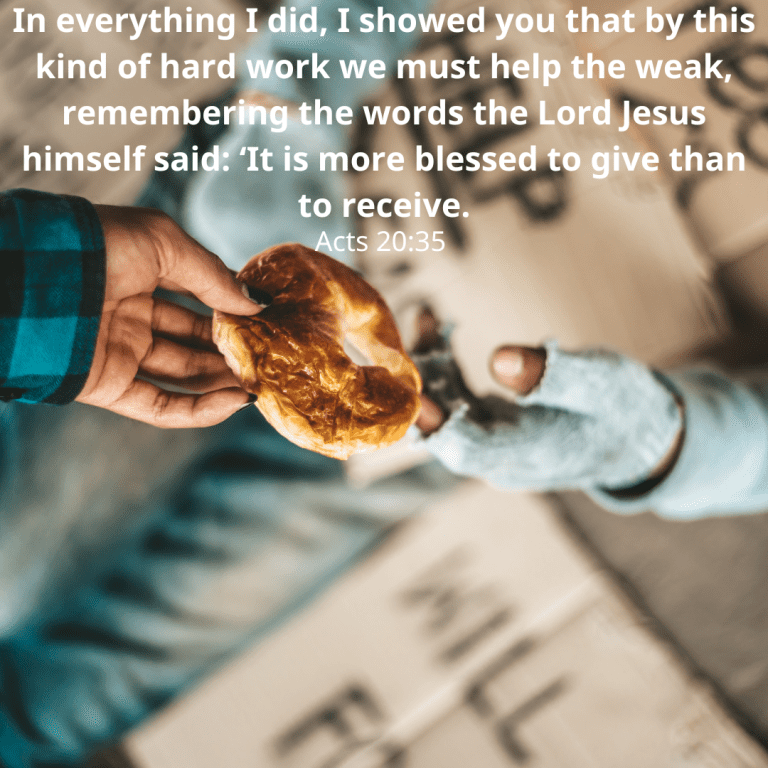
Giving is a powerful act that reflects the heart of God and His desire for us to live generously. Throughout the Bible, we find numerous teachings that emphasize the importance and impact of giving. Whether it’s through offering our time, resources, or love, the act of giving not only blesses others but also enriches our own lives. Here are seven Bible verses that highlight the power of giving and encourage us to embrace a life of generosity.
1. Acts 20:35 “In everything I did, I showed you that by this kind of hard work we must help the weak, remembering the words the Lord Jesus himself said: ‘It is more blessed to give than to receive.’”
When we give to others, especially those in need, we are not only helping them but also experiencing the joy and fulfillment that comes from generosity. It reminds us that true happiness is found in selflessness.
2. 2 Corinthians 9:6-7 “Remember this: Whoever sows sparingly will also reap sparingly, and whoever sows generously will also reap generously. Each of you should give what you have decided in your heart to give, not reluctantly or under compulsion, for God loves a cheerful giver.”
The emphasis on giving cheerfully reminds us that our attitude matters. God values a heart that gives freely and joyfully, knowing that our contributions can lead to abundant blessings.
3. Proverbs 11:25 “A generous person will prosper; whoever refreshes others will be refreshed.”
Generosity is not just about meeting the needs of others; it also brings personal renewal and prosperity. When we give, we often receive in return, not necessarily in material wealth, but in spiritual and emotional well-being. The act of giving refreshes both the giver and the recipient.
4. Luke 6:38 “Give, and it will be given to you. A good measure, pressed down, shaken together and running over, will be poured into your lap. For with the measure you use, it will be measured to you.”
Jesus emphasizes the abundance that comes from giving. The imagery of a generous measure being returned to us illustrates that our giving will not go unnoticed or unrewarded. When we give with an open heart, we can expect God’s blessings to overflow in our lives.
5. Matthew 6:3-4 “But when you give to the needy, do not let your left hand know what your right hand is doing, so that your giving may be in secret. Then your Father, who sees what is done in secret, will reward you.”
We should give quietly and humbly, without seeking recognition or praise. The focus is on the sincerity and purity of our giving. God sees our acts of kindness, even when they are done in secret, and He will reward us accordingly. It reminds us that true giving is done for the benefit of others, not for personal glory.
6. Hebrews 13:16 “And do not forget to do good and to share with others, for with such sacrifices God is pleased.”
Sharing what we have with others is a sacrifice that pleases God. This verse highlights the importance of being mindful of others’ needs and taking action to meet them. It serves as a reminder that our acts of generosity are not just good deeds; they are expressions of our faith and love for God.
7. James 1:17 “Every good and perfect gift is from above, coming down from the Father of the heavenly lights, who does not change like shifting shadows.”
All we have comes from God. Recognizing that every gift we receive is from Him encourages us to be generous in sharing those gifts with others. When we give, we are participating in God’s work, distributing His blessings to those around us.
Conclusion
The Bible teaches that giving is a powerful way to express our faith, love, and gratitude. These verses reveal that generosity not only impacts those we help but also enriches our own lives, bringing us closer to God and His purposes. Whether through our resources, time, or compassion, giving allows us to reflect God’s love in a tangible way, creating a ripple effect of blessings that extend far beyond what we can see. By embracing a spirit of generosity, we open ourselves up to experience the fullness of life that God desires for us.
Addictions come in many shapes and forms, whether it’s lust, alcohol, substances, gambling, gaming, or even excessive use of your mobile phone and social media. There is professional help to get as well as counselling from your priest or pastor.
Also, read the Bible and lay your addiction before God in prayer. Here are some passages from the Word of God to reflect upon.
- James 1:14-15 But each person is tempted when he is lured and enticed by his own desire. Then desire when it has conceived gives birth to sin, and sin when it is fully grown brings forth death.
We all have weaknesses within us that can make us fall and lead to an addiction. Acknowledging this, and admitting that you struggle with addiction is an important step to be free from it.
- 1 John 2:16 For all that is in the world—the desires of the flesh and the desires of the eyes and pride of life—is not from the Father but is from the world.
Addictions don’t come from God, but from the world and our desires, lusts and pride. We can rely on God wanting us to be free from any addiction.
- 1 Corinthians 10:13 No temptation has overtaken you that is not common to man. God is faithful, and he will not let you be tempted beyond your ability, but with the temptation he will also provide the way of escape, that you may be able to endure it.
You may feel that you can’t break your addiction. But the Bible tells us that God can. God will provide the way of escape. Turn to God, turn from your addiction. Let God fill you with his presence.
- 1 Corinthians 6:12 “All things are lawful for me,” but not all things are helpful. “All things are lawful for me,” but I will not be dominated by anything.
Addiction is many times when something takes control over you. Those things that are not helpful in your life and dominate your thoughts and desires you may need to cut out of your life.
- 1 Peter 2:11 Beloved, I urge you as sojourners and exiles to abstain from the passions of the flesh, which wage war against your soul.
Addictions come from this world and not from God. In the end, addictions replace God as the number one in our lives. It’s not just about addictions, but also about our souls.
- Matthew 6:13 And lead us not into temptation, but deliver us from evil.
Lay your struggles before God. Ask for God’s protection and deliverance.
- John 8:36 So if the Son sets you free, you will be free indeed.
This is the promise of Jesus Christ, that when he sets us free, it is real freedom.
This article is not intended as a replacement for medical or therapeutic help or treatment for addiction, but a complement and inspiration to those who battle addiction.
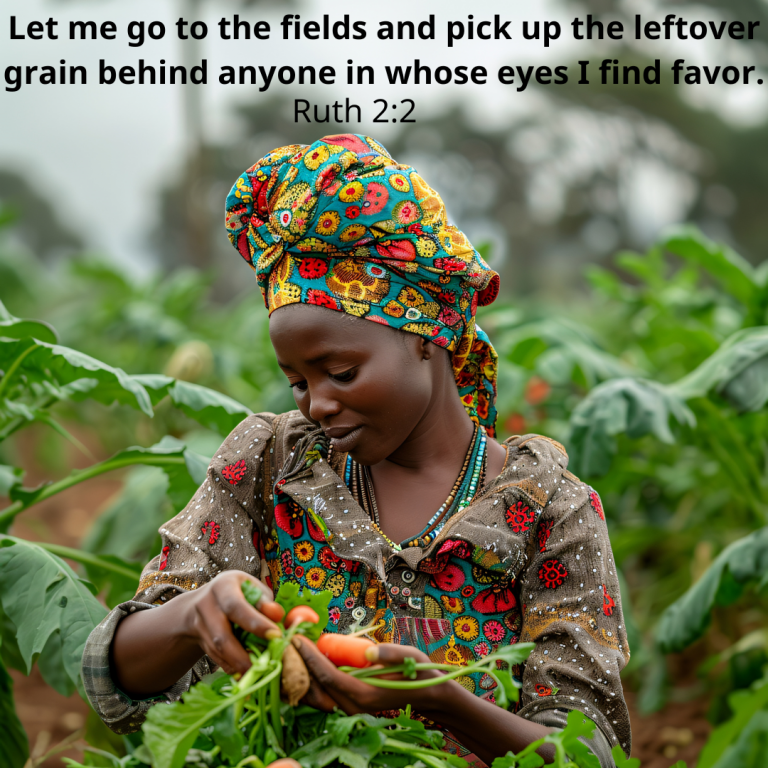
The love story of Ruth and Boaz is one of the most heartwarming narratives in the Bible. It highlights loyalty, kindness, and the providence of God. Below is a seven-part exploration of their story, showcasing key moments and lessons we can learn.
1. Ruth’s Loyal Love for Naomi
Bible Verse: “But Ruth replied, ‘Don’t urge me to leave you or to turn back from you. Where you go, I will go, and where you stay, I will stay. Your people will be my people and your God my God.'” (Ruth 1:16)
The story begins with Ruth’s decision to stay with her mother-in-law, Naomi, after the loss of their husbands. Despite being a Moabite with no obligation to remain, Ruth chooses loyalty and selfless love over personal comfort. Her declaration of commitment is a profound example of love rooted in devotion and faith.
Lesson: True love often involves sacrifice and putting others’ needs before your own.
2. Ruth’s Humility and Hard Work
Bible Verse: “Let me go to the fields and pick up the leftover grain behind anyone in whose eyes I find favor.” (Ruth 2:2)
Arriving in Bethlehem, Ruth immediately seeks ways to provide for herself and Naomi. She humbly works in the fields, gleaning leftover grain, which was allowed under the law for the poor (Leviticus 19:9-10). Her actions reflect love expressed through diligence and service.
Lesson: Love is not just about words but is demonstrated through actions of care and responsibility.
3. Boaz’s Kindness Toward Ruth
Bible Verse: “The Lord bless you, my daughter. This kindness is greater than that which you showed earlier… You have not run after the younger men, whether rich or poor.” (Ruth 3:10)
Boaz, a wealthy landowner and relative of Naomi, notices Ruth’s character and dedication. He treats her with kindness, ensuring she has more than enough grain and protection while working in his fields. Boaz’s actions are motivated by compassion and respect for Ruth’s integrity.
Lesson: Love involves recognizing and honoring the worth of others, especially their character and efforts.
4. Ruth’s Bold Request for Redemption
Bible Verse: “Spread the corner of your garment over me, since you are a guardian-redeemer of our family.” (Ruth 3:9)
Following Naomi’s guidance, Ruth approaches Boaz at night, asking him to act as her kinsman-redeemer. This was not a romantic gesture in the modern sense but a cultural and legal request for protection and provision. Ruth’s boldness reflects her trust in both Boaz and God’s plan.
Lesson: Love sometimes requires stepping out in faith and making courageous decisions.
5. Boaz’s Integrity and Commitment
Bible Verse: “I will do for you all you ask. All the people of my town know that you are a woman of noble character.” (Ruth 3:11)
Boaz agrees to Ruth’s request but ensures the proper legal steps are taken first. He respects the traditions and laws of Israel, seeking permission from a closer relative before redeeming Ruth. His actions show his integrity and willingness to do things the right way.
Lesson: Love is honorable and seeks to uphold righteousness in all circumstances.
6. The Marriage of Ruth and Boaz
Bible Verse: “So Boaz took Ruth and she became his wife. When he made love to her, the Lord enabled her to conceive, and she gave birth to a son.” (Ruth 4:13)
Boaz redeems Ruth and marries her, fulfilling his role as her kinsman-redeemer. Their union is not only a picture of love between two people but also a reflection of God’s faithfulness in providing for His people.
Lesson: God honors love that is rooted in obedience, faithfulness, and His divine plan.
7. God’s Providential Love Through Their Lineage
Bible Verse: “Then Naomi took the child in her arms and cared for him. The women living there said, ‘Naomi has a son!’ And they named him Obed. He was the father of Jesse, the father of David.” (Ruth 4:16-17)
Ruth and Boaz’s love story is woven into God’s grand plan. Their son, Obed, becomes the grandfather of King David, placing them in the lineage of Jesus Christ (Matthew 1:5). This demonstrates how God uses love and faithfulness to fulfill His promises.
Lesson: Love that honors God has eternal significance, impacting generations to come.
Conclusion
The story of Ruth and Boaz is more than a romance—it’s a testament to God’s providence and the power of love rooted in loyalty, humility, and faith. Their story encourages us to trust God’s plan, love selflessly, and honor Him in all our relationships.
Let this example inspire us to live with the same devotion and integrity, trusting that God is working behind the scenes to bring about His perfect plan for our lives.
Ruth and Boaz: A Love Story About Loyalty, Faith, and God's Plan
Ruth and Boaz’s love story is woven into God’s grand plan. Their son, Obed, becomes the grandfather of King David, placing them in the lineage of Jesus Christ (Matthew 1:5). This demonstrates how God uses love and faithfulness to fulfill His promises.
Ruth and Boaz’s love story is woven into God’s grand plan. Their son, Obed, becomes the grandfather of King David, placing them in the lineage of Jesus Christ (Matthew 1:5). This demonstrates how God uses love and faithfulness to fulfill His promises.