
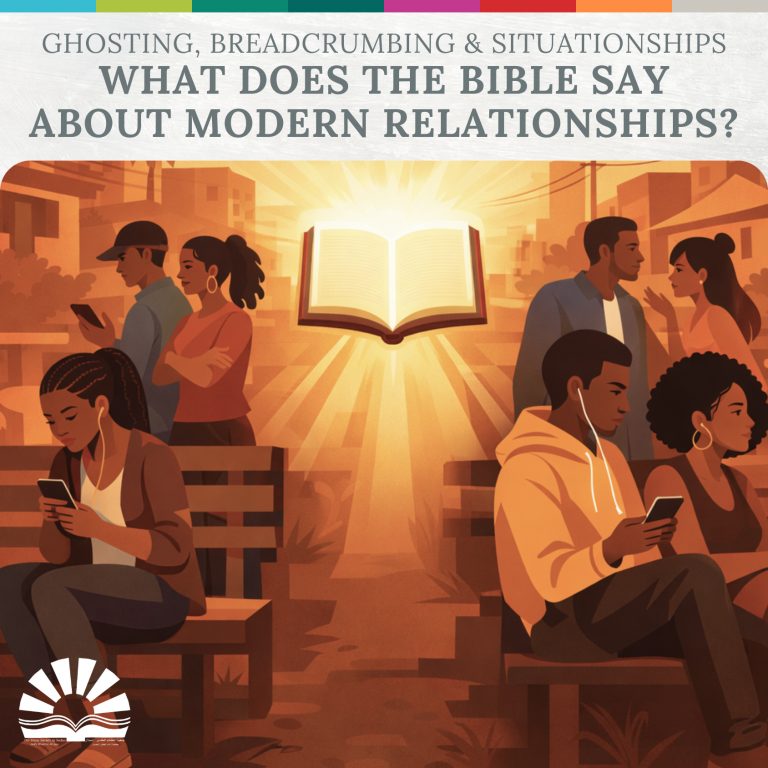
In today’s dating world, people disappear without explanation, send mixed signals to keep you emotionally attached, or stay in undefined “almost-relationships.” These experiences can leave hearts confused, anxious, and questioning self-worth. But what does Jesus, who cared deeply about love, truth, and people’s hearts, say about this?
Let’s explore this through Scripture.
1. Jesus Values Truth, Not Mixed Signals
Verse: “Let your ‘Yes’ be yes, and your ‘No,’ no.” — Matthew 5:37 (NIV)
Breadcrumbing thrives on uncertainty, just enough attention to keep someone hoping. Jesus teaches clarity and honesty. Leading someone on emotionally while avoiding commitment goes against His call to be truthful and straightforward.
If intentions are unclear, it’s not love, it’s confusion.
2. Disappearing Without Explanation Hurts Real People
Verse: “So in everything, do to others what you would have them do to you.” — Matthew 7:12 (NIV)
Ghosting may feel easier than having a difficult conversation, but Jesus calls us to empathy. How would you want to be treated if the roles were reversed?
Love considers the emotional impact of our actions.
3. God Is Not the Author of Confusion
Verse: “For God is not a God of disorder but of peace.” — 1 Corinthians 14:33 (NIV)
Situationships often come with anxiety, insecurity, and constant overthinking. If a connection consistently brings confusion rather than peace, it may not be aligned with God’s design for relationships.
Peace is a sign of God’s presence; confusion is a warning sign.
4. Guard Your Heart in Undefined Relationships
Verse: “Above all else, guard your heart, for everything you do flows from it.” — Proverbs 4:23 (NIV)
When you invest emotionally in someone who won’t commit, your heart is at risk. Jesus never taught us to ignore our emotional well-being in the name of “love.”
Protecting your heart is wisdom, not weakness.
5. Love Is Patient and Kind—Not Manipulative
Verse: “Love is patient, love is kind… it is not self-seeking.” — 1 Corinthians 13:4–5 (NIV)
Breadcrumbing is often self-centered—keeping someone around for attention, validation, or convenience. Biblical love seeks the good of the other person, not personal gain.
If it benefits one person at the expense of another, it isn’t love.
6. Your Worth Is Not Defined by Someone’s Inconsistency
Verse: “I have loved you with an everlasting love.” — Jeremiah 31:3 (NIV)
Being ghosted can make someone feel disposable. Jesus reminds us that God’s love doesn’t disappear, go silent, or show up only when convenient.
God’s love is consistent—even when people are not.
7. Jesus Calls Us to Love with Integrity
Verse: “The Lord detests lying lips, but he delights in people who are trustworthy.” — Proverbs 12:22 (NIV)
Situationships often avoid labels to escape responsibility. Jesus calls His followers to integrity—being honest about intentions, emotions, and expectations.
Trust is built on honesty, not ambiguity.
So… What Would Jesus Say?
Jesus would likely challenge us to:
- Be clear, kind, and honest
- Stop playing with emotions
- Choose peace over confusion
- Value people more than convenience
- Remember that love never leaves people feeling disposable
Final Reflection for Youth
If a relationship needs constant decoding, it may not be God-centered. Real love reflects God’s character, truthful, consistent, and respectful.Before staying in a situationship, ask:
“Is this bringing me peace, or slowly draining my heart?”
Theme verse: “We hear them declaring the wonders of God in our own tongues!” – Acts 2:11
Picture this: you’re at a massive global festival — music blasting, people in colorful outfits, food stalls with smells from every country. You hear bits of conversation all around you — French, Korean, Shona, Spanish — but none of it really lands with you because it’s not your language. Then suddenly, over the noise, you hear someone speaking your exact dialect — telling a story that feels like it was written for you. Instantly, you feel seen, understood, and connected.
That’s what happened on the Day of Pentecost in Acts 2. The Holy Spirit didn’t just drop a universal language from the sky, He gave the disciples the ability to speak the heart languages of everyone there. It was the first miraculous translation of the Gospel, and it set the tone for how God’s Word would travel through history: personal, accessible, and in every language under heaven.
Here are 7 Bible verses showing how God values every language — and why translation is still His heartbeat today.
1. Acts 2:4 – “All of them were filled with the Holy Spirit and began to speak in other tongues as the Spirit enabled them.”
This moment wasn’t about showing off supernatural skills; it was about connection. Imagine a livestream where the subtitles instantly appear in every viewer’s language without a glitch. That’s the Pentecost miracle. God could have picked one “holy” language and told the world to learn it, but instead, He said, “I’ll come to you where you are.” He knew that the fastest way to someone’s heart is to speak in words they’ve known since childhood — the ones their grandmother used when telling bedtime stories, the ones they use when they cry or pray.
2. Acts 2:11 – “We hear them declaring the wonders of God in our own tongues!”
The crowd didn’t just hear “religious talk.” They heard the wonders of God — in words they didn’t have to translate in their heads. It’s the difference between watching a movie dubbed in your language versus struggling through with broken subtitles. When the message comes in your mother tongue, it feels like it was crafted for you. That day, God wasn’t just talking to people — He was talking with them, in the very vocabulary that shaped their identity.
3. Revelation 7:9 – *”…from every nation, tribe, people and language, standing before the throne…” *
Heaven will not be a one-language zone. It will be the most diverse, colorful gathering ever — every accent, every rhythm, every dialect praising the same God. Translation work today is like a sneak preview of that day. Every time a new Bible translation is completed, it’s another rehearsal for the heavenly choir, making sure every voice can join in without needing someone else to interpret for them.
4. Genesis 11:9 – “That is why it was called Babel — because there the Lord confused the language of the whole world.”
At Babel, language differences pushed people apart. But at Pentecost, God flipped the script — languages became bridges, not barriers. Translation work continues that miracle. It takes something that could divide us and turns it into a point of connection. If Babel was the scattering, Pentecost — and every Bible translation today — is the gathering.
5. Romans 10:14 – “How can they believe in the one of whom they have not heard?”
You can’t believe a message you’ve never understood. That’s why translation is more than a technical process, it’s a lifeline. It’s like getting urgent news in a language you actually comprehend, instead of in one that leaves you guessing. Faith grows when the Gospel comes to you without a language barrier blocking the way.
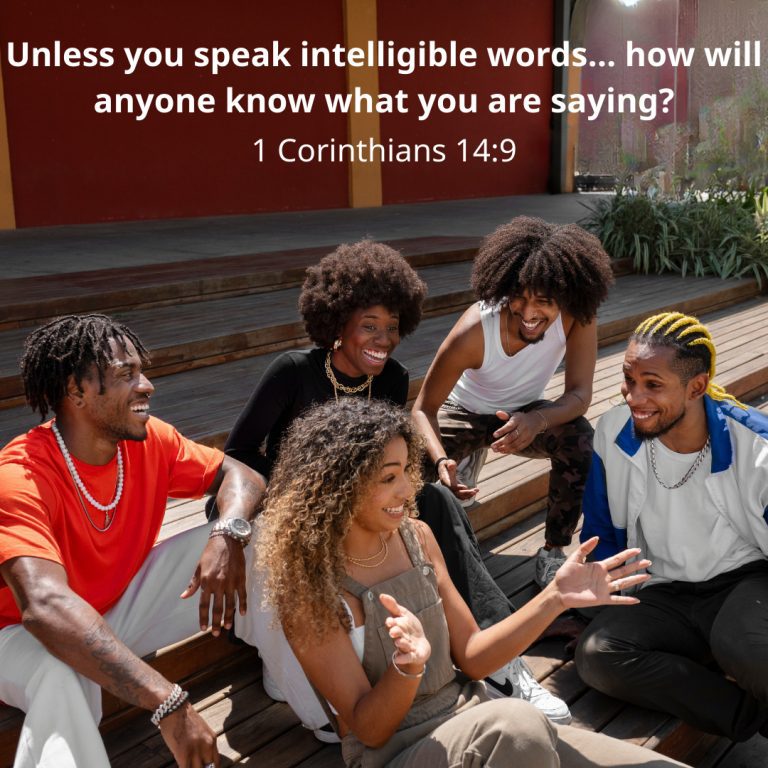
6. 1 Corinthians 14:9 – “Unless you speak intelligible words… how will anyone know what you are saying?”
Ever been in a group chat where everyone is using inside jokes or slang you don’t know? You feel left out, even if the conversation is meant to include you. God’s Word is too important to be “lost in translation.” That’s why He makes sure it’s not just available, but understandable, so that no one has to scroll past the greatest message ever told because it feels out of reach.
7. Matthew 28:19–20 – *”Go and make disciples of all nations…” *
“All nations” isn’t just geography ,it’s culture, it’s language, it’s the way people think and express themselves. The Great Commission is, at its core, a Great Translation Mission. Jesus’ final command is an open invitation to take His words into every linguistic space.
Final Challenge
God is not a distant voice speaking in a code you have to crack. He’s the one who speaks your slang, your memes, your mother tongue, your unfiltered prayers. This World Translation Day, remember: God doesn’t wait for you to learn His language, He comes speaking yours. And when you share His Word, you’re joining that same mission, making sure no one misses the message because they couldn’t understand it.
-
The 1927 Gospel of Mark in Sudanese Arabic: A Legacy of Its Time
When we think of Bible translations in Sudan, our minds often go to the many languages of the Nuba Mountains and beyond.Yet, nearly a century ago, a bold and unusual experiment was undertaken in Khartoum and Omdurman—a translation that still speaks to the history of Bible mission work in Sudan. The Gospel of Mark in…
-
From Nubia to Now: The Gospel of Mark and the Lord’s Prayer in Nobiin
When you hear the word Nubia, what comes to mind? For many, it’s the golden sands along the Nile, the echoes of pyramids and temples, or the proud heritage of one of Africa’s earliest civilisations. But Nubia is also a land where the Bible has deep roots, stretching back in history. Today, in the middle…
-
From Eden to the Nuba Mountains: The Heiban New Testament
When you open a Bible in the Heiban language, you’re not just holding a translation—you’re stepping into a story that begins at the very dawn of the Scriptures. From Cush to the Nuba Mountains The Bible first mentions the land of Cush in Genesis 2:13, when the river Gihon is said to flow out from…
-
God Speaks My Language: How Faith Connects Across Every Tongue and Culture
Theme verse: “We hear them declaring the wonders of God in our own tongues!” – Acts 2:11 Picture this: you’re at a massive global festival — music blasting, people in colorful outfits, food stalls with smells from every country. You hear bits of conversation all around you — French, Korean, Shona, Spanish — but none…
Prayer is a vital aspect of the Christian faith, serving as a direct line of communication with God. The Bible offers numerous verses that can guide and inspire us in our prayer life. Here are seven Bible verses that can help you to pray:
1. Matthew 6:9-13
“This, then, is how you should pray: ‘Our Father in heaven, hallowed be your name, your kingdom come, your will be done, on earth as it is in heaven. Give us today our daily bread. And forgive us our debts, as we also have forgiven our debtors. And lead us not into temptation, but deliver us from the evil one.’”
The Lord’s Prayer, provides a perfect model for prayer. It includes elements of praise, submission to God’s will, requests for daily needs, forgiveness, and guidance. Using this structure can help us cover all aspects of our spiritual life in prayer.
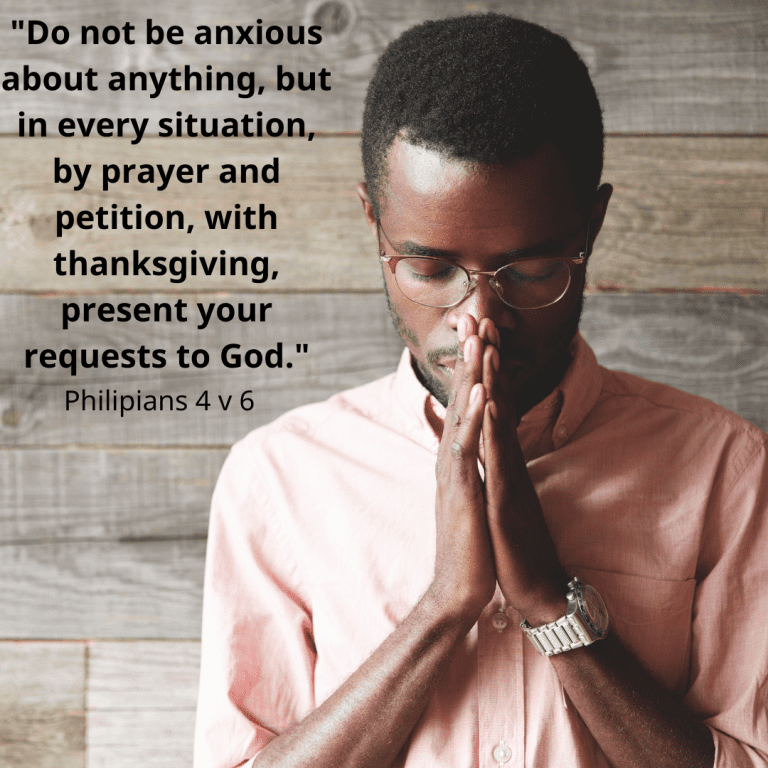
2. Philippians 4:6
“Do not be anxious about anything, but in every situation, by prayer and petition, with thanksgiving, present your requests to God.”
You are encouraged to turn your worries into prayers. This verse emphasizes importance of approaching God with your needs and anxieties, coupled with a heart of gratitude. This verse reminds you that prayer is a means to relieve anxiety and to trust in God’s provision.
3. 1 Thessalonians 5:16
“Rejoice always, pray continually, give thanks in all circumstances; for this is God’s will for you in Christ Jesus.”
Praying continually doesn’t mean being on our knees all day but maintaining a constant awareness of God’s presence and turning to Him throughout our day. It encourages an attitude of gratitude and joy in all circumstances.
4. James 5:16
“Therefore confess your sins to each other and pray for each other so that you may be healed. The prayer of a righteous person is powerful and effective.”
James 5:16 emphasizes the power of communal prayer and confession. It encourages us to support each other through prayer and to recognize the importance of a righteous person’s prayer. You are encouraged to seek out prayer partners and to be diligent in your intercessions for others.
5. Romans 8:26
“In the same way, the Spirit helps us in our weakness. We do not know what we ought to pray for, but the Spirit himself intercedes for us through wordless groans.”
You can find comfort in knowing that the Holy Spirit assists you in your prayers, especially when you are uncertain about what to pray for. The Spirit’s intercession ensures that your prayers align with God’s will, providing a deeper connection in your communication with God.
6. Matthew 7:7-8
“Ask and it will be given to you; seek and you will find; knock and the door will be opened to you. For everyone who asks receives; the one who seeks finds; and to the one who knocks, the door will be opened.”
Jesus assures you that your earnest seeking and asking will not go unanswered. This promise can bolster your confidence in approaching God with your needs and desires, knowing that He listens and responds.
7. 1 John 5:14-15
“This is the confidence we have in approaching God: that if we ask anything according to his will, he hears us. And if we know that he hears us—whatever we ask—we know that we have what we asked of him.”
God is attentive to your prayers. It highlights the importance of aligning your requests with His will, giving you confidence that your prayers are heard and will be answered in accordance with His divine plan.
Conclusion
Prayer is a powerful and essential practice in the Christian life. These seven Bible verses offer guidance, encouragement, and assurance in our prayer journey. By meditating on and incorporating these scriptures into your prayer life, you can deepen your relationship with God, approach Him with confidence, and experience the transformative power of prayer.
Marriage is the foundation for the Christian family. Husband and wife and by God’s grace blessed with children. Whether you hope to marry one day or are already married it’s good to go to the Bible and learn about marriage.
- Genesis 2:24 Therefore a man shall leave his father and his mother and hold fast to his wife, and they shall become one flesh.
Marriage is mentioned already in creation. Whether you are already married or not, here are Bible verses to guide you to what the Bible says about marriage.
- 1 Corinthians 7:2 But because of the temptation to sexual immorality, each man should have his own wife and each woman her own husband.
There are many kinds of temptations in the world. To be married is to give our love and loyalty to our husband or wife.
- Ephesians 5:25 Husbands, love your wives, as Christ loved the church and gave himself up for her
In a Christian marriage the husband is to love his wife as Christ loved us. This is to love even when it’s not deserved, unconditionally.
- Colossians 3:18-19 Wives, submit to your husbands, as is fitting in the Lord. Husbands, love your wives, and do not be harsh with them.
Love between husband and wife includes for the husband to be gentle and giving himself up for his wife, and for the wife to submit to and respect her husband.
- Exodus 20:14 You shall not commit adultery.
Loyalty and trust are fundamental in all relationships. In marriage that means to forsake all others and not have any other intimate relationships.
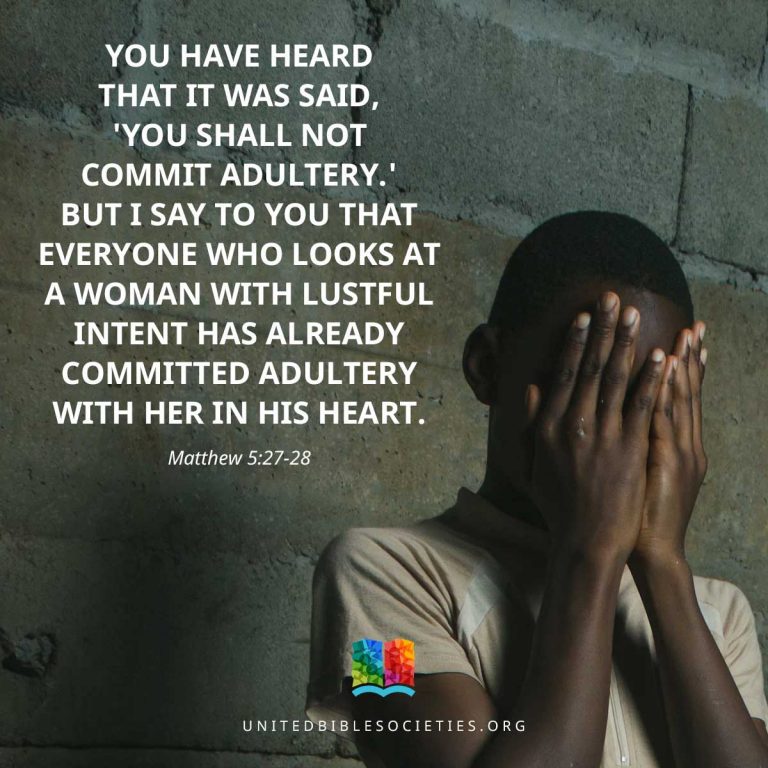
- Matthew 5:27-28 You have heard that it was said, ‘You shall not commit adultery.’ But I say to you that everyone who looks at a woman with lustful intent has already committed adultery with her in his heart.
Jesus taught us that it’s not only the act of adultery that is breaking the commandment, but even lustful thoughts.
- Ephesians 4:32 Be kind to one another, tenderhearted, forgiving one another, as God in Christ forgave you.
Although this verse speaks of the love between all Christians, it also applies to husband and wife. Forgive each other and be kind.

Theme verse: “Do not merely listen to the word… Do what it says.” – James 1:22
We live in an age where we read a lot — from TikTok captions and Instagram stories to class notes and text messages. But here’s the catch: reading isn’t just about understanding the words on a screen or page — it’s about what those words do in you and through you.
The Bible isn’t meant to be just read like a novel you close and put away. It’s God’s living Word — meant to shape your choices, your relationships, and your future.
Here are 7 Bible verses that show what it means to Read It, Live It.
1. James 1:22 – “Do not merely listen to the word, and so deceive yourselves. Do what it says.”
It’s like watching a hundred “how to work out” videos but never actually exercising. The results don’t come from watching — they come from doing. The Bible works the same way. Reading God’s Word without applying it is like reading a recipe and never cooking the meal. When you actually live what you read — forgiving someone, helping a friend, refusing gossip — that’s when change happens.
2. Matthew 7:24 – “Everyone who hears these words of mine and puts them into practice is like a wise man who built his house on the rock.”
Think of building your life like setting up a phone with strong security — you want something that lasts, not something that collapses at the first hack or crash. Jesus says when you do His Word, you’re building on a foundation that won’t fail when storms hit — breakups, stress, exams, or disappointments.
3. Psalm 119:105 – “Your word is a lamp to my feet and a light to my path.”
Walking in the dark without your phone’s flashlight? Risky. You might trip or get lost. God’s Word lights up your life decisions — it’s your navigation system when you don’t know which direction to go. But the light only helps if you follow it, not if you just admire how bright it is.
4. Joshua 1:8 – “Keep this Book of the Law always on your lips; meditate on it day and night, so that you may be careful to do everything written in it.”
Ever had a song stuck in your head all day? That’s what meditating on Scripture is like — keeping it so close in your mind and heart that it naturally comes out in your words and actions. Joshua’s success came from not just knowing God’s Word but letting it shape every decision.
5. Luke 11:28 – “Blessed rather are those who hear the word of God and obey it.”
We all want to be “blessed” — a happy life, peace, purpose. Jesus flips the idea: blessing comes not from luck, but from obedience. It’s not just what you know from the Bible, but what you do with it, that leads to a life that feels full.
6. Colossians 3:16 – “Let the message of Christ dwell among you richly as you teach and admonish one another with all wisdom…”
Imagine having a playlist so good you can’t help but share it. When God’s Word “dwells” in you, it naturally spills out into conversations, advice to friends, encouragement to someone going through a rough time. You’re not just a reader — you’re a living speaker of hope.
7. John 13:17 – “Now that you know these things, you will be blessed if you do them.”
Knowing and doing are two different games. You can know all the Bible verses about love and still treat people badly. Jesus says blessing comes when you actually live out what you know — when your faith is visible in your kindness, patience, honesty, and courage.
Final Challenge
The Bible is more than a historical text or a spiritual checklist. It’s like your life’s power bank — but it only charges you if you connect and use it. This World Literacy Day, don’t just read God’s Word to tick a box. Read it, live it, and watch it change you — and the world around you.
Ghosting, Breadcrumbing & Situationships: What Does the Bible Say About Modern Relationships?
Modern dating terms like ghosting and situationships often bring confusion and hurt. Explore how biblical principles of integrity, honesty, and love apply to these struggles and find healing in God's truth.
Modern dating terms like ghosting and situationships often bring confusion and hurt. Explore how biblical principles of integrity, honesty, and love apply to these struggles and find healing in God's truth.
Read It, Live It: Putting God’s Word Into Action Every Day
We read a lot every day but the Bible is different. It’s God’s living Word, meant not just to inform but to transform your life. Read it, live it, and watch your choices, relationships, and future change as His Word works through you.
We read a lot every day but the Bible is different. It’s God’s living Word, meant not just to inform but to transform your life. Read it, live it, and watch your choices, relationships, and future change as His Word works through you.