Many women, especially young women, quietly wrestle with this thought:
“Is being a woman a disadvantage?”
It can feel that way when:
- your voice is overlooked
- your abilities are doubted
- your safety feels fragile
- your value is reduced to appearance
- your timeline is controlled by social pressure
- your sacrifices go unnoticed
But Scripture tells a very different story. From the beginning, God established women with dignity, authority, purpose, and spiritual strength. Let’s walk through 7 Bible verses that speak directly to seasons when being a woman feels like a disadvantage.
1. Genesis 1:27 — Your Value Was Established at Creation
“So God created mankind in his own image, in the image of God he created them; male and female he created them.” (NIV)
Before society formed opinions about women, God formed identity. Both male and female were created in His image, equal in worth, equal in dignity, equal in spiritual value.
This means your value is not cultural, it is created. Not negotiated, declared. When the world minimizes women, creation itself speaks otherwise.
2. Judges 4:4–5 — God Raises Women Leaders
“Now Deborah, a prophet, the wife of Lappidoth, was leading Israel at that time.” (NIV)
Deborah was not hidden. She was not secondary. She was a national leader, judge, and prophet.
When leadership spaces feel closed to women, Deborah’s story reminds us: God is not limited by human bias. He appoints based on calling, not gender expectations.
Your leadership is not a mistake. Your voice is not out of place.
3. Psalm 139:14 — You Are Not a Design Error
“I praise you because I am fearfully and wonderfully made.” (NIV)
When being a woman feels like a burden instead of a blessing, this verse calls you back to truth: you are not an afterthought. Not an inferior version. Not a weaker model.
You are intentional design.
Your emotions, intuition, resilience, and nurturing strength are not flaws, they are features.
4. Luke 8:1–3 — Jesus Publicly Valued Women
“…the Twelve were with him, and also some women… These women were helping to support them out of their own means.” (NIV)
In a culture where women were often excluded, Jesus welcomed them into His mission circle. He taught them, traveled with them, and honored their contributions.
Jesus did not treat women as background characters, but as partners in purpose.
If you ever feel spiritually sidelined, remember: Jesus pulled women closer, not further away.
5. Proverbs 31:25 — Strength Is Feminine Too
“She is clothed with strength and dignity; she can laugh at the days to come.” (NIV)
Biblical womanhood is not a weakness. It is strength with dignity.
This woman is not fearful of the future, she faces it with confidence. Not because life is easy, but because her foundation is secure.
Strength is not unfeminine. Strength is biblical.
6. Galatians 3:28 — Your Spiritual Standing Is Equal
“There is neither Jew nor Gentile, neither slave nor free, nor is there male and female, for you are all one in Christ Jesus.” (NIV)
Before God, your access, inheritance, and spiritual identity are not limited by gender.
You are not spiritually second-class. Not spiritually delayed. Not spiritually restricted.
In Christ, you stand fully included.
7. John 20:16–18 — A Woman First Carried the Resurrection Message
Jesus said to her, “Mary.” … Mary Magdalene went to the disciples with the news: “I have seen the Lord!” (NIV)
The first recorded witness and messenger of the resurrection was a woman.
At the most important announcement in history, Jesus chose a woman to carry the news.
When the world questions whether women should speak, lead, or proclaim truth, the resurrection story answers clearly.
Final Encouragement: When It Feels Hard to Be a Woman
Yes, challenges women face are real. Inequality, pressure, vulnerability, and misunderstanding exist. But disadvantage is not destiny.
Biblically:
- Women are image-bearers
- Leaders
- Witnesses
- Supporters of mission
- Carriers of strength
- Voices of truth
- Chosen messengers
When being a woman feels like a disadvantage, remember, in God’s story, women are never optional. They are essential.

Feeling overlooked, undervalued, or underestimated as a woman? Discover how God sees every woman, lifts the overlooked, and turns the invisible into the invincible.
Introduction
Have you ever felt invisible?
Maybe in your marriage, at work, at church, or even among friends, it sometimes feels like no one notices your efforts, your struggles, or your value.
But here’s the truth: God sees every woman. He sees your heart, your courage, your prayers, and your struggles. And He promises that the invisible can become invincible when we trust Him.
Let’s explore 7 Bible verses that show how God honors, strengthens, and uplifts women.
1. You Are Fearfully and Wonderfully Made
Verse: Psalm 139:14
“I praise you because I am fearfully and wonderfully made; your works are wonderful, I know that full well.”
Every woman is crafted by God with purpose and care. Your value is not defined by society, by roles, or by what others think, it’s defined by God’s intentional design.
You are worth celebrating, even when no one else does.
2. God Sees What Others Miss
Verse: Psalm 33:18
“But the eyes of the Lord are on those who fear him, on those whose hope is in his unfailing love.”
Even when the world overlooks your efforts, God notices. He sees your work, your patience, your love, and your faith, even in seasons of invisibility.
You are never unseen by God.
3. Strength in Faith Makes You Invincible
Verse: Proverbs 31:25
“She is clothed with strength and dignity; she can laugh at the days to come.”
A woman who trusts God carries a quiet strength. Even when life is unfair or people underestimate her, she can face the future with confidence and hope.
Strength and dignity come from God, not from approval or recognition from others.
4. God Uses Overlooked Women for His Purpose
Verse: Luke 1:45
“Blessed is she who has believed that the Lord would fulfill his promises to her!”
Think of women like Hannah, Ruth, Mary Magdalene ,overlooked, marginalized, or underestimated. Yet God used them to fulfill extraordinary purposes.
Being overlooked today doesn’t mean you won’t be celebrated tomorrow. God’s timing is perfect.
5. God Protects and Upholds You
Verse: Isaiah 54:17
“No weapon forged against you will prevail, and you will refute every tongue that accuses you.”
When society, family, or even spouses belittle or speak against you, God is your shield. Your dignity, purpose, and worth cannot be destroyed.
Invisible today? Invincible tomorrow. God has your back.
6. You Are Chosen and Loved
Verse: Ephesians 1:4-5
“For he chose us in him before the creation of the world to be holy and blameless in his sight. In love he predestined us for adoption to sonship through Jesus Christ, in accordance with his pleasure and will.”
God’s love for women is intentional and eternal. You were chosen before the world existed. Your life has meaning and impact, even if others overlook you.
Your identity is secure in God’s eyes, not society’s.
7. Your Influence Matters
Verse: Titus 2:3-5
“Likewise, teach the older women to be reverent in the way they live… Then they can urge the younger women to love their husbands and children, to be self-controlled and pure, to be busy at home, to be kind, and to be subject to their husbands, so that no one will malign the word of God.”
God honors women who live faithfully and purposefully, whether young or mature. Your life, your choices, your faith, they impact generations.
Even if invisible to the world, your life leaves a legacy that matters eternally.
Conclusion
To every woman who feels unseen, overlooked, or undervalued:
You are invisible to some, but invincible in God. Walk boldly in His purpose, and trust that your season of being overlooked is just the setup for your season of influence and victory.

1: The Strength of a Mother
- Reading: Proverbs 31:25-31 She watches over the affairs of her household and does not eat the bread of idleness.
The Bible honors mothers who are strong, wise, and diligent. A Proverbs 31 woman is described as clothed with strength and dignity, speaking with wisdom, and watching over her household with care. Her children rise to call her blessed, and her works bring her praise. This passage celebrates the nurturing spirit and resilience that define motherhood.
- Reflection:
How can you embody strength and dignity in your journey as a mother or as a mentor to others? Pray for wisdom and grace to impact your family positively.
2: A Mother’s Faith
- Reading: 2 Timothy 1:3-7 I am reminded of your sincere faith, which first lived in your grandmother Lois and in your mother Eunice and, I am persuaded, now lives in you also.
Timothy’s strong faith was nurtured by two remarkable women—his mother, Eunice, and his grandmother, Lois. Their sincere belief shaped his spiritual foundation, enabling him to become a respected leader. This story reminds us of the powerful influence that a mother’s faith can have on her children, passing down a legacy of devotion and integrity.
- Reflection:
Think about the spiritual heritage you are creating for your children. Pray for your faith to be steadfast and inspiring, impacting future generations.
3: God’s Comfort Like a Mother’s Love
- Reading: Isaiah 66:13 As a mother comforts her child, so will I comfort you; and you will be comforted over Jerusalem.
In a beautiful comparison, God promises to comfort His people just as a mother comforts her child. This image conveys warmth, safety, and reassurance. When life brings hardships, God’s nurturing presence surrounds us, reminding us that we are never alone. Mothers often reflect this aspect of God’s character, offering solace and encouragement through life’s challenges.
- Reflection:
Have you experienced God’s comforting presence recently? Take a moment to thank Him for His unwavering love and pray for the ability to extend that same comfort to your family.
4: A Mother’s Prayer
- Reading: 1 Samuel 1:9-20 And she made a vow, saying, “Lord Almighty, if you will only look on your servant’s misery and remember me, and not forget your servant but give her a son, then I will give him to the Lord for all the days of his life, and no razor will ever be used on his head.
Hannah’s story is a powerful reminder of the importance of prayer and surrender. Despite her years of childlessness and ridicule, she poured out her heart to God. When God blessed her with Samuel, she faithfully kept her vow and dedicated him to the Lord’s service. Hannah’s faith teaches us that persistent prayer and trust can turn sorrow into joy.
- Reflection:
What are you earnestly praying for as a mother? Bring your deepest desires to God, trusting Him to work in ways that surpass your understanding.
5: Waiting on God for a Child
- Reading: Psalm 113:9 He settles the childless woman in her home as a happy mother of children. Praise the Lord.
This verse is a promise of hope to those longing for children: “He settles the childless woman in her home as a happy mother of children.” God sees the silent prayers of women waiting for the fruit of the womb, and His compassion reaches those who feel forgotten. Like Sarah, Hannah, and Elizabeth, many women in the Bible experienced long periods of waiting, but God’s timing brought joy.
- Reflection:
If you or someone you know is waiting for a child, take comfort in God’s faithfulness. Pray for peace, strength, and hope, believing that God’s plans are good and His timing is perfect.
6: A Mother’s Legacy of Love
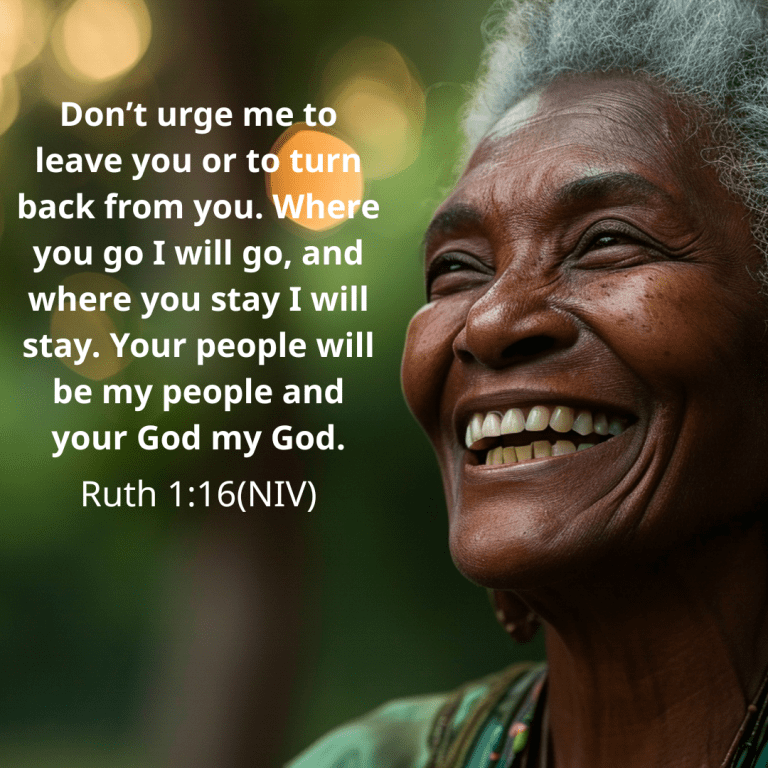
- Reading: Ruth 1:16-18 Don’t urge me to leave you or to turn back from you. Where you go I will go, and where you stay I will stay. Your people will be my people and your God my God.
Naomi’s relationship with Ruth exemplifies love and loyalty beyond blood relations. Ruth’s decision to stay with Naomi despite personal loss shows that family bonds can be forged through love, commitment, and shared faith. Naomi’s guidance and Ruth’s dedication eventually led to God’s blessing in their lives.
- Reflection:
Consider the people God has placed in your life who feel like family. How can you nurture and support them with love and encouragement?
7: A Mother’s Blessing
- Reading: Luke 1:46-55 For the Mighty One has done great things for me, holy is his name.
Mary’s song of praise reflects a mother’s joy and humble gratitude. Despite the uncertainties of her calling, she glorified God for choosing her to bear the Savior. Her willingness to embrace God’s plan, even when it seemed daunting, teaches us to rejoice in the blessings we receive while remaining faithful through challenges.
- Reflection:
Take time to praise God for the gift of motherhood and the privilege of shaping lives. Pray for the grace to guide your children in love, faith, and wisdom.

Heartbreak doesn’t always come with closure. Sometimes it’s a breakup. Sometimes it’s betrayal, ghosting, unreturned feelings, or loving someone who couldn’t love you back. For many young people, emotional pain is silent, but heavy.
The Bible doesn’t ignore heartbreak. God sees the tears, the confusion, and the questions. Scripture offers not quick fixes, but real steps toward healing, restoration, and hope.
1. Acknowledge the Pain—God Can Handle It
Verse: “The Lord is close to the brokenhearted and saves those who are crushed in spirit.”
— Psalm 34:18
Healing doesn’t start with pretending you’re okay. God doesn’t ask you to minimize your pain or rush your healing. He draws near to those who are hurting, not those who hide it.
Relatable truth: Crying doesn’t mean you’re weak, it means you’re human.
2. Give Yourself Permission to Grieve
Verse: “Blessed are those who mourn, for they will be comforted.”
— Matthew 5:4
Grief isn’t only about death, it’s about loss. Lost dreams. Lost trust. Lost connection. Jesus acknowledges grief as part of healing, not something to avoid.
Relatable truth: Healing doesn’t mean forgetting, it means processing.
3. Guard Your Heart While It Heals
Verse: “Above all else, guard your heart, for everything you do flows from it.”
— Proverbs 4:23
After heartbreak, it’s easy to reopen wounds by replaying memories, stalking profiles, or seeking closure from the same place that caused pain. Guarding your heart may mean setting boundaries, even digital ones.
Relatable truth: Sometimes healing requires distance, not answers.
4. Release What You Can’t Control
Verse: “Cast all your anxiety on him because he cares for you.”
— 1 Peter 5:7
You can’t control how someone treated you or why things ended, but you can choose where you place your pain. God invites you to hand Him what you can’t fix.
Relatable truth: Closure doesn’t always come from people, it comes from God.
5. Choose Forgiveness, Not Bitterness
Verse: “Be kind and compassionate to one another, forgiving each other, just as in Christ God forgave you.”
— Ephesians 4:32
Forgiveness doesn’t excuse the hurt, it frees your heart from being stuck in it. Holding onto bitterness keeps the wound open. Forgiveness is often a process, not a moment.
Relatable truth: Forgiveness is for your peace, not their comfort.
6. Let God Restore Your Identity
Verse: “I have loved you with an everlasting love.”
— Jeremiah 31:3
Heartbreak can make you question your worth. God reminds you that His love isn’t based on performance, attraction, or someone else’s choice. You are still chosen, valued, and loved.
Relatable truth: Someone walking away doesn’t reduce your value.
7. Trust God With What’s Next
Verse: “He heals the brokenhearted and binds up their wounds.”
— Psalm 147:3
Healing takes time, but God promises restoration. Moving on doesn’t mean erasing the past, it means allowing God to shape your future without being chained to pain.
Relatable truth: Healing doesn’t rush, but it does come.
Final Reflection for Young Hearts
Heartbreak is painful, but it doesn’t get the final word. God does.
Moving on doesn’t mean you stop caring. It means you stop letting pain control your future. With God, healing becomes possible, not overnight, but step by step.If you’re hurting right now, pray this simple prayer:
“God, help me heal what I don’t understand and release what I can’t change.”

In today’s dating world, people disappear without explanation, send mixed signals to keep you emotionally attached, or stay in undefined “almost-relationships.” These experiences can leave hearts confused, anxious, and questioning self-worth. But what does Jesus, who cared deeply about love, truth, and people’s hearts, say about this?
Let’s explore this through Scripture.
1. Jesus Values Truth, Not Mixed Signals
Verse: “Let your ‘Yes’ be yes, and your ‘No,’ no.” — Matthew 5:37 (NIV)
Breadcrumbing thrives on uncertainty, just enough attention to keep someone hoping. Jesus teaches clarity and honesty. Leading someone on emotionally while avoiding commitment goes against His call to be truthful and straightforward.
If intentions are unclear, it’s not love, it’s confusion.
2. Disappearing Without Explanation Hurts Real People
Verse: “So in everything, do to others what you would have them do to you.” — Matthew 7:12 (NIV)
Ghosting may feel easier than having a difficult conversation, but Jesus calls us to empathy. How would you want to be treated if the roles were reversed?
Love considers the emotional impact of our actions.
3. God Is Not the Author of Confusion
Verse: “For God is not a God of disorder but of peace.” — 1 Corinthians 14:33 (NIV)
Situationships often come with anxiety, insecurity, and constant overthinking. If a connection consistently brings confusion rather than peace, it may not be aligned with God’s design for relationships.
Peace is a sign of God’s presence; confusion is a warning sign.
4. Guard Your Heart in Undefined Relationships
Verse: “Above all else, guard your heart, for everything you do flows from it.” — Proverbs 4:23 (NIV)
When you invest emotionally in someone who won’t commit, your heart is at risk. Jesus never taught us to ignore our emotional well-being in the name of “love.”
Protecting your heart is wisdom, not weakness.
5. Love Is Patient and Kind—Not Manipulative
Verse: “Love is patient, love is kind… it is not self-seeking.” — 1 Corinthians 13:4–5 (NIV)
Breadcrumbing is often self-centered—keeping someone around for attention, validation, or convenience. Biblical love seeks the good of the other person, not personal gain.
If it benefits one person at the expense of another, it isn’t love.
6. Your Worth Is Not Defined by Someone’s Inconsistency
Verse: “I have loved you with an everlasting love.” — Jeremiah 31:3 (NIV)
Being ghosted can make someone feel disposable. Jesus reminds us that God’s love doesn’t disappear, go silent, or show up only when convenient.
God’s love is consistent—even when people are not.
7. Jesus Calls Us to Love with Integrity
Verse: “The Lord detests lying lips, but he delights in people who are trustworthy.” — Proverbs 12:22 (NIV)
Situationships often avoid labels to escape responsibility. Jesus calls His followers to integrity—being honest about intentions, emotions, and expectations.
Trust is built on honesty, not ambiguity.
So… What Would Jesus Say?
Jesus would likely challenge us to:
- Be clear, kind, and honest
- Stop playing with emotions
- Choose peace over confusion
- Value people more than convenience
- Remember that love never leaves people feeling disposable
Final Reflection for Youth
If a relationship needs constant decoding, it may not be God-centered. Real love reflects God’s character, truthful, consistent, and respectful.Before staying in a situationship, ask:
“Is this bringing me peace, or slowly draining my heart?”

We live in a generation where relationships often begin with a notification. A reply, a reaction, or a late-night DM can spark emotional connections faster than ever before. While technology has made communication easier, it has also blurred boundaries, created confusion, and sometimes replaced real commitment with convenience.
The Bible may not mention social media or messaging apps, but it speaks clearly about love, honesty, intention, and the condition of the heart, all of which are deeply relevant to online relationships today.
1. God Cares About Your Heart, Even Behind a Screen
Verse: “Above all else, guard your heart, for everything you do flows from it.”
— Proverbs 4:23 (NIV)
Online conversations can feel safe because there’s physical distance, but emotional closeness can develop quickly. Late-night chats, deep conversations, and constant messaging can slowly open your heart before trust, commitment, or clarity are established.
God’s instruction to guard your heart isn’t about being cold, it’s about being wise. When your heart is unprotected, your peace, focus, and identity can be affected.
Reflection: Just because someone has access to your DMs doesn’t mean they deserve access to your heart.
2. Honesty Matters More Than Filters and Vibes
Verse: “The Lord detests lying lips, but he delights in people who are trustworthy.”
— Proverbs 12:22 (NIV)
Online spaces make it easy to exaggerate, hide intentions, or present a “perfect” version of yourself. But love built on half-truths, vague intentions, or emotional pretending eventually collapses.
Biblical love values authenticity. God is pleased when relationships are grounded in truth, even when honesty feels uncomfortable.
Reflection: If a relationship depends on pretending, it isn’t sustainable, or God-honouring.
3. Love Communicates Clearly, Not Confusingly
Verse: “Let your ‘Yes’ be yes, and your ‘No,’ no.”
— Matthew 5:37 (NIV)
One of the biggest struggles in online relationships is unclear communication, mixed signals, inconsistent replies, and undefined intentions. Jesus teaches clarity because confusion creates emotional strain.
Clarity is not rude. It’s respectful. Being honest about intentions saves hearts from unnecessary hurt.
Reflection: If someone keeps you guessing, ask whether confusion is being used as control.
4. Words Carry Weight—Even When Typed
Verse: “Do not let any unwholesome talk come out of your mouths, but only what is helpful for building others up.”
— Ephesians 4:29 (NIV)
Texting removes tone, facial expression, and context, which can easily lead to misunderstanding. It also lowers accountability, people say things online they wouldn’t say face-to-face.
God calls us to use words that uplift, protect dignity, and bring life. This applies to jokes, flirting, arguments, and emotional conversations online.
Reflection: If your message wouldn’t bring healing or encouragement, it may not be worth sending.
5. Love Is Not Self-Seeking or Emotionally Manipulative
Verse: “Love… is not self-seeking.”
— 1 Corinthians 13:5 (NIV)
Breadcrumbing, emotional check-ins with no commitment, and keeping someone around for attention are common in digital relationships. These behaviours meet personal needs but ignore the emotional cost to others.
Biblical love considers how actions affect another person’s heart. If connection exists only when it’s convenient, it’s not love, it’s self-interest.
➡ Reflection: Love asks, “Is this good for them?” not just “Does this feel good to me?”
6. Your Worth Is Not Measured by Replies or Reactions
Verse: “I have loved you with an everlasting love.”
— Jeremiah 31:3 (NIV)
Being left on read, ignored, or suddenly ghosted can make someone question their value. Online silence can feel personal, even when it isn’t.
God’s love, however, is consistent and unwavering. It doesn’t fluctuate with moods, availability, or interest. Your worth remains secure in Him.
Reflection: Someone’s inconsistency does not cancel God’s constant love for you.
7. God’s Love Brings Peace, Not Constant Anxiety
Verse: “For God is not a God of disorder but of peace.”
— 1 Corinthians 14:33 (NIV)
If an online relationship constantly causes overthinking, insecurity, or emotional stress, it’s worth pausing. God’s design for love includes peace, stability, and clarity.
While no relationship is perfect, persistent anxiety is a signal that something may be misaligned with God’s heart for you.
Reflection: Peace is often God’s way of confirming you’re on the right path.
Final Reflection for Today’s Generation
Online relationships are real, and emotions formed through screens matter. But the Bible reminds us that love should be intentional, honest, respectful, and life-giving, whether offline or online.
Before investing deeper, ask yourself:
“Is this relationship helping me grow or slowly draining my peace?”
God’s love sets the standard, clear, consistent, and rooted in truth.

Are you stressed, or worried? Take comfort in knowing that there is hope. Don’t give up. These 7 Bible verses are a reminder that you can find hope in God and by reading the Bible.
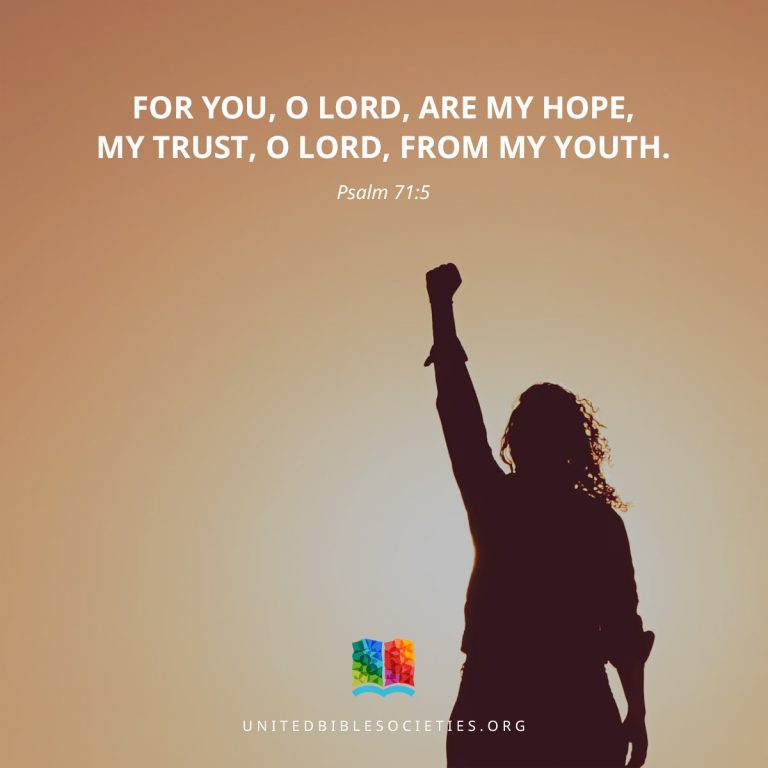
- Psalm 71:5 For you, O Lord, are my hope, my trust, O LORD, from my youth.
God is our hope. People may let us down, opportunities may go away, worldly things be lost or destroyed. But can can trust God and put our hope in him.
- Deuteronomy 31:8 It is the LORD who goes before you. He will be with you; he will not leave you or forsake you. Do not fear or be dismayed.
If you are struggling, this is a reminder that God is with you. You are not alone, it is not hopeless.
- Proverbs 23:18 Surely there is a future, and your hope will not be cut off.
This is a promise that hope in God is a hope that lasts. God will not let you down. Trust God to lead you into your future.
- Psalm 119:114 You are my hiding place and my shield; I hope in your word.
God has given us the Bible, his Word. Read it. You can find comfort and encouragement.
- Romans 5:1-2 Therefore, since we have been justified by faith, we have peace with God through our Lord Jesus Christ. Through him we have also obtained access by faith into this grace in which we stand, and we rejoice in hope of the glory of God.
It is thanks to Jesus Christ we can have hope. He came into the world with light, with love, with redemption and salvation.
- Titus 2:11-13 For the grace of God has appeared, bringing salvation for all people, training us to renounce ungodliness and worldly passions, and to live self-controlled, upright, and godly lives in the present age, waiting for our blessed hope, the appearing of the glory of our great God and Savior Jesus Christ
We are waiting for the second coming of Jesus. It is a promise to trust and have hope in. The day will come.
- Psalm 71:14 But I will hope continually and will praise you yet more and more.
Every day, put your faith in God, have your hope in him and whatever your situation is, praise God.

When Being a Woman Feels Like a Disadvantage – A Biblical Perspective
Does being a woman ever feel like a disadvantage? Many women quietly struggle with feeling overlooked, underestimated, or defined by society’s expectations. Yet the Bible reveals a very different truth. Discover 7 powerful Bible verses that show the dignity, strength, and purpose God has given to women.

What the Bible Says About Women’s Worth – From Invisible to Invincible
Feeling overlooked, undervalued, or underestimated as a woman? Discover how God sees every woman, lifts the overlooked, and turns the invisible into the invincible.

7 Powerful Bible Readings for Moms: Strength, Comfort, and Prayer
Naomi’s relationship with Ruth exemplifies love and loyalty beyond blood relations. Ruth’s decision to stay with Naomi despite personal loss shows that family bonds can be forged through love, commitment, and shared faith. Naomi’s guidance and Ruth’s dedication eventually led to God’s blessing in their lives.

Does being a woman ever feel like a disadvantage? Many women quietly struggle with feeling overlooked, underestimated, or defined by society’s expectations. Yet the Bible reveals a very different truth. Discover 7 powerful Bible verses that show the dignity, strength, and purpose God has given to women.

Feeling overlooked, undervalued, or underestimated as a woman? Discover how God sees every woman, lifts the overlooked, and turns the invisible into the invincible.

Naomi’s relationship with Ruth exemplifies love and loyalty beyond blood relations. Ruth’s decision to stay with Naomi despite personal loss shows that family bonds can be forged through love, commitment, and shared faith. Naomi’s guidance and Ruth’s dedication eventually led to God’s blessing in their lives.