

Our phones are practically an extension of our hands. TikTok, Instagram, YouTube — we scroll, we double tap, we post. But here’s a thought: what if every swipe, every story, every share could make a difference? What if your online presence could actually change someone’s day… or even their life?
The Bible doesn’t mention TikTok or trending hashtags, but it does give us timeless wisdom on how to live — and yes, that includes how we show up online.
Here’s how 7 powerful Bible verses can guide us from just scrolling to actually serving:
1. 1 Timothy 4:12 – “Don’t let anyone look down on you because you are young, but set an example for the believers in speech, in conduct, in love, in faith and in purity.”
Some people think you have to “grow up” to make an impact. Not true. Your voice matters now. The way you comment, the memes you post, the language you use in your captions — it all sets an example. Be the one who brings encouragement, not just more noise.
2. Ephesians 4:29 – “Do not let any unwholesome talk come out of your mouths, but only what is helpful for building others up.”
It’s so easy to roast someone online, join a cancel trend, or drop a “clap back” comment. But every word we post has power. What if we flipped it? What if your comments built people up instead of tearing them down? You might be the only kind word someone sees that day.
3. Matthew 5:14 – “You are the light of the world. A town built on a hill cannot be hidden.”
Social media can feel dark sometimes — cyberbullying, negativity, toxic trends. But light always wins over darkness. Your faith-filled posts, uplifting reels, and hopeful stories can shine like a beacon. Don’t hide your light. Someone out there needs to see it.
4. Proverbs 18:21 – “The tongue has the power of life and death.”
Think of your posts as seeds. Are you planting seeds of life or seeds of hurt? A single encouraging DM, a prayer shared in your stories, or a Scripture on your feed can breathe life into someone’s weary heart. Use your words to heal, not harm.
5. Colossians 3:17 – “And whatever you do, whether in word or deed, do it all in the name of the Lord Jesus.”
Yes — this even includes your TikToks. That trend you’re doing? That tweet you’re drafting? That bio on your profile? Everything online reflects who you are. Ask yourself: Does this honor God? Would I post this if Jesus followed me?(Spoiler: He does.)
6. Philippians 2:4 – “Not looking to your own interests but each of you to the interests of the others.”
It’s easy to post just for likes, clout, or validation. But what if you used your platform to notice others? Sharing a friend’s art, posting about a cause you care about, or raising awareness for someone in need — that’s serving with your feed.
7. Galatians 6:9 – “Let us not become weary in doing good, for at the proper time we will reap a harvest if we do not give up.”
Sometimes, you’ll post encouragement and it’ll feel like no one cares. You’ll share positive content and only get a few likes. But don’t quit. Your words, prayers, and kindness are making ripples you can’t see. Keep sowing good — God promises a harvest.
So… What Now?
Your online presence is powerful. It can tear down or build up, spread drama or share hope, fuel chaos or bring peace. Every post is a choice.
This month, try asking yourself before you hit “share”:
– Will this bring light?
– Will this lift someone up?
– Will this reflect the love of Jesus?
Because when we move from scrolling to serving, social media stops being just entertainment — it becomes ministry.

Avoiding stress during exams is essential for maintaining focus, performing well, and staying healthy. Here’s a biblical, practical, and actionable guide to managing stress effectively during exam time:
1. Start with Prayer and Trust in God
- Philippians 4:6-7 – “Do not be anxious about anything, but in every situation, by prayer and petition, with thanksgiving, present your requests to God.”
Tip: Whenever you feel overwhelmed, pause and pray. Surrender your worries to God.
Action:
- Start and end your study sessions with a short prayer.
- Keep a prayer journal where you express your concerns and ask God for peace.
2. Stay Organized with a Study Plan
- 1 Corinthians 14:40 – “But everything should be done in a fitting and orderly way.”
Tip: A well-organized study schedule prevents last-minute cramming and reduces stress.
Action:
- Break your syllabus into manageable chunks, covering a little every day.
- Use tools like a study timetable or to-do list to track progress.
3. Take Care of Your Body
- 1 Corinthians 6:19-20 – “Your body is a temple of the Holy Spirit… Therefore, honor God with your bodies.”
Tip: Eating well, exercising, and sleeping enough will help your brain function better.
Action:
- Exercise: Take short walks or do light stretches between study sessions.
- Sleep: Aim for 7-8 hours of sleep per night to improve concentration.
- Eat Nutritious Foods: Include fruits, vegetables, and water to keep your energy up.
4. Take Breaks and Rest
- Exodus 20:8-10 – “Remember the Sabbath day by keeping it holy…”
Tip: Rest is essential to recharge your brain and avoid burnout.
Action:
- Take 10-15 minute breaks every hour to relax your mind.
- Set aside one day a week to rest and engage in something you enjoy.
5. Avoid Comparison with Others
- Galatians 6:4 – “Each one should test their own actions… without comparing themselves to someone else.”
Tip: Comparing yourself with classmates can lead to unnecessary anxiety. Focus on your progress and efforts.
Action:
- Remind yourself that your journey is unique, and God has a plan for you.
- Celebrate small achievements along the way, like completing a topic or practice test.
6. Practice Deep Breathing and Relaxation Techniques
- Psalm 46:10 – “Be still, and know that I am God.”
Tip: When stress creeps in, breathe deeply and meditate on God’s presence.
Action:
- Deep Breathing: Inhale for 4 seconds, hold for 4 seconds, and exhale for 4 seconds. Repeat several times.
- Play soft, relaxing worship music while you study or during breaks.
7. Stay Positive and Speak Life Over Yourself
- Proverbs 18:21 – “The tongue has the power of life and death…”
Tip: Replace negative thoughts with positive affirmations rooted in Scripture.
Action:
- Speak aloud Scriptures like: “I can do all things through Christ who strengthens me” (Philippians 4:13).
- Avoid saying things like “I will fail” or “This is too hard.” Instead, say, “I am prepared, and God is with me.”
8. Engage in Fellowship with Others
- Ecclesiastes 4:9-10 – “Two are better than one… If one falls down, the other can help him up.”
Tip: Talk to family, friends, or mentors when you feel overwhelmed.
Action:
- Join a study group for encouragement.
- Share your concerns with someone who can pray with you and provide guidance.
9. Limit Distractions and Focus on the Present
- Matthew 6:34 – “Do not worry about tomorrow, for tomorrow will worry about itself.”
Tip: Avoid worrying about the future or dwelling on past mistakes. Stay focused on what you can do today.
Action:
- Set specific times to study without distractions from social media or phone notifications.
- Tackle one subject or task at a time to avoid overwhelm.
10. Trust God with the Outcome
- Proverbs 3:5-6 – “Trust in the Lord with all your heart and lean not on your own understanding…”
Tip: After you’ve done your best, trust God to handle the rest.
Action:
- After each exam, pray and thank God for the strength to finish.
- Avoid overanalyzing your performance, trust that God’s plan is perfect.
Conclusion
Managing stress during exams is about trusting God, planning wisely, taking care of yourself, and staying focused on the present. Remember that success is not just about grades—it’s about learning, growing, and relying on God’s strength. Following this guide will help you stay calm, focused, and productive throughout the exam season. You’ve got this! God is with you every step of the way.
The Bible is rich with wisdom regarding the power of our words. Throughout Scripture, we are reminded that the tongue—though small—holds the capacity to uplift, destroy, heal, or harm. The words we speak can shape destinies, mend relationships, or cause deep wounds. Let’s explore seven Bible verses that illuminate the profound power of the tongue.
1. Proverbs 18:21 – “Death and life are in the power of the tongue, and those who love it will eat its fruits.”
The words we choose to speak can bring encouragement, love, and healing, or they can cause hurt, division, and destruction. The “fruits” we reap from our words reflect their power—whether for good or ill.
2. James 3:5-6 – “So also the tongue is a small member, yet it boasts of great things. How great a forest is set ablaze by such a small fire! And the tongue is a fire, a world of unrighteousness.”
Although it is a small part of the body, the tongue can cause significant harm, much like a small spark can ignite an entire forest fire. James warns believers of the dangers of careless speech, reminding us that words can spread like wildfire, causing damage that can be difficult to undo.
3. Proverbs 12:18 – “There is one whose rash words are like sword thrusts, but the tongue of the wise brings healing.”
Words spoken in haste or anger can cut deeply, inflicting pain and damage similar to physical wounds. Conversely, wise and thoughtful words can bring comfort, peace, and restoration, highlighting the importance of controlling our speech and choosing our words carefully.
4. Ephesians 4:29 – “Let no corrupting talk come out of your mouths, but only such as is good for building up, as fits the occasion, that it may give grace to those who hear.”
We are urged to avoid corrupting or harmful talk and instead speak in ways that edify and encourage others. Words have the power to build up or tear down, and we are encouraged to use our speech to impart grace and support to those around us.
5. Proverbs 15:4 – “A gentle tongue is a tree of life, but perverseness in it breaks the spirit.”
A gentle tongue, like a tree of life, offers nourishment, strength, and growth. In contrast, perverse or harsh speech can crush a person’s spirit, leading to discouragement and despair. The verse encourages us to speak with kindness and gentleness, fostering life and growth in others.
6. Matthew 12:36-37 – “I tell you, on the day of judgment people will give account for every careless word they speak, for by your words you will be justified, and by your words you will be condemned.”
Jesus’ words in Matthew are a sobering reminder of the accountability we have for our speech. Every word we speak—careless or otherwise—will be subject to judgment. Our words reflect our hearts, and they play a role in our justification or condemnation. This verse underscores the importance of being mindful of our speech, knowing that it has eternal consequences.
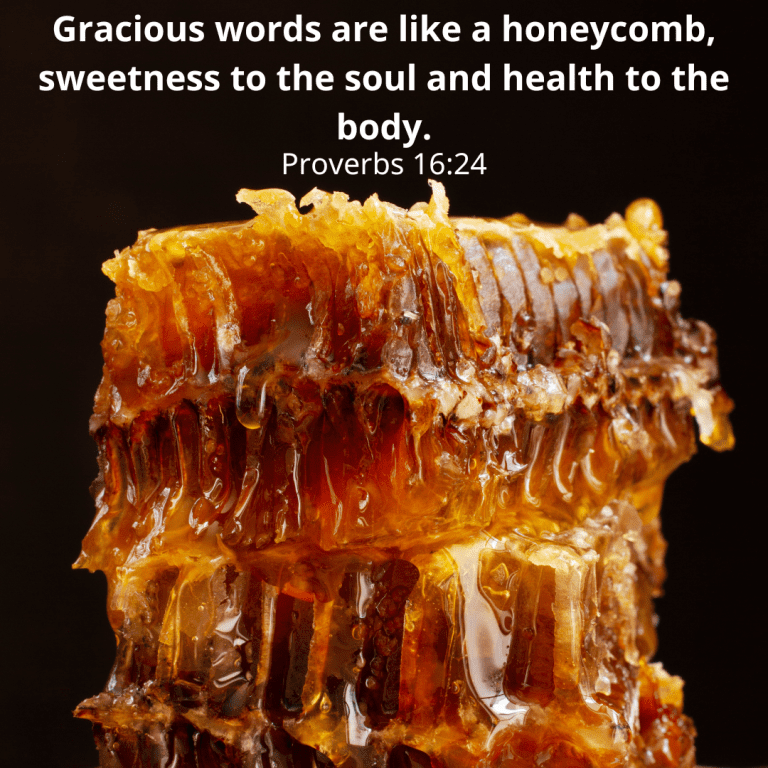
7. Proverbs 16:24 – “Gracious words are like a honeycomb, sweetness to the soul and health to the body.”
Words that are kind, loving, and considerate are likened to honeycomb—sweet and nourishing, bringing joy and health to both the speaker and the listener. The verse encourages us to speak in ways that bring sweetness and well-being to others, reflecting the love and grace of God through our words.
Conclusion
The Bible consistently teaches that the tongue, though small, wields immense power. It can bring life or death, healing or harm, joy or sorrow. As followers of Christ, we are called to use our words wisely, to speak life, and to reflect God’s love through our speech. By guarding our tongues and choosing our words carefully, we can positively influence those around us and honor God with our speech.
From Scrolling to Serving: 7 Powerful Ways to Use Your Online Presence for Kingdom Impact
Our phones are practically an extension of our hands. TikTok, Instagram, YouTube — we scroll, we double tap, we post. But here’s a thought: what if every swipe, every story, every share could make a difference? What if your online presence could actually change someone’s day… or even their life?
Tips to avoid stress during exams
Managing stress during exams is about trusting God, planning wisely, taking care of yourself, and staying focused on the present. Remember that success is not just about grades—it’s about learning, growing, and relying on God's strength. Following this guide will help you stay calm, focused, and productive throughout the exam season. You've got this! God is with you every step of the way.
7 Bible Verses about The Power of the Tongue
The Bible consistently teaches that the tongue, though small, wields immense power. It can bring life or death, healing or harm, joy or sorrow. As followers of Christ, we are called to use our words wisely, to speak life, and to reflect God's love through our speech. By guarding our tongues and choosing our words carefully, we can positively influence those around us and honor God with our speech.
Our phones are practically an extension of our hands. TikTok, Instagram, YouTube — we scroll, we double tap, we post. But here’s a thought: what if every swipe, every story, every share could make a difference? What if your online presence could actually change someone’s day… or even their life?
Managing stress during exams is about trusting God, planning wisely, taking care of yourself, and staying focused on the present. Remember that success is not just about grades—it’s about learning, growing, and relying on God's strength. Following this guide will help you stay calm, focused, and productive throughout the exam season. You've got this! God is with you every step of the way.
The Bible consistently teaches that the tongue, though small, wields immense power. It can bring life or death, healing or harm, joy or sorrow. As followers of Christ, we are called to use our words wisely, to speak life, and to reflect God's love through our speech. By guarding our tongues and choosing our words carefully, we can positively influence those around us and honor God with our speech.