

Disagreeing with your parents does not mean you are disrespectful. This article shares seven Bible verses, including Exodus 20:12, Ephesians 6:1, Proverbs 15:1 and Acts 5:29, showing how to listen, communicate gently, seek God’s wisdom and honour your parents while still making responsible, faith-led decisions as you mature into adulthood.
So, because I disagree with my parents, does that mean I’m disrespectful? Maybe your parents want you to pursue a career you don’t like. Maybe they don’t approve of your relationship. Or perhaps you’re an adult trying to make your own decisions, but every disagreement leaves you feeling guilty.
You’ve probably heard the Bible say, “Honour thy father and thy mother.” But does honouring your parents mean saying yes to everything, even when you believe a different choice is right for you?
Let’s explore seven Bible verses that can help you navigate these difficult conversations with wisdom, faith and maturity.
1. Exodus 20:12 — Honour Your Parents
“Honour thy father and thy mother: that thy days may be long upon the land which the LORD thy God giveth thee.” — KJV
Honouring your parents means treating them with love and respect, appreciating their sacrifices and valuing their contribution to your life. Even when you disagree, you can choose to communicate respectfully.
2. Ephesians 6:1 — Children, Obey Your Parents
“Children, obey your parents in the Lord: for this is right.” — KJV
Children need parental guidance, protection and appropriate rules. As they grow into adulthood, however, they take on greater responsibility for their own decisions. Honouring parents remains important, but it does not mean surrendering every adult choice to them.
3. Proverbs 1:8 — Listen to Their Wisdom
“My son, hear the instruction of thy father, and forsake not the law of thy mother.” — KJV
Parents often speak from experience and concern. Even if you disagree with their advice, listen and consider their perspective. You may discover valuable wisdom, even when you ultimately make a different decision.
4. James 1:19 — Listen Before You Respond
“Let every man be swift to hear, slow to speak, slow to wrath.” — James 1:19, KJV
Disagreements can quickly become arguments when emotions take over. Listen to your parents, allow them to explain their concerns and share your views calmly. You can stand by your decision without being disrespectful.
5. Romans 12:2 — Seek God’s Wisdom
“Be ye transformed by the renewing of your mind, that ye may prove what is that good, and acceptable, and perfect, will of God.” — KJV
God calls us to develop discernment. When making important decisions, pray, study Scripture and seek wise counsel. Do not dismiss your parents’ advice simply because you disagree, but take responsibility for making thoughtful choices.
6. Proverbs 15:1 — Disagree With Kindness
“A soft answer turneth away wrath: but grievous words stir up anger.” — KJV
How you communicate matters. Instead of responding with anger, explain your perspective gently. You may not reach an agreement, but respectful communication can help preserve your relationship.
7. Acts 5:29 — Put God First
“We ought to obey God rather than men.” — KJV
The apostles spoke these words when they were ordered to stop proclaiming the Gospel. Their example reminds us that human authority has limits when it conflicts with God’s commands. This is not an excuse to reject every instruction we dislike, but a reminder to put God first.
Can You Honour Your Parents and Still Disagree?
Yes! Honouring your parents does not mean agreeing with everything they say. Children need guidance, while adults must increasingly take responsibility for their own choices. Both can listen, communicate respectfully and maintain loving relationships.
The goal is not to win arguments or prove your parents wrong. It is to grow in wisdom, act responsibly and treat them with love, even when your opinions differ.
Remember: You can disagree without dishonouring, make your own decisions without rejecting your parents, and remain respectful without giving up your convictions.

Not everyone will understand your boundaries, but Scripture shows you can stand firm with kindness. These seven NIV Bible verses teach you to speak truth in love, say a respectful no, pause before reacting, pursue peace, resist people pleasing, guard your heart and choose gentle words without guilt or harshness.
Have you ever said no to someone, only to be called selfish? Maybe you declined a favour, stepped back from a draining friendship or turned down another church commitment.
Suddenly, you’re questioning yourself. Am I wrong for protecting my peace?
Not everyone will understand your boundaries. But you can stand firm in your decisions while treating others with love and respect. Here’s what the Bible says.
1. Speak the Truth in Love
Ephesians 4:15 (NIV)
“Instead, speaking the truth in love…”
Being honest doesn’t mean being harsh. If someone’s behaviour hurts you, explain how you feel without attacking them.
Try this: “I value our friendship, but I need you to respect my decision.”
2. You Don’t Have to Explain Everything
Matthew 5:37 (NIV)
“All you need to say is simply ‘Yes’ or ‘No’…”
You decline an invitation, and suddenly you’re defending your decision. Remember, a respectful no is enough. You don’t need everyone’s approval to make a reasonable choice.
Try this: “Thank you for inviting me, but I won’t be able to make it.”
3. Pause Before You React
James 1:19 (NIV)
“Everyone should be quick to listen, slow to speak and slow to become angry.”
When someone calls you selfish, it’s tempting to fire back. Take a breath, listen and respond calmly. You can stand your ground without turning the conversation into an argument.
4. You Can Disagree and Still Pursue Peace
Romans 12:18 (NIV)
“If it is possible, as far as it depends on you, live at peace with everyone.”
You can communicate respectfully, but you cannot control how others respond. Do your part to make peace without abandoning your values or accepting mistreatment.
5. Stop Living for Everyone’s Approval
Galatians 1:10 (NIV)
“Am I now trying to win the approval of human beings, or of God?”
Afraid your friends will exclude you or your family will misunderstand you? It’s impossible to please everyone. Make wise, faith-centred decisions instead of letting guilt control you.
6. Protect Your Heart
Proverbs 4:23 (NIV)
“Above all else, guard your heart, for everything you do flows from it.”
If someone repeatedly ignores your boundaries, pay attention. You can forgive them while taking time to rebuild trust or creating some distance. Love doesn’t require you to accept repeated disrespect.
7. Choose Your Words Carefully
Proverbs 15:1 (NIV)
“A gentle answer turns away wrath, but a harsh word stirs up anger.”
When someone says, “You’ve changed!” you don’t have to respond with anger. Explain your decision calmly. Being gentle doesn’t mean giving in; it means standing firm without deliberately hurting others.
You Can Be Kind and Still Say No
Not everyone will agree with your boundaries, and that’s okay. Focus on communicating honestly, acting with love and remaining open to correction.
You can forgive without immediately restoring trust. You can say no without being disrespectful. And you can pursue peace without pretending everything is okay.
Reflection: Is there a difficult conversation you’ve been avoiding? How can you approach it with both courage and kindness?
Ask God for wisdom, choose your words carefully and remember: standing firm doesn’t mean you have to stop loving people.

December comes with a whole vibe, Christmas playlists, last-minute shopping, secret Santa stress, and that one cousin who finishes the Christmas drinks before Christmas actually arrives.
But there’s something else that happens every year too:
Gifts fade.
Excitement fades.
But God’s Word? It stays.
Think about it.
You can get someone sneakers today, and they’ll be creased by New Year.
A perfume? Finished by March.
A phone? Outdated in 6 months.
But a Bible, that’s a gift that grows with a person.
It enters every season of their life.
It speaks when people stay silent, comforts when life gets heavy, and guides when the path isn’t clear.
This Christmas, before you pick the usual gifts, here’s why gifting someone a Bible is the ultimate long-term investment, backed by 7 powerful Bible verses, each with a meaningful narrative.
1. It Never Gets Old — It Grows With You
“The grass withers and the flowers fall, but the word of our God endures forever.” — Isaiah 40:8 (NIV)
Every trend ends.
Every season changes.
But God’s Word? It has outlived empires, cultures, wars, generations and it’s still speaking today.
When someone receives a Bible, they’re not getting something that fades.
They’re receiving something that matures with them from youth to adulthood, from uncertainty to confidence, from questions to clarity.
A Bible is the only gift where the older it gets, the more valuable it becomes.
2. It Lights Up the Path When Life Gets Confusing
“Your word is a lamp for my feet, a light on my path.” — Psalm 119:105 (NIV)
Life is full of “I’m not sure what to do next” moments, choosing a career, choosing friends wisely, choosing peace when drama keeps knocking.
A Bible doesn’t just inspire, it illuminates.
It gives direction when someone feels stuck, lost or overwhelmed.
It’s like giving them a spiritual flashlight that never runs out of battery.
This gift says:
“You don’t have to walk through life blind. God will guide you.”
3. It Brings Peace When the World Is Too Loud
“Great peace have those who love your law.” — Psalm 119:165 (NIV)
Between social pressure, expectations, deadlines, and personal struggles, peace can feel rare.
But Scripture has this calming, grounding effect.
It quiets anxiety.
It softens the noise of life.
It reminds the heart who’s still in control.
Giving someone a Bible is giving them the gift of peace on demand, anytime, anywhere.
4. It Strengthens You When Plans Don’t Go Your Way
“Many are the plans in a person’s heart, but it is the Lord’s purpose that prevails.” — Proverbs 19:21 (NIV)
We make plans.
Life changes them.
Sometimes brutally.
A Bible reminds us that God is writing a bigger, better story than the one we imagined.
When someone’s heart breaks, when doors close, or when life takes unexpected turns,
Scripture holds them up and pushes them forward.
It’s the gift that whispers:
“God’s not done with you yet.”
5. It’s a Weapon in the Middle of Life’s Battles
“Take the sword of the Spirit, which is the word of God.” — Ephesians 6:17 (NIV)
Life can fight dirty, fear, self-doubt, spiritual attacks, comparison, emotional pressure.
But the Bible isn’t passive. It’s not just comforting, it’s powerful. It’s a weapon.
It gives strength, authority, and truth when a person is under pressure.
When you give someone a Bible, you’re not handing them a book.
You’re handing them a sword, one that helps them fight back.
6. It Gives Real Hope — Not the Temporary Kind
“For everything that was written… was written to teach us, so that through the endurance taught in the Scriptures and the encouragement they provide we might have hope.” — Romans 15:4 (NIV)
Hope is hard to find these days.
People smile publicly but are secretly exhausted.
Social media is loud, expectations are high, and disappointments hit deep.
Scripture restores hope, not the motivational quote type of hope,
but deep, anchored hope that survives storms.
A Bible becomes a lifeline when someone feels like giving up.
It tells them, “This darkness isn’t the end. God is working.”
7. It Transforms a Life From the Inside Out
“For the word of God is alive and active.” — Hebrews 4:12 (NIV)
No novel, no diary, no self-help book can do what the Bible does.
It breaks chains, heals wounds, renews minds, and shapes destinies.
The Bible doesn’t sit on a shelf, it works.
It enters a person’s thoughts, decisions, relationships, confidence, and purpose.
Giving someone a Bible is giving them a chance to meet God for themselves,
and nothing beats that.
So Why Give a Bible This Christmas?
Because every other gift expires.
But God’s Word:
- Guides.
- Heals.
- Strengthens.
- Encourages.
- Transforms.
- Anchors.
- Stays.
You’re not giving a moment.
You’re giving a lifetime.
You’re giving something eternal.
Give someone a Bible this Christmas, It hits different, not just today, but forever.**

When you are feeling anxious or worried, it’s a good idea to go to the Bible. God knows our fears and worries, and the Bible has many words to lift us up, giving hope and relieving us of anxiety.
- Isaiah 41:13 For I, the Lord your God, hold your right hand; it is I who say to you, “Fear not, I am the one who helps you.”
You are not alone. God is here, He is with you. This is an important reminder because anxiety can be overwhelming. But God is here to help you.
- John 14:1 Let not your hearts be troubled. Believe in God; believe also in me.
God became a man, Jesus Christ, and lived as one of us. He knows your situation. Jesus reminds you to turn to him in faith.
- Psalm 34:4 I sought the LORD, and he answered me and delivered me from all my fears.
When you seek God, the Bible tells us that God will answer. Seek God with all your heart and he will deliver you from your fears.
- Psalm 94:19 When the cares of my heart are many, your consolations cheer my soul.
Anxiety can make your heart feel heavy and burdened. Read the Word of God and let God lift you up.
- Proverbs 29:25 The fear of man lays a snare, but whoever trusts in the LORD is safe.
Our fears try to bring us down and trap us. God is our refuge, he is our safe harbour. Put your trust in God.
- Colossians 3:15 And let the peace of Christ rule in your hearts, to which indeed you were called in one body. And be thankful.
When we let God into our hearts, there is peace. That peace isn’t just for ourselves, but for all who follow Jesus Christ.
- Romans 15:13 May the God of hope fill you with all joy and peace in believing, so that by the power of the Holy Spirit you may abound in hope.
We need to keep our faith in God. It can be hard when we are anxious. But ask people around you to pray for you.
The Bible is rich with wisdom regarding the power of our words. Throughout Scripture, we are reminded that the tongue—though small—holds the capacity to uplift, destroy, heal, or harm. The words we speak can shape destinies, mend relationships, or cause deep wounds. Let’s explore seven Bible verses that illuminate the profound power of the tongue.
1. Proverbs 18:21 – “Death and life are in the power of the tongue, and those who love it will eat its fruits.”
The words we choose to speak can bring encouragement, love, and healing, or they can cause hurt, division, and destruction. The “fruits” we reap from our words reflect their power—whether for good or ill.
2. James 3:5-6 – “So also the tongue is a small member, yet it boasts of great things. How great a forest is set ablaze by such a small fire! And the tongue is a fire, a world of unrighteousness.”
Although it is a small part of the body, the tongue can cause significant harm, much like a small spark can ignite an entire forest fire. James warns believers of the dangers of careless speech, reminding us that words can spread like wildfire, causing damage that can be difficult to undo.
3. Proverbs 12:18 – “There is one whose rash words are like sword thrusts, but the tongue of the wise brings healing.”
Words spoken in haste or anger can cut deeply, inflicting pain and damage similar to physical wounds. Conversely, wise and thoughtful words can bring comfort, peace, and restoration, highlighting the importance of controlling our speech and choosing our words carefully.
4. Ephesians 4:29 – “Let no corrupting talk come out of your mouths, but only such as is good for building up, as fits the occasion, that it may give grace to those who hear.”
We are urged to avoid corrupting or harmful talk and instead speak in ways that edify and encourage others. Words have the power to build up or tear down, and we are encouraged to use our speech to impart grace and support to those around us.
5. Proverbs 15:4 – “A gentle tongue is a tree of life, but perverseness in it breaks the spirit.”
A gentle tongue, like a tree of life, offers nourishment, strength, and growth. In contrast, perverse or harsh speech can crush a person’s spirit, leading to discouragement and despair. The verse encourages us to speak with kindness and gentleness, fostering life and growth in others.
6. Matthew 12:36-37 – “I tell you, on the day of judgment people will give account for every careless word they speak, for by your words you will be justified, and by your words you will be condemned.”
Jesus’ words in Matthew are a sobering reminder of the accountability we have for our speech. Every word we speak—careless or otherwise—will be subject to judgment. Our words reflect our hearts, and they play a role in our justification or condemnation. This verse underscores the importance of being mindful of our speech, knowing that it has eternal consequences.
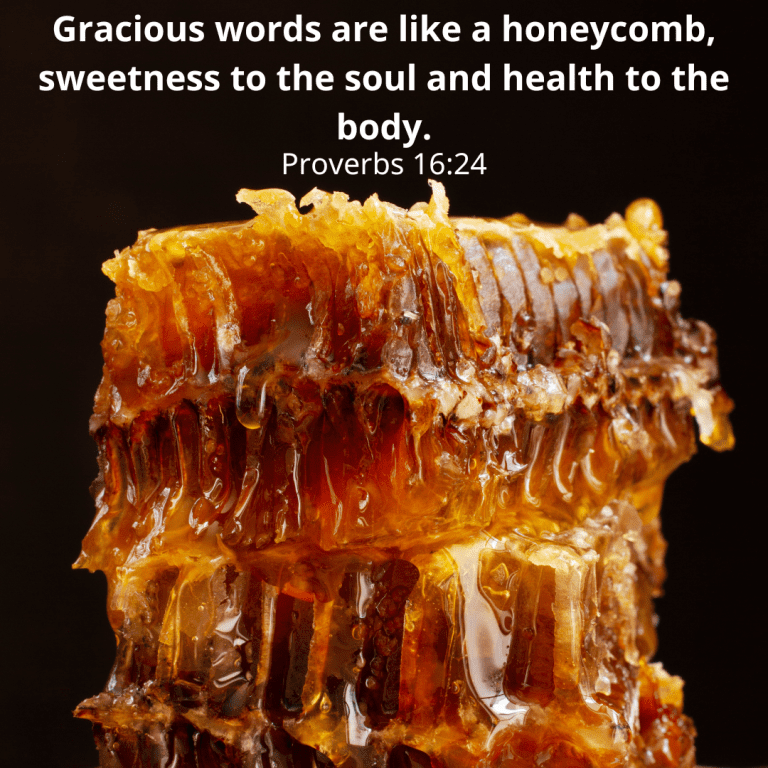
7. Proverbs 16:24 – “Gracious words are like a honeycomb, sweetness to the soul and health to the body.”
Words that are kind, loving, and considerate are likened to honeycomb—sweet and nourishing, bringing joy and health to both the speaker and the listener. The verse encourages us to speak in ways that bring sweetness and well-being to others, reflecting the love and grace of God through our words.
Conclusion
The Bible consistently teaches that the tongue, though small, wields immense power. It can bring life or death, healing or harm, joy or sorrow. As followers of Christ, we are called to use our words wisely, to speak life, and to reflect God’s love through our speech. By guarding our tongues and choosing our words carefully, we can positively influence those around us and honor God with our speech.
Can You Disagree With Your Parents and Still Honour Them? 7 Bible Verses
Does disagreeing with your parents make you disrespectful? Explore seven Bible verses that show how to honour your parents, listen with humility and make your own faith-led decisions with wisdom and kindness.
When People Misunderstand Your Boundaries. 7 Bible Verses About Boundaries and Difficult Conversations
Not everyone will understand your boundaries, but you can stand firm while treating others with love and respect. Discover 7 Bible verses to guide your difficult conversations.
Does disagreeing with your parents make you disrespectful? Explore seven Bible verses that show how to honour your parents, listen with humility and make your own faith-led decisions with wisdom and kindness.
Not everyone will understand your boundaries, but you can stand firm while treating others with love and respect. Discover 7 Bible verses to guide your difficult conversations.
7 Bible Verses about The Power of the Tongue
The Bible consistently teaches that the tongue, though small, wields immense power. It can bring life or death, healing or harm, joy or sorrow. As followers of Christ, we are called to use our words wisely, to speak life, and to reflect God's love through our speech. By guarding our tongues and choosing our words carefully, we can positively influence those around us and honor God with our speech.
The Bible consistently teaches that the tongue, though small, wields immense power. It can bring life or death, healing or harm, joy or sorrow. As followers of Christ, we are called to use our words wisely, to speak life, and to reflect God's love through our speech. By guarding our tongues and choosing our words carefully, we can positively influence those around us and honor God with our speech.