

Disagreeing with your parents does not mean you are disrespectful. This article shares seven Bible verses, including Exodus 20:12, Ephesians 6:1, Proverbs 15:1 and Acts 5:29, showing how to listen, communicate gently, seek God’s wisdom and honour your parents while still making responsible, faith-led decisions as you mature into adulthood.
So, because I disagree with my parents, does that mean I’m disrespectful? Maybe your parents want you to pursue a career you don’t like. Maybe they don’t approve of your relationship. Or perhaps you’re an adult trying to make your own decisions, but every disagreement leaves you feeling guilty.
You’ve probably heard the Bible say, “Honour thy father and thy mother.” But does honouring your parents mean saying yes to everything, even when you believe a different choice is right for you?
Let’s explore seven Bible verses that can help you navigate these difficult conversations with wisdom, faith and maturity.
1. Exodus 20:12 — Honour Your Parents
“Honour thy father and thy mother: that thy days may be long upon the land which the LORD thy God giveth thee.” — KJV
Honouring your parents means treating them with love and respect, appreciating their sacrifices and valuing their contribution to your life. Even when you disagree, you can choose to communicate respectfully.
2. Ephesians 6:1 — Children, Obey Your Parents
“Children, obey your parents in the Lord: for this is right.” — KJV
Children need parental guidance, protection and appropriate rules. As they grow into adulthood, however, they take on greater responsibility for their own decisions. Honouring parents remains important, but it does not mean surrendering every adult choice to them.
3. Proverbs 1:8 — Listen to Their Wisdom
“My son, hear the instruction of thy father, and forsake not the law of thy mother.” — KJV
Parents often speak from experience and concern. Even if you disagree with their advice, listen and consider their perspective. You may discover valuable wisdom, even when you ultimately make a different decision.
4. James 1:19 — Listen Before You Respond
“Let every man be swift to hear, slow to speak, slow to wrath.” — James 1:19, KJV
Disagreements can quickly become arguments when emotions take over. Listen to your parents, allow them to explain their concerns and share your views calmly. You can stand by your decision without being disrespectful.
5. Romans 12:2 — Seek God’s Wisdom
“Be ye transformed by the renewing of your mind, that ye may prove what is that good, and acceptable, and perfect, will of God.” — KJV
God calls us to develop discernment. When making important decisions, pray, study Scripture and seek wise counsel. Do not dismiss your parents’ advice simply because you disagree, but take responsibility for making thoughtful choices.
6. Proverbs 15:1 — Disagree With Kindness
“A soft answer turneth away wrath: but grievous words stir up anger.” — KJV
How you communicate matters. Instead of responding with anger, explain your perspective gently. You may not reach an agreement, but respectful communication can help preserve your relationship.
7. Acts 5:29 — Put God First
“We ought to obey God rather than men.” — KJV
The apostles spoke these words when they were ordered to stop proclaiming the Gospel. Their example reminds us that human authority has limits when it conflicts with God’s commands. This is not an excuse to reject every instruction we dislike, but a reminder to put God first.
Can You Honour Your Parents and Still Disagree?
Yes! Honouring your parents does not mean agreeing with everything they say. Children need guidance, while adults must increasingly take responsibility for their own choices. Both can listen, communicate respectfully and maintain loving relationships.
The goal is not to win arguments or prove your parents wrong. It is to grow in wisdom, act responsibly and treat them with love, even when your opinions differ.
Remember: You can disagree without dishonouring, make your own decisions without rejecting your parents, and remain respectful without giving up your convictions.

Not everyone will understand your boundaries, but Scripture shows you can stand firm with kindness. These seven NIV Bible verses teach you to speak truth in love, say a respectful no, pause before reacting, pursue peace, resist people pleasing, guard your heart and choose gentle words without guilt or harshness.
Have you ever said no to someone, only to be called selfish? Maybe you declined a favour, stepped back from a draining friendship or turned down another church commitment.
Suddenly, you’re questioning yourself. Am I wrong for protecting my peace?
Not everyone will understand your boundaries. But you can stand firm in your decisions while treating others with love and respect. Here’s what the Bible says.
1. Speak the Truth in Love
Ephesians 4:15 (NIV)
“Instead, speaking the truth in love…”
Being honest doesn’t mean being harsh. If someone’s behaviour hurts you, explain how you feel without attacking them.
Try this: “I value our friendship, but I need you to respect my decision.”
2. You Don’t Have to Explain Everything
Matthew 5:37 (NIV)
“All you need to say is simply ‘Yes’ or ‘No’…”
You decline an invitation, and suddenly you’re defending your decision. Remember, a respectful no is enough. You don’t need everyone’s approval to make a reasonable choice.
Try this: “Thank you for inviting me, but I won’t be able to make it.”
3. Pause Before You React
James 1:19 (NIV)
“Everyone should be quick to listen, slow to speak and slow to become angry.”
When someone calls you selfish, it’s tempting to fire back. Take a breath, listen and respond calmly. You can stand your ground without turning the conversation into an argument.
4. You Can Disagree and Still Pursue Peace
Romans 12:18 (NIV)
“If it is possible, as far as it depends on you, live at peace with everyone.”
You can communicate respectfully, but you cannot control how others respond. Do your part to make peace without abandoning your values or accepting mistreatment.
5. Stop Living for Everyone’s Approval
Galatians 1:10 (NIV)
“Am I now trying to win the approval of human beings, or of God?”
Afraid your friends will exclude you or your family will misunderstand you? It’s impossible to please everyone. Make wise, faith-centred decisions instead of letting guilt control you.
6. Protect Your Heart
Proverbs 4:23 (NIV)
“Above all else, guard your heart, for everything you do flows from it.”
If someone repeatedly ignores your boundaries, pay attention. You can forgive them while taking time to rebuild trust or creating some distance. Love doesn’t require you to accept repeated disrespect.
7. Choose Your Words Carefully
Proverbs 15:1 (NIV)
“A gentle answer turns away wrath, but a harsh word stirs up anger.”
When someone says, “You’ve changed!” you don’t have to respond with anger. Explain your decision calmly. Being gentle doesn’t mean giving in; it means standing firm without deliberately hurting others.
You Can Be Kind and Still Say No
Not everyone will agree with your boundaries, and that’s okay. Focus on communicating honestly, acting with love and remaining open to correction.
You can forgive without immediately restoring trust. You can say no without being disrespectful. And you can pursue peace without pretending everything is okay.
Reflection: Is there a difficult conversation you’ve been avoiding? How can you approach it with both courage and kindness?
Ask God for wisdom, choose your words carefully and remember: standing firm doesn’t mean you have to stop loving people.

The World Cup has once again given us unforgettable moments. Some teams celebrated with tears of joy, while others walked off the pitch heartbroken. Across Africa, fans packed viewing centres, gathered around TVs at home, and proudly wore their team’s colours. For a few weeks, football brought us together.
But whether your favourite team won or lost, one truth remains: life is full of victories and defeats. As Christians, God calls us to respond to both with faith, humility, and hope.
Here are seven Bible verses that show us how to handle both winning and losing, on the pitch and in everyday life.
1. Stay Humble When You Win
Proverbs 16:18 (NIV)
“Pride goes before destruction, a haughty spirit before a fall.”
Winning feels amazing. Whether it’s passing your exams, landing your dream job, growing your business, or watching your team lift the World Cup, success is worth celebrating. But success should never make us think we’re better than others.
The best champions stay humble, remembering that every opportunity and talent comes from God. Celebrate your victories, but never let pride replace gratitude.
2. Don’t Let Defeat Define You
Micah 7:8 (NIV)
“Though I have fallen, I will rise. Though I sit in darkness, the Lord will be my light.”
Every World Cup has heartbreaking exits. One mistake, one penalty miss, and the dream is over. Yet many great players come back stronger.
Life is no different. Maybe you didn’t get into university, your business didn’t work out, or you missed an opportunity. Your setback is not your identity. With God, every ending can become a new beginning.
3. Celebrate Others Without Jealousy
Romans 12:15 (NIV)
“Rejoice with those who rejoice; mourn with those who mourn.”
Not everyone can win the trophy. Sometimes you’ll be cheering while someone else is celebrating their breakthrough.
In today’s social media culture, it’s easy to compare your life with someone else’s success. Instead of feeling jealous, learn to celebrate others. Your season will come too.
4. Play With Integrity
Colossians 3:23 (NIV)
“Whatever you do, work at it with all your heart, as working for the Lord.”
Fans remember incredible goals, but they also remember players who showed honesty, respect, and sportsmanship.
Whether you’re in the classroom, the workplace, or creating content online, don’t chase shortcuts. Do your best because you’re serving God, not just people.
5. Trust God’s Timing
Ecclesiastes 3:1 (NIV)
“There is a time for everything, and a season for every activity under the heavens.”
Some footballers wait years before playing on the world’s biggest stage. Success rarely happens overnight.
Many young Africans dream of scholarships, jobs, businesses, or opportunities abroad. If things seem delayed, don’t lose hope. God’s timing is always better than our own.
6. Remember That Teamwork Matters
Ecclesiastes 4:9 (NIV)
“Two are better than one, because they have a good return for their labour.”
No player wins the World Cup alone. Every goal begins with teamwork.
The same is true in life. Build friendships that strengthen your faith, encourage your dreams, and help you grow closer to Christ. We were never meant to do life alone.
7. Live for the Eternal Prize
1 Corinthians 9:24–25 (NIV)
“Run in such a way as to get the prize… They do it to get a crown that will not last, but we do it to get a crown that will last forever.”
World Cup champions lift a trophy that will eventually belong to someone else. Records are broken, and new champions rise.
But following Jesus leads to a reward that never fades. While it’s okay to celebrate earthly achievements, our greatest goal should always be living a life that honours God.
Final Whistle
The World Cup may be over, but life’s match continues.
You’ll experience victories worth celebrating and defeats that test your faith. You’ll have moments when you’re cheering and moments when you’re wondering what’s next.
Whatever season you’re in, remember this: God is more interested in your character than your scoreboard.
So whether you’re winning or losing, studying or job hunting, building a business or chasing a dream, play your part with humility, integrity, and faith.
Because in Christ, the greatest victory isn’t lifting a trophy—it’s finishing the race well. (2 Timothy 4:7)
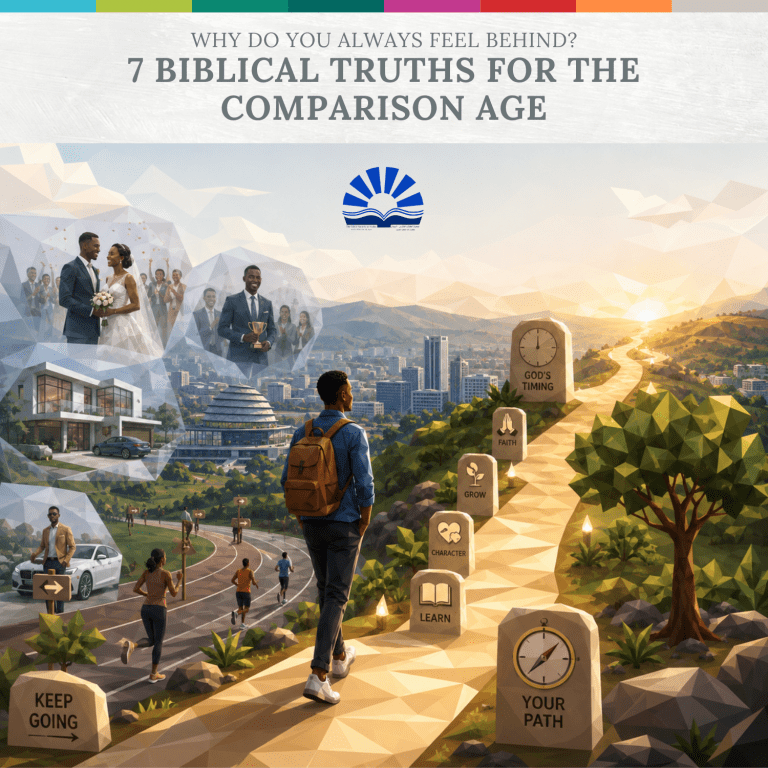
Feeling “behind” in life is a feeling, not a fact, manufactured almost entirely by comparison. The Bible reframes the whole question: you are not late, you are not defective, and you cannot fall behind a plan you did not write. These seven truths replace comparison anxiety with God’s timing, your God-given worth, and the freedom to run your own race.
Everyone seems to be ahead of you. The promotions, the weddings, the houses, the highlight reels. Scroll long enough and you start to believe the lie that you missed your moment. You didn’t. Here are seven truths that pull the plug on that feeling for good.
1. Your Pace Is Not Your Problem
Everyone seems to be ahead of you. Married, promoted, settled, thriving. The feed never stops reminding you. But “behind” is a feeling, not a fact, and comparison is where it is born.
Galatians 6:4-5 (NIV)
“Each one should test their own actions. Then they can take pride in themselves alone, without comparing themselves to someone else, for each one should carry their own load.”
Close the app. Measure today against your own yesterday, not against a stranger’s curated best. Your load is yours to carry, and yours alone to be proud of.
2. Your Timing Isn’t Broken
You are not late. You are not early. You are exactly where a season placed you. The pressure to catch up assumes there is one universal schedule. There isn’t.
Ecclesiastes 3:1 (NIV)
“There is a time for everything, and a season for every activity under the heavens.”
Winter is not a failed summer. If this is your waiting season, wait well. The harvest has its own calendar, and rushing it only ruins the crop.
3. The Highlight Reel Is Lying to You
Envy whispers that everyone else has it figured out. They don’t. You are comparing your raw footage to their final cut, and it is quietly eating you alive.
Proverbs 14:30 (NIV)
“A heart at peace gives life to the body, but envy rots the bones.”
Notice the cost. Envy does not only steal your joy; it corrodes your health. Trade the scroll for gratitude and watch your shoulders drop.
4. You Were Made on Purpose
Feeling behind assumes you are a defective version of someone better. You are not a rough draft. You were authored with intention, detail, and delight.
Psalm 139:14 (NIV)
“I praise you because I am fearfully and wonderfully made; your works are wonderful, I know that full well.”
Your worth was never tied to your milestones. Before the achievements, before the applause, you were already wonderfully made. Start there.
5. Your Future Is Already Mapped
The fear underneath “behind” is simple. What if I miss it? What if the good life passes me by? Scripture answers with a promise, not a panic.
Jeremiah 29:11 (NIV)
“‘For I know the plans I have for you,’ declares the Lord, ‘plans to prosper you and not to harm you, plans to give you hope and a future.’”
You cannot fall behind a plan you did not write. The same God who set the seasons is holding your future. Walk forward with open hands.
6. Contentment Is a Skill, Not a Mood
Contentment is not something you stumble into when life finally cooperates. Paul learned it in a prison cell. It is a muscle, trained in the gap between what you have and what you want.
Philippians 4:11 (NIV)
“I am not saying this because I am in need, for I have learned to be content whatever the circumstances.”
Practice it small today. Thank God for what is unfinished, for what is still in motion, for what has not arrived yet. Contentment grows where comparison used to live.
7. Run Your Own Race
Stop watching the lanes beside you. Runners who look sideways lose speed and lose heart. Your finish line is your own, and it is still ahead of you.
Hebrews 12:1 (NIV)
“Therefore, since we are surrounded by such a great cloud of witnesses, let us throw off everything that hinders and the sin that so easily entangles. And let us run with perseverance the race marked out for us.”
Drop the weight of comparison. Fix your eyes forward. Perseverance, not pace, is what carries you home.
You Were Never Behind. You Were Comparing.
You were never behind. You were comparing your story to a stranger’s edit, your winter to someone else’s summer, your raw draft to their highlight reel. Timing is not your enemy. Envy is. Lay it down. Run your own race, at your own pace, held by a God who already knows how it ends. You are not late. You are right on time.

When we think of world-changing figures, we often imagine adults with power, wealth, or fame. But sometimes, all it takes is a teenager with faith, determination, and courage. Mary Jones, a 15-year-old girl from Wales in the late 1700s, is a perfect example.
Mary was not rich. She had no influence. Yet her heart burned with a desire that would leave a lasting mark on history: she wanted her own Bible in her own language. Bibles were rare, expensive, and hard to come by in her village. But Mary’s story teaches us that age is no barrier when God is in the equation.
“Let no one despise your youth, but set the believers an example in speech, in conduct, in love, in faith, in purity.” – 1 Timothy 4:12
From the age of 10, Mary began saving every penny she could earn. For six long years, she collected coins, carefully storing them until she finally had enough. Her hunger for God’s Word was relentless, a hunger that Scripture promises will be satisfied:
“Blessed are those who hunger and thirst for righteousness, for they shall be satisfied.” – Matthew 5:6
At 15, she set off on a journey that would test her faith and determination. The nearest place to buy a Bible was 25 miles away in Bala. With no shoes and only the money she had saved, Mary walked over rivers, hills, and rocky paths because she believed God’s Word was worth the effort.
“I can do all things through him who strengthens me.” – Philippians 4:13
When she finally arrived, she was met with disappointment: all the Bibles were already promised to others. Many would have turned back. But not Mary. She persisted, trusting that God’s plan was greater than her moment of despair:
“But those who wait for the Lord shall renew their strength; they shall mount up with wings like eagles; they shall run and not be weary; they shall walk and not faint.” – Isaiah 40:31
Seeing her determination and tears, Reverend Thomas Charles gave Mary one of the remaining Bibles. That moment marked the fulfillment of her dream and the beginning of something much bigger.
“Commit your work to the Lord, and your plans will be established.” – Proverbs 16:3
Mary’s story didn’t stop with a single Bible in her hands. Her passion inspired the founding of the British and Foreign Bible Society, which went on to distribute Bibles worldwide. One teenager’s faith had sparked a global movement.
“For nothing will be impossible with God.” – Luke 1:37
Mary Jones reminds us that age is no limit to impact. Her courage, determination, and love for God’s Word continue to challenge young people today. Each of us has a “25-mile walk” to make for God, whether it’s sharing His Word, helping someone in need, or living out faith courageously.
“Do not be slothful in zeal, be fervent in spirit, serve the Lord.” – Romans 12:11
The question is: what will you do with your passion, your faith, and your courage?

We live in a world where almost everything is just a click away — opinions, substances, validation, or distractions. For the youth, the pressure to experiment, fit in, or numb out is massive. From parties to pills, vaping to pornography, hookup culture to hustler mindsets, there’s this silent rule that says, “Do what you want, no one cares.”
But you know what? God cares. And deep down, so do you. Here’s how you can stand firm and thrive in a culture that keeps telling you to let go.
1. 1 Corinthians 10:13 — “No temptation has overtaken you except what is common to mankind…”
You’re not alone in this.
Whether it’s the pressure to try drugs, get high to escape stress, or be someone you’re not just to fit in, you’re not weird or weak for struggling. Everyone faces temptation. The verse promises that God will always provide a way out. Sometimes that “way out” is a friend’s text, a parent’s question, or just that inner voice saying “Don’t do it.”
Story: Thomas tried weed at 16 because everyone at the party was doing it. He thought he’d be cooler, braver. But instead, he ended up anxious and ashamed. Years later, he discovered this verse and realized temptation didn’t define him, God had always offered a better choice.
2. Romans 12:2 — “Do not conform to the pattern of this world…”
The world screams, “Normalize it!”
God whispers, “Renew your mind.”
Peer pressure often starts with small things: music, jokes, drinks, risky DMs. But one compromise leads to another. This verse reminds us not to copy what the world says is okay. Transformation begins in the mind. What you feed your thoughts with — that’s what shapes your life.
Story: Margaret stopped following certain pages on Instagram — they weren’t evil, just misleading. After a month of feeding her mind differently, she felt lighter, freer, and more confident in who God said she was.
3. James 4:7 — “Submit yourselves, then, to God. Resist the devil, and he will flee from you.”
You have authority.
Temptation isn’t just a feeling — it’s spiritual warfare. You don’t fight it alone. Submitting to God isn’t weakness; it’s your superpower. The moment you decide to stand firm, hell trembles.
Story: Mike kept falling into late-night habits online. But once he started praying before going to bed and installing accountability apps, the grip lessened. When you resist consistently, the temptation doesn’t stick around.
4. Proverbs 1:10 — “My son, if sinful men entice you, do not give in to them.”
Not all friendships are safe.
Sometimes it’s not the drugs or the drinking — it’s the friend group behind it. God calls us to courage — to walk away from those leading us astray. It’s better to lose fake friends than to lose yourself.
Story: Jonathan left his crew after realizing they were slowly dragging him into a life he didn’t want. It hurt at first. But a few months later, he found real friends at church who uplifted him, not trapped him.
5. Galatians 5:1 — “It is for freedom that Christ has set us free…”
Jesus didn’t die for you to live in chains.
Addiction is real — whether it’s substances, screens, sex, or approval. But freedom is not just possible — it’s promised. You’re not stuck. God’s power can break cycles that feel permanent.
Story: Grace was addicted to pills. She didn’t think prayer or therapy would work — until she tried both. Healing didn’t happen overnight, but every day, she felt the chains loosen.
6. 2 Timothy 2:22 — “Flee the evil desires of youth and pursue righteousness…”
Run to something better.
Sometimes we focus too much on what to avoid and forget what we should chase: purpose, peace, community, God. You’re not just saying no to temptation — you’re saying yes to something way better.
Story: Trish stopped clubbing every weekend. Not because someone forced her, but because she found passion in leading youth worship. Her “no” gave birth to a bigger “yes.”
7. Psalm 119:9 — “How can a young person stay on the path of purity? By living according to your word.”
The Bible is your map.
In a culture where boundaries are blurred, God’s Word becomes a GPS for purity, purpose, and peace. The more you read it, the more you recognize the lies you’ve been believing. Scripture rewires your heart.
Story: Morris began with one verse a day. Just one. A month later, he felt like he was finally walking in light after years of being lost in fog.
Final Thoughts: You Were Born to Stand Out
This “anything goes” generation will try to cancel your convictions, mock your morals, and twist your truth. But God called you to be different — not to judge, but to shine.
Temptation will always knock. But with God’s Word in your heart, community by your side, and the Spirit guiding your steps, you don’t have to open that door.
You are stronger than the pressure.
You are not alone.
You are chosen.
Struggling with more than just temptation? Discover how faith can help you overcome addiction. There’s hope beyond the habit. Learn how God’s power can help you overcome addiction.

A Fresh Look for a Generation Seeking Real Faith
You’ve probably seen the list on a church wall, a t-shirt, or a Pinterest post:
Love. Joy. Peace. Patience. Kindness. Goodness. Faithfulness. Gentleness. Self-Control.
That’s the fruit of the Spirit (Galatians 5:22–23).
But here’s the thing: these aren’t just “nice Christian traits” you try to copy. They’re evidence that something supernatural is growing inside you, something the Holy Spirit is actively forming. Let’s break them down one by one in a way that speaks to real life.
1. LOVE
“Dear children, let us not love with words or speech but with actions and in truth.” – 1 John 3:18
We live in a world where love is often performative. It’s in captions and emojis, but not always in action. The Holy Spirit teaches us to love people even when they’re difficult, unlovable, or don’t benefit us.
Real love:
- Listens before speaking
- Forgives even when it hurts
- Stays when it’s easier to walk away
2. JOY
“Though you have not seen him, you love him… you are filled with an inexpressible and glorious joy.” – 1 Peter 1:8
Joy is different from happiness. It’s not tied to a vibe, a relationship, or a goal. Joy is deep and steady.
You can be battling anxiety and still carry joy. You can be broke and still feel joy. Why? Because joy is rooted in who God is, not what life looks like.
3. PEACE
“You will keep in perfect peace those whose minds are steadfast, because they trust in you.” – Isaiah 26:3
Peace isn’t passive. It’s fierce trust in the middle of chaos.
For young people constantly hit with bad news, mental pressure, and overthinking, peace feels rare. But the Holy Spirit anchors us when the world spins. Peace shows up in how we handle pressure, stay grounded in prayer, and choose surrender over control.
4. PATIENCE
“Be completely humble and gentle; be patient, bearing with one another in love.” – Ephesians 4:2
We’re an instant generation, streaming, deliveries, dating apps. We’re wired for now.
But spiritual maturity grows in the slow seasons. Patience is learning to:
- Wait without whining
- Love people who don’t “get it” yet
- Trust God’s timeline, not your own
It’s not natural, but it’s powerful and deeply needed in a culture obsessed with speed.
5. KINDNESS
“God’s kindness is intended to lead you to repentance.” – Romans 2:4
Kindness isn’t just random acts. It’s intentional compassion.
It’s DM-ing someone just to check in.
It’s being gentle when you have every reason to be cold.
It’s choosing not to clap back even when you could go viral.
Kindness is powerful because it reflects the kindness God showed us.
6. GOODNESS
“Do not be overcome by evil, but overcome evil with good.” – Romans 12:21
Goodness is about integrity when no one’s watching.
It’s not about being a “good person”, it’s about choosing what’s right, even when it costs you.
It’s:
- Being honest when you could cut corners
- Calling out injustice, even if it’s unpopular
- Living with purity in a world that celebrates compromise
7. FAITHFULNESS
“His master replied, ‘Well done, good and faithful servant!’” – Matthew 25:21
This one’s about showing up in relationships, in responsibilities, and in your walk with God.
Faithfulness says:
- “I’ll keep praying, even when I feel nothing.”
- “I’ll show up for my friends when it’s not convenient.”
- “I’ll follow through on what I said.”
In a culture that glorifies jumping ship, faithfulness is countercultural—and deeply beautiful.
8. GENTLENESS
“Let your gentleness be evident to all.” – Philippians 4:5
Gentleness isn’t weakness. It’s controlled strength.
In a world where loud = power, the Spirit teaches us a quieter strength.
Gentleness shows up when:
- You disagree without disrespecting
- You lead without dominating
- You correct without crushing
Jesus was gentle with the broken and we’re called to be like Him.
9. SELF-CONTROL
“Like a city whose walls are broken through is a person who lacks self-control.” – Proverbs 25:28
Without self-control, everything else crumbles.
It’s the Spirit saying:
- “Don’t send that text.”
- “Pause before you scroll.”
- “Say no when you know it’s not worth it.”
This fruit guards your peace, protects your witness, and empowers you to make decisions that align with your purpose not your impulse.
Final Thoughts: Fruit Takes Time
You don’t become a walking, talking Fruit Basket overnight.
But if you stay rooted in Jesus, the Holy Spirit will grow this fruit in you gradually, powerfully, and authentically.
You might not see it every day. But others will.
And in a world craving something real, the Spirit’s fruit is the loudest quiet message you’ll ever carry.
Ask Yourself:
- Which fruit comes easiest for me?
- Which one is God stretching in me right now?
- How can I lean into the Spirit more today?
Next Step:
If you’re serious about growth, start a “Fruit Check” journal every week, reflect on one fruit and ask:
“How did I live this out or not this week?”
Spiritual growth isn’t about perfection. It’s about progress. And you don’t walk it alone, the Spirit walks with you.
Love and relationships are important aspects of life, especially for younger generations navigating friendships, family dynamics, dating, and social connections. In a world where love is often portrayed in a confusing, fleeting, or superficial way, the Bible offers clear and timeless wisdom on what love truly means and how to build healthy relationships.
Here are seven Bible verses that will help guide you through the complexities of love and relationships.
1. 1 Corinthians 13:4-7 — “Love is patient, love is kind. It does not envy, it does not boast, it is not proud. It does not dishonor others, it is not self-seeking, it is not easily angered, it keeps no record of wrongs. Love does not delight in evil but rejoices with the truth. It always protects, always trusts, always hopes, always perseveres.”
In a world that sometimes focuses on instant gratification and fleeting emotions, the Bible reminds us that love is more about giving than receiving. Love isn’t just a feeling; it’s a choice to act with kindness and humility, even when it’s hard.
2. Matthew 22:37-39 — “Jesus replied: ‘Love the Lord your God with all your heart and with all your soul and with all your mind.’ This is the first and greatest commandment. And the second is like it: ‘Love your neighbor as yourself.’”
Jesus simplifies love and relationships into two commandments: loving God first and then loving others. When your relationships are rooted in love for God, they will naturally reflect a love that values and respects others.
3. Proverbs 17:17 — “A friend loves at all times, and a brother is born for a time of adversity.”
Friendships and community are crucial, especially for the younger generation navigating through life’s challenges. Genuine friends love in every season, not just when it’s easy or convenient. They are there to support you during difficult times, and they offer strength and encouragement when you need it most.
4. 1 John 4:18 — “There is no fear in love. But perfect love drives out fear, because fear has to do with punishment. The one who fears is not made perfect in love.”
Many young people experience anxiety, fear, or insecurity in relationships, whether it’s fear of rejection, fear of not being enough, or fear of vulnerability. But this verse reminds us that real love, the kind of love God gives, casts out fear. In healthy relationships, love should create a sense of safety, not fear or insecurity. When you’re in a relationship that reflects God’s love, you will feel valued and cherished, not afraid or anxious.
5. Ephesians 4:2-3 — “Be completely humble and gentle; be patient, bearing with one another in love. Make every effort to keep the unity of the Spirit through the bond of peace.”
In a world where arguments and conflict are common, these verses from Ephesians encourage us to practice humility, patience, and unity in our relationships. It’s not always easy, but maintaining peace and working toward understanding are key aspects of healthy connections. Love isn’t about always being right; sometimes it’s about listening, understanding, and choosing peace over conflict.
6. Song of Solomon 8:4 — “Do not arouse or awaken love until it so desires.”
For young people, particularly in the context of dating and romantic relationships, this verse offers wisdom about timing and patience. Culture often pressures young people to rush into relationships or equates physical attraction with love. However, the Bible encourages us to wait for the right timing, to allow love to grow naturally and genuinely, without rushing into anything prematurely. This ensures that relationships are based on genuine connection and mutual respect.
7. Romans 12:10 — “Be devoted to one another in love. Honor one another above yourselves.”
Instead of asking, “What can I get out of this relationship?” we are encouraged to honor and respect others, putting their needs ahead of our own. True love is about devotion and commitment, not just convenience or personal gain. When you prioritize honoring others, you build relationships that are strong, meaningful, and lasting.
Conclusion
Navigating love and relationships as a young person can be challenging, especially in a world filled with mixed messages about what love is and how relationships should work. However, these Bible verses provide a clear and countercultural view of love: one that is selfless, patient, kind, and enduring. Love isn’t just about feelings, it’s about action, commitment, and putting others before yourself. When your relationships are rooted in these principles, they will flourish in ways that bring fulfillment, joy, and peace. So, take these truths with you as you navigate love and relationships, always remembering that God’s love is the foundation of all healthy connections.
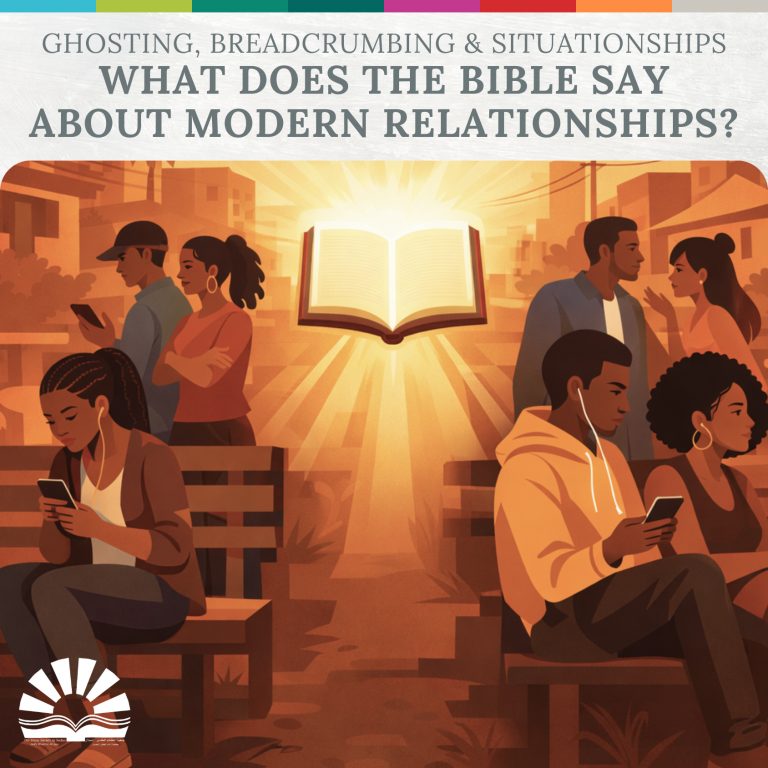
In today’s dating world, people disappear without explanation, send mixed signals to keep you emotionally attached, or stay in undefined “almost-relationships.” These experiences can leave hearts confused, anxious, and questioning self-worth. But what does Jesus, who cared deeply about love, truth, and people’s hearts, say about this?
Let’s explore this through Scripture.
1. Jesus Values Truth, Not Mixed Signals
Verse: “Let your ‘Yes’ be yes, and your ‘No,’ no.” — Matthew 5:37 (NIV)
Breadcrumbing thrives on uncertainty, just enough attention to keep someone hoping. Jesus teaches clarity and honesty. Leading someone on emotionally while avoiding commitment goes against His call to be truthful and straightforward.
If intentions are unclear, it’s not love, it’s confusion.
2. Disappearing Without Explanation Hurts Real People
Verse: “So in everything, do to others what you would have them do to you.” — Matthew 7:12 (NIV)
Ghosting may feel easier than having a difficult conversation, but Jesus calls us to empathy. How would you want to be treated if the roles were reversed?
Love considers the emotional impact of our actions.
3. God Is Not the Author of Confusion
Verse: “For God is not a God of disorder but of peace.” — 1 Corinthians 14:33 (NIV)
Situationships often come with anxiety, insecurity, and constant overthinking. If a connection consistently brings confusion rather than peace, it may not be aligned with God’s design for relationships.
Peace is a sign of God’s presence; confusion is a warning sign.
4. Guard Your Heart in Undefined Relationships
Verse: “Above all else, guard your heart, for everything you do flows from it.” — Proverbs 4:23 (NIV)
When you invest emotionally in someone who won’t commit, your heart is at risk. Jesus never taught us to ignore our emotional well-being in the name of “love.”
Protecting your heart is wisdom, not weakness.
5. Love Is Patient and Kind—Not Manipulative
Verse: “Love is patient, love is kind… it is not self-seeking.” — 1 Corinthians 13:4–5 (NIV)
Breadcrumbing is often self-centered—keeping someone around for attention, validation, or convenience. Biblical love seeks the good of the other person, not personal gain.
If it benefits one person at the expense of another, it isn’t love.
6. Your Worth Is Not Defined by Someone’s Inconsistency
Verse: “I have loved you with an everlasting love.” — Jeremiah 31:3 (NIV)
Being ghosted can make someone feel disposable. Jesus reminds us that God’s love doesn’t disappear, go silent, or show up only when convenient.
God’s love is consistent—even when people are not.
7. Jesus Calls Us to Love with Integrity
Verse: “The Lord detests lying lips, but he delights in people who are trustworthy.” — Proverbs 12:22 (NIV)
Situationships often avoid labels to escape responsibility. Jesus calls His followers to integrity—being honest about intentions, emotions, and expectations.
Trust is built on honesty, not ambiguity.
So… What Would Jesus Say?
Jesus would likely challenge us to:
- Be clear, kind, and honest
- Stop playing with emotions
- Choose peace over confusion
- Value people more than convenience
- Remember that love never leaves people feeling disposable
Final Reflection for Youth
If a relationship needs constant decoding, it may not be God-centered. Real love reflects God’s character, truthful, consistent, and respectful.Before staying in a situationship, ask:
“Is this bringing me peace, or slowly draining my heart?”

We live in a generation where relationships often begin with a notification. A reply, a reaction, or a late-night DM can spark emotional connections faster than ever before. While technology has made communication easier, it has also blurred boundaries, created confusion, and sometimes replaced real commitment with convenience.
The Bible may not mention social media or messaging apps, but it speaks clearly about love, honesty, intention, and the condition of the heart, all of which are deeply relevant to online relationships today.
1. God Cares About Your Heart, Even Behind a Screen
Verse: “Above all else, guard your heart, for everything you do flows from it.”
— Proverbs 4:23 (NIV)
Online conversations can feel safe because there’s physical distance, but emotional closeness can develop quickly. Late-night chats, deep conversations, and constant messaging can slowly open your heart before trust, commitment, or clarity are established.
God’s instruction to guard your heart isn’t about being cold, it’s about being wise. When your heart is unprotected, your peace, focus, and identity can be affected.
Reflection: Just because someone has access to your DMs doesn’t mean they deserve access to your heart.
2. Honesty Matters More Than Filters and Vibes
Verse: “The Lord detests lying lips, but he delights in people who are trustworthy.”
— Proverbs 12:22 (NIV)
Online spaces make it easy to exaggerate, hide intentions, or present a “perfect” version of yourself. But love built on half-truths, vague intentions, or emotional pretending eventually collapses.
Biblical love values authenticity. God is pleased when relationships are grounded in truth, even when honesty feels uncomfortable.
Reflection: If a relationship depends on pretending, it isn’t sustainable, or God-honouring.
3. Love Communicates Clearly, Not Confusingly
Verse: “Let your ‘Yes’ be yes, and your ‘No,’ no.”
— Matthew 5:37 (NIV)
One of the biggest struggles in online relationships is unclear communication, mixed signals, inconsistent replies, and undefined intentions. Jesus teaches clarity because confusion creates emotional strain.
Clarity is not rude. It’s respectful. Being honest about intentions saves hearts from unnecessary hurt.
Reflection: If someone keeps you guessing, ask whether confusion is being used as control.
4. Words Carry Weight—Even When Typed
Verse: “Do not let any unwholesome talk come out of your mouths, but only what is helpful for building others up.”
— Ephesians 4:29 (NIV)
Texting removes tone, facial expression, and context, which can easily lead to misunderstanding. It also lowers accountability, people say things online they wouldn’t say face-to-face.
God calls us to use words that uplift, protect dignity, and bring life. This applies to jokes, flirting, arguments, and emotional conversations online.
Reflection: If your message wouldn’t bring healing or encouragement, it may not be worth sending.
5. Love Is Not Self-Seeking or Emotionally Manipulative
Verse: “Love… is not self-seeking.”
— 1 Corinthians 13:5 (NIV)
Breadcrumbing, emotional check-ins with no commitment, and keeping someone around for attention are common in digital relationships. These behaviours meet personal needs but ignore the emotional cost to others.
Biblical love considers how actions affect another person’s heart. If connection exists only when it’s convenient, it’s not love, it’s self-interest.
➡ Reflection: Love asks, “Is this good for them?” not just “Does this feel good to me?”
6. Your Worth Is Not Measured by Replies or Reactions
Verse: “I have loved you with an everlasting love.”
— Jeremiah 31:3 (NIV)
Being left on read, ignored, or suddenly ghosted can make someone question their value. Online silence can feel personal, even when it isn’t.
God’s love, however, is consistent and unwavering. It doesn’t fluctuate with moods, availability, or interest. Your worth remains secure in Him.
Reflection: Someone’s inconsistency does not cancel God’s constant love for you.
7. God’s Love Brings Peace, Not Constant Anxiety
Verse: “For God is not a God of disorder but of peace.”
— 1 Corinthians 14:33 (NIV)
If an online relationship constantly causes overthinking, insecurity, or emotional stress, it’s worth pausing. God’s design for love includes peace, stability, and clarity.
While no relationship is perfect, persistent anxiety is a signal that something may be misaligned with God’s heart for you.
Reflection: Peace is often God’s way of confirming you’re on the right path.
Final Reflection for Today’s Generation
Online relationships are real, and emotions formed through screens matter. But the Bible reminds us that love should be intentional, honest, respectful, and life-giving, whether offline or online.
Before investing deeper, ask yourself:
“Is this relationship helping me grow or slowly draining my peace?”
God’s love sets the standard, clear, consistent, and rooted in truth.

Today, school life doesn’t only happen in the classroom. It happens on phones, tablets, laptops, WhatsApp groups, Google searches, TikTok, and online learning platforms. The internet helps us learn faster, connect with friends, and discover new ideas, but it can also expose us to things we are not ready for.
That’s why digital safety matters. Being safe online is not just about avoiding danger; it’s about making wise choices, protecting your mind, and knowing when to ask for help. The Bible may not talk about smartphones, but it teaches principles that help us live wisely, even online.
- Guarding the Mind
Proverbs 4:23 (NIV)
“Above all else, guard your heart, for everything you do flows from it.”
What children watch, listen to, and engage with online shapes their thinking and behaviour. Parents and guardians must guide children to protect their minds from harmful content.
Practical action:
Use parental controls and talk openly about what is appropriate online.
- Choosing Wise Content
Philippians 4:8 (NIV)
“Whatever is true, whatever is noble, whatever is right, whatever is pure… think about such things.”
Not everything trending online is good for children. This verse encourages intentional choices about content.
Practical action:
Encourage educational, positive, and age-appropriate digital content.
- Online Behaviour Matters
Ephesians 4:29 (NIV)
“Do not let any unwholesome talk come out of your mouths…”
The way children speak online, comments, messages, and posts should reflect kindness and respect.
Practical action:
Teach children that words typed online carry the same weight as words spoken.
- Being Careful Who We Trust Online
Proverbs 13:20 (NIV)
“Walk with the wise and become wise, for a companion of fools suffers harm.”
Online friends are still influences. Children must be taught that not everyone online has good intentions.
Practical action:
Teach children never to share personal information or meet online strangers.
- Accountability in Digital Spaces
Luke 16:10 (NIV)
“Whoever can be trusted with very little can also be trusted with much…”
Trust with devices comes with responsibility. Digital discipline builds character.
Practical action:
Set clear rules on screen time, apps, and online behaviour.
- Seeking Help When in Trouble
Proverbs 12:15 (NIV)
“The way of fools seems right to them, but the wise listen to advice.”
Children should feel safe to report cyberbullying, inappropriate content, or online threats.
Practical action:
Create a safe environment where children can talk without fear of punishment.
- God’s Protection Over Our Children
Psalm 121:7–8 (NIV)
“The Lord will keep you from all harm—he will watch over your life.”
While we take practical steps, we also trust God to protect children in a digital world.
Practical action:
Pray regularly with children about their online activities and safety.
Closing Reflection (Short Prayer)
Lord, guide our children as they learn and grow in a digital world. Give parents wisdom, children discernment, and protect them from harm—online and offline. Amen.
Discipline. It’s a word that can sound rigid or intimidating, yet it’s the secret ingredient to achieving your goals and living a purposeful life. As we step into this new year, let’s explore how biblical wisdom can shape our understanding of discipline and help us thrive in every area of life. Here are seven powerful Bible verses that can guide you to embrace discipline and build a life worth living.
1. Hebrews 12:11
“No discipline seems pleasant at the time, but painful. Later on, however, it produces a harvest of righteousness and peace for those who have been trained by it.”
Discipline isn’t easy, and let’s be real, most of us would rather binge-watch our favorite shows than stick to a workout plan or study for exams. But think of discipline as planting seeds. The effort you put in now even when it feels tough will lead to a life full of peace, stability, and purpose. Start by asking yourself, What seeds am I planting today?
2. Proverbs 25:28
“Like a city whose walls are broken through is a person who lacks self-control.”
Imagine a city without walls, completely vulnerable to attacks. That’s what life feels like without discipline. Self-control acts as a shield, protecting your mind, time, and energy from distractions and harmful influences. This year, rebuild those walls by setting boundaries, whether it’s limiting screen time, managing your finances, or saying “no” to toxic habits.
3. 1 Corinthians 9:25
“Everyone who competes in the games goes into strict training. They do it to get a crown that will not last, but we do it to get a crown that will last forever.”
Athletes don’t just show up on game day and hope for the best; they train hard every single day. Think of your goals as your personal championship. Whether it’s excelling in your career, strengthening your faith, or building relationships, discipline is the training ground that prepares you for success. What’s your eternal crown, and how are you working toward it?
4. Proverbs 12:1
“Whoever loves discipline loves knowledge, but whoever hates correction is stupid.”
Harsh? Maybe. True? Absolutely. Learning from mistakes and being open to correction is essential for growth. When a mentor, teacher, or friend offers constructive criticism, don’t dismiss it. Instead, use it as an opportunity to refine yourself. This year, adopt a growth mindset that embraces learning, even when it’s uncomfortable.
5. 2 Timothy 1:7
“For the Spirit God gave us does not make us timid, but gives us power, love, and self-discipline.”
Discipline isn’t something you have to muster up on your own; it’s a gift from God. Through His Spirit, you have the power to conquer procrastination, overcome fear, and stick to your commitments. When you feel overwhelmed or tempted to quit, tap into the strength God has already placed within you.
6. Galatians 6:9
“Let us not become weary in doing good, for at the proper time we will reap a harvest if we do not give up.”
Ever feel like your efforts are pointless? Maybe you’ve been working hard, but the results aren’t visible yet. Don’t lose heart. Discipline is about consistency, not instant gratification. Whether it’s staying faithful in prayer, working on your side hustle, or investing in relationships, your perseverance will pay off. Keep going; your harvest is coming.
7. Psalm 119:105
“Your word is a lamp for my feet, a light on my path.”
Discipline is easier when you have a clear direction. Let God’s Word be your guide this year. Start a habit of reading the Bible daily, even if it’s just a verse or two. Allow Scripture to shape your choices and priorities, illuminating the path toward your purpose.
Bringing It All Together
Discipline isn’t about being perfect; it’s about being intentional. It’s about taking small, consistent steps that lead to big changes over time. Whether you’re setting fitness goals, working on your faith, or pursuing career dreams, these verses remind us that discipline is both a gift and a responsibility.
This year, challenge yourself to embrace discipline as an act of worship and a step toward becoming the person God created you to be. Your future self will thank you.

The Bible is rich with wisdom regarding the power of our words. Throughout Scripture, we are reminded that the tongue—though small—holds the capacity to uplift, destroy, heal, or harm. The words we speak can shape destinies, mend relationships, or cause deep wounds. Let’s explore seven Bible verses that illuminate the profound power of the tongue.
1. Proverbs 18:21 – “Death and life are in the power of the tongue, and those who love it will eat its fruits.”
The words we choose to speak can bring encouragement, love, and healing, or they can cause hurt, division, and destruction. The “fruits” we reap from our words reflect their power—whether for good or ill.
2. James 3:5-6 – “So also the tongue is a small member, yet it boasts of great things. How great a forest is set ablaze by such a small fire! And the tongue is a fire, a world of unrighteousness.”
Although it is a small part of the body, the tongue can cause significant harm, much like a small spark can ignite an entire forest fire. James warns believers of the dangers of careless speech, reminding us that words can spread like wildfire, causing damage that can be difficult to undo.
3. Proverbs 12:18 – “There is one whose rash words are like sword thrusts, but the tongue of the wise brings healing.”
Words spoken in haste or anger can cut deeply, inflicting pain and damage similar to physical wounds. Conversely, wise and thoughtful words can bring comfort, peace, and restoration, highlighting the importance of controlling our speech and choosing our words carefully.
4. Ephesians 4:29 – “Let no corrupting talk come out of your mouths, but only such as is good for building up, as fits the occasion, that it may give grace to those who hear.”
We are urged to avoid corrupting or harmful talk and instead speak in ways that edify and encourage others. Words have the power to build up or tear down, and we are encouraged to use our speech to impart grace and support to those around us.
5. Proverbs 15:4 – “A gentle tongue is a tree of life, but perverseness in it breaks the spirit.”
A gentle tongue, like a tree of life, offers nourishment, strength, and growth. In contrast, perverse or harsh speech can crush a person’s spirit, leading to discouragement and despair. The verse encourages us to speak with kindness and gentleness, fostering life and growth in others.
6. Matthew 12:36-37 – “I tell you, on the day of judgment people will give account for every careless word they speak, for by your words you will be justified, and by your words you will be condemned.”
Jesus’ words in Matthew are a sobering reminder of the accountability we have for our speech. Every word we speak—careless or otherwise—will be subject to judgment. Our words reflect our hearts, and they play a role in our justification or condemnation. This verse underscores the importance of being mindful of our speech, knowing that it has eternal consequences.
7. Proverbs 16:24 – “Gracious words are like a honeycomb, sweetness to the soul and health to the body.”
Words that are kind, loving, and considerate are likened to honeycomb—sweet and nourishing, bringing joy and health to both the speaker and the listener. The verse encourages us to speak in ways that bring sweetness and well-being to others, reflecting the love and grace of God through our words.
Conclusion
The Bible consistently teaches that the tongue, though small, wields immense power. It can bring life or death, healing or harm, joy or sorrow. As followers of Christ, we are called to use our words wisely, to speak life, and to reflect God’s love through our speech. By guarding our tongues and choosing our words carefully, we can positively influence those around us and honor God with our speech.
Discipline Unlocked: 7 Bible Verses to Transform Your Year
Discipline is easier when you have a clear direction. Let God’s Word be your guide this year. Start a habit of reading the Bible daily, even if it’s just a verse or two. Allow Scripture to shape your choices and priorities, illuminating the path toward your purpose.
Discipline is easier when you have a clear direction. Let God’s Word be your guide this year. Start a habit of reading the Bible daily, even if it’s just a verse or two. Allow Scripture to shape your choices and priorities, illuminating the path toward your purpose.
Digital Safety for Students: 7 Bible Tips to Stay Safe Online
Today, school life doesn’t only happen in the classroom. It happens on phones, tablets, laptops, WhatsApp groups, Google searches, TikTok, and online learning platforms.
Today, school life doesn’t only happen in the classroom. It happens on phones, tablets, laptops, WhatsApp groups, Google searches, TikTok, and online learning platforms.
7 Bible Verses about The Power of the Tongue
The Bible consistently teaches that the tongue, though small, wields immense power. It can bring life or death, healing or harm, joy or sorrow. As followers of Christ, we are called to use our words wisely, to speak life, and to reflect God's love through our speech. By guarding our tongues and choosing our words carefully, we can positively influence those around us and honor God with our speech.
The Bible consistently teaches that the tongue, though small, wields immense power. It can bring life or death, healing or harm, joy or sorrow. As followers of Christ, we are called to use our words wisely, to speak life, and to reflect God's love through our speech. By guarding our tongues and choosing our words carefully, we can positively influence those around us and honor God with our speech.
Ghosting, Breadcrumbing & Situationships: What Does the Bible Say About Modern Relationships?
Modern dating terms like ghosting and situationships often bring confusion and hurt. Explore how biblical principles of integrity, honesty, and love apply to these struggles and find healing in God's truth.
Love in the Age of DMs: What the Bible Says About Online Relationships
We live in a generation where relationships often begin with a notification. A reply, a reaction, or a late-night DM can spark emotional connections faster than ever before.
Modern dating terms like ghosting and situationships often bring confusion and hurt. Explore how biblical principles of integrity, honesty, and love apply to these struggles and find healing in God's truth.
We live in a generation where relationships often begin with a notification. A reply, a reaction, or a late-night DM can spark emotional connections faster than ever before.