
In today’s world of cliques, filters, and curated identity, it’s easy to feel like some people are “in” and others are “out.” Maybe you’ve felt it too—that quiet question in your heart: “Am I welcome here? Do I really belong?”
Now imagine someone who had every reason to feel like an outsider. The man in Acts 8 was powerful, wealthy, and educated—but still spiritually hungry, searching for truth on a dusty road. And that’s where God sent Philip. No stage. No crowd. Just one man and one divine appointment that reminds us: the Good News is for everyone—every nation, every status, every story.
Let’s explore 7 powerful lessons from this encounter between Philip and the Ethiopian eunuch.
1. God Sends You Where You’re Needed
Acts 8:26 (NIV)
“Now an angel of the Lord said to Philip, ‘Go south to the road—the desert road—that goes down from Jerusalem to Gaza.’”
Philip had just come from a revival in Samaria. Crowds were responding, miracles were happening—and then God tells him to walk a hot, lonely road. Why?
Because God doesn’t just chase crowds. He chases individuals. Your next assignment might look random, but it might be the very place someone is waiting to hear from God.
2. Divine Appointments Aren’t Always Obvious
Acts 8:27 (NIV)
“So he started out, and on his way he met an Ethiopian eunuch, an important official in charge of all the treasury of the Kandake (which means ‘queen of the Ethiopians’). This man had gone to Jerusalem to worship.”
This man was wealthy, educated, and spiritually curious—but he was also from a different land and culture. And he was reading Scripture but had no one to explain it.
Sometimes your most impactful ministry will look nothing like what you expected. Be ready for surprise encounters—especially with people who seem different from you.
3. Ask Before You Speak
Acts 8:30 (NIV)
“Then Philip ran up to the chariot and heard the man reading Isaiah the prophet. ‘Do you understand what you are reading?’ Philip asked.”
Notice that Philip starts with a question—not a sermon. That question created space for conversation, not confrontation.
Asking questions builds bridges. In a world full of opinions and arguments, be the person who listens first and speaks with love.
4. The Gospel Explains Life’s Deepest Questions
Acts 8:35 (NIV)
“Then Philip began with that very passage of Scripture and told him the good news about Jesus.”
The man was reading Isaiah 53—a prophecy about the suffering servant. He was trying to connect the dots, and Philip helped him see: this was all about Jesus.
The Bible isn’t irrelevant. It’s deeply personal and incredibly powerful when explained in the light of Christ. Be ready to help someone make the connection.
5. The Message Is for Outsiders Too
Acts 8:27–28 (NIV)
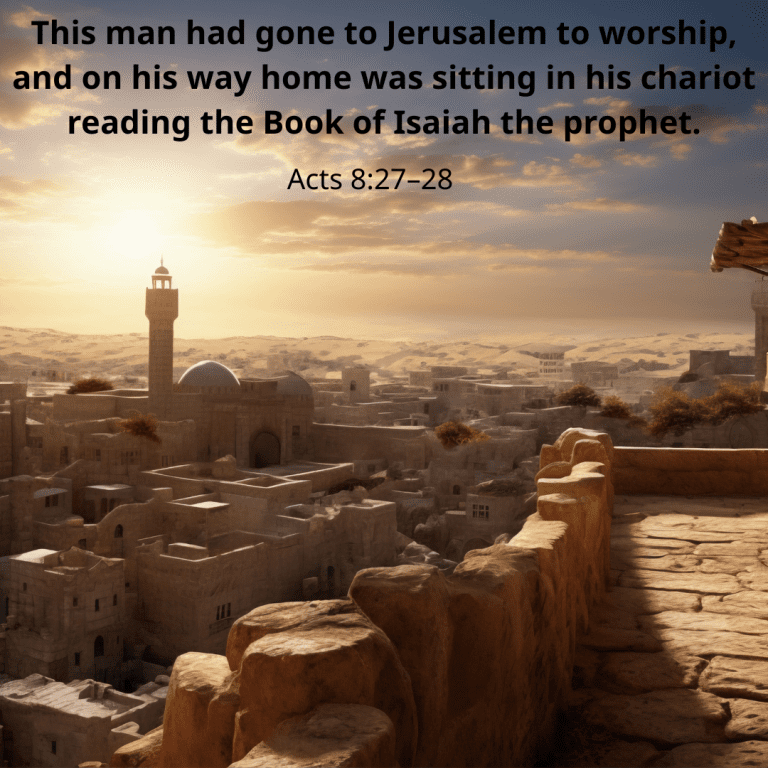
“This man had gone to Jerusalem to worship, and on his way home was sitting in his chariot reading the Book of Isaiah the prophet.”
The Ethiopian eunuch had traveled far to worship—but as a eunuch, Jewish law may have kept him from full inclusion in temple worship (see Deuteronomy 23:1).
And yet, God sent Philip specifically to him. Because the gospel doesn’t stop at man-made boundaries. It includes everyone willing to receive it.
6. Baptism Is for Believers, Not Perfect People
Acts 8:36 (NIV)
“As they traveled along the road, they came to some water and the eunuch said, ‘Look, here is water. What can stand in the way of my being baptized?’”
This man didn’t wait to finish a course or fix his life. The moment he understood the gospel, he responded with faith.
If you’re waiting to be “ready” for Jesus, know this: He already made a way. All He asks for is your “yes.”
7. Joy Is the Natural Response to Grace
Acts 8:39 (NIV)
“When they came up out of the water, the Spirit of the Lord suddenly took Philip away, and the eunuch did not see him again, but went on his way rejoicing.”
Philip disappeared—but the joy stayed. Because once you encounter Jesus, your joy doesn’t depend on people, location, or circumstances.
Final Thought
The gospel isn’t exclusive. It’s not reserved for a type, a clique, or a culture. It’s for the overlooked, the curious, the foreigner, the intellectual, the broken-hearted, and the spiritually hungry.
God still sends people into desert roads—places of isolation and doubt—because His love reaches farther than religion ever could.
So ask God today: Who’s my one?
Because someone, somewhere, is reading and wondering—and your presence could be the answer to their prayer.
“They devoted themselves to the apostles’ teaching and to fellowship, to the breaking of bread and to prayer.”
— Acts 2:42 (NIV)
Let’s be real, church today can feel… complicated. Lights, livestreams, hashtags, trendy merch, opinions, expectations. For the younger generation, sometimes it feels like faith is more filtered than fire-filled.
But what if we hit rewind and went back to where it all started — the Book of Acts, where the Church wasn’t an event, a building, or a Sunday plan, but a Spirit-led movement?
Here’s what the Early Church got right — and what we desperately need to rediscover today.
1. Faith Was Fueled by Fire, Not Formality
Acts 2:4 – “All of them were filled with the Holy Spirit and began to speak in other tongues…”
The first believers weren’t just “churchgoers.” They were people radically filled with the Holy Spirit. They didn’t blend in — they stood out. There was no hype, no platform. Just fire.
We don’t need more events. We need an encounter. When Gen Z and Millennials connect with the Holy Spirit personally, faith stops being a performance and becomes power.
2. They Did Life Together, Not Just Services
Acts 2:46 – “They broke bread in their homes and ate together with glad and sincere hearts.”
This wasn’t about Sunday mornings. It was about everyday moments — meals, struggles, prayer circles, real friendships. Church wasn’t just a gathering. It was a family.
Today’s challenge: We’re more connected than ever digitally but lonelier than ever emotionally. Real community doesn’t live on IG Stories — it lives in open homes, honest convos, and intentional fellowship.
3. They Shared What They Had Freely
Acts 4:34-35 – “There were no needy persons among them… they shared everything they had.”
The early believers didn’t wait for GoFundMe. They became the provision. Radical generosity was normal — not just tithing, but selling stuff to meet others’ needs.
You don’t have to sell your car. But what if you bought someone groceries, funded a Bible project, or covered a classmate’s fees? That’s the real vibe of early church giving.
4. They Preached Truth, Not Popular Opinion
Acts 4:20 – “We cannot help speaking about what we have seen and heard.”
Peter and John didn’t adjust their message to fit the crowd. They spoke boldly even when it cost them. The early Church wasn’t built on comfort, but conviction.
Today’s younger generation care deeply about justice and truth. But real boldness comes when we speak God’s truth with love — not for likes, but for lives.
5. They Changed the World Without a Building
Acts 17:6 – “These men who have turned the world upside down have come here also!” (ESV)
The early believers had no cathedral, no microphones, no social media. Yet they turned cities upside down — with faith, fire, and fierce love.
You’ve got more tools — but do you have the same urgency? You don’t need a pulpit to lead. Your voice, your faith, your obedience can disrupt darkness.
6. They Were Spirit-Led, Not Algorithm-Driven
Acts 8:29 – “The Spirit told Philip, ‘Go to that chariot and stay near it.’”
Philip didn’t wait for a sign to go viral. He obeyed the Holy Spirit’s whisper. That encounter led to the Gospel reaching Africa. One moment. One obedient move.
You’re already being led by algorithms, peer pressure, content loops. What if you hit pause and let God lead instead?
7. They Were Ordinary People with Extraordinary Power
Acts 4:13 – “They were unschooled, ordinary men… but they had been with Jesus.”
No theology degree. No stage presence. Just Spirit-filled faith and time spent with Jesus. That’s what set them apart.
You don’t need to be perfect. Just available. Your obedience, your yes, your authenticity — that’s what God uses to change the world.
You don’t have to recreate Acts 2 — but you can reflect it.
The Church today needs believers who are:
- Bold like Peter
- Generous like Barnabas
- Servant-hearted like Stephen
- Spirit-led like Philip
You were never meant to just attend church. You were meant to be the Church — fiery, fearless, and full of purpose.
The Holy Spirit is not just an abstract concept or a mystical force; He is a personal and powerful presence in the life of every believer. Understanding His role and allowing Him to actively work in our lives is essential for spiritual growth and victorious Christian living. In this article, we will delve into the transformative influence of the Holy Spirit, supported by biblical narratives and reflections, and see how He continues to work in the lives of believers today.
1. The Holy Spirit as Our Guide
One of the most profound ways the Holy Spirit works in a believer’s life is by guiding us through the complexities of life. Jesus promised this guidance when He said:
John 16:13 (RSV) – “When the Spirit of truth comes, he will guide you into all the truth; for he will not speak on his own authority, but whatever he hears he will speak, and he will declare to you the things that are to come.”
Consider the story of Philip and the Ethiopian eunuch (Acts 8:26-40). Philip, led by the Spirit, approached the chariot and explained the Scriptures, resulting in the eunuch’s conversion and baptism. This narrative highlights how sensitive obedience to the Spirit’s guidance can lead to profound outcomes.
Today, believers can experience the Holy Spirit’s guidance in everyday decisions—whether in career choices, relationships, or ministry. Many testify of the Spirit’s prompting to reach out to someone in need or speak a word of encouragement at just the right moment.
2. The Spirit Who Empowers
The empowerment of the Holy Spirit is vividly portrayed at Pentecost. After Jesus’ ascension, the disciples were unsure and fearful. But when the Spirit descended upon them, they were transformed into bold witnesses.
Acts 1:8 (RSV) – “But you shall receive power when the Holy Spirit has come upon you; and you shall be my witnesses in Jerusalem and in all Judea and Samaria and to the end of the earth.”
Peter, who once denied Christ, boldly preached, leading to the conversion of about three thousand people (Acts 2:14-41). The Spirit’s power equips ordinary people to perform extraordinary acts of faith.
This empowerment is evident when believers boldly share their faith despite challenges or speak truth in situations where silence seems easier. The Spirit gives us courage to act according to God’s will.
3. The Spirit as Comforter
Life’s challenges can leave us weary and disheartened. The Holy Spirit, however, comes as a Comforter, assuring us of God’s presence in our pain.
John 14:16-17 (RSV) – “And I will pray the Father, and he will give you another Counselor, to be with you forever, even the Spirit of truth.”
When Paul faced persecution and hardship, he found comfort through the Spirit’s inner strengthening (2 Corinthians 1:3-5). This divine comfort enabled him to endure and continue his mission.
In modern life, believers find comfort when overwhelmed by grief, loss, or uncertainty. Through prayer and worship, the Holy Spirit brings peace that surpasses understanding, reminding us that we are never alone.
4. The Spirit of Transformation
Paul emphasizes the transformative work of the Holy Spirit in believers:
Romans 8:11 (RSV) – “If the Spirit of him who raised Jesus from the dead dwells in you, he who raised Christ Jesus from the dead will give life to your mortal bodies also through his Spirit which dwells in you.”
When the Spirit transforms a believer, old habits, sins, and weaknesses are replaced with new life, marked by the fruit of the Spirit (Galatians 5:22-23). This transformation is not instantaneous but a continual process as we yield to His work.
In today’s context, transformation might involve overcoming addiction, finding hope amidst despair, or growing in patience and love. Believers experience gradual yet profound change as they submit daily to the Spirit’s leading.
5. The Holy Spirit and Fellowship
Unity among believers is one of the key works of the Holy Spirit:
1 Corinthians 12:13 (RSV) – “For by one Spirit we were all baptized into one body—Jews or Greeks, slaves or free—and all were made to drink of one Spirit.”
The early church exemplified this unity. Despite differences in background and social status, they were of one heart and mind (Acts 4:32). The Holy Spirit cultivates a spirit of love and collaboration within the body of Christ.
In today’s diverse church communities, the Spirit continues to break down barriers of race, culture, and background, fostering unity and love among believers. Small groups, communal worship, and service projects often become places where the Spirit knits hearts together.
6. The Spirit of Intercession
One of the profound ways the Holy Spirit helps believers is through intercession. When we face situations where words fail us, the Spirit steps in, praying on our behalf.
Romans 8:26 (RSV) – “Likewise the Spirit helps us in our weakness; for we do not know how to pray as we ought, but the Spirit himself intercedes for us with sighs too deep for words.”
This powerful assurance means that even in moments of despair or confusion, when prayer seems impossible, the Holy Spirit prays for us according to the will of God. Modern believers often experience this in moments of deep worship or crisis when words are inadequate. Trusting that the Spirit intercedes brings comfort and peace.
7. The Spirit as the Giver of Spiritual Gifts
The Holy Spirit equips believers with spiritual gifts to build up the church and serve God effectively. These gifts are diverse, ranging from wisdom and knowledge to healing and prophecy.
1 Corinthians 12:4-7 (RSV) – “Now there are varieties of gifts, but the same Spirit; and there are varieties of service, but the same Lord; and there are varieties of working, but it is the same God who inspires them all in every one. To each is given the manifestation of the Spirit for the common good.”
Believers are encouraged to seek and develop their spiritual gifts, using them to serve others and glorify God. Whether in church leadership, creative ministries, or everyday acts of kindness, the Spirit empowers believers to make a difference.
Living by the Spirit
The Christian life is not merely about following rules but about being led by the Spirit. It requires daily surrender and openness to His leading. As we allow the Spirit to work within us, our lives bear witness to His power and grace. From guiding and comforting to empowering and transforming, the Holy Spirit is actively involved in every aspect of a believer’s journey.
Today, believers can cultivate sensitivity to the Spirit through prayer, meditation on Scripture, and staying connected to a faith community. As we walk in step with the Spirit, we reflect Christ’s love and power in a world in need of hope.
The Holy Spirit is a vital part of the Christian faith, yet many believers struggle to understand who He truly is and what role He plays in their lives. In this article, we will explore the identity of the Holy Spirit using seven powerful Bible verses to help deepen our understanding.
1. The Holy Spirit as Comforter and Advocate
John 14:16-17 (RSV) – “And I will pray the Father, and he will give you another Counselor, to be with you for ever, even the Spirit of truth, whom the world cannot receive, because it neither sees him nor knows him; you know him, for he dwells with you, and will be in you.”
Jesus promised His disciples that the Holy Spirit would come as an Advocate—someone who stands by us, guiding and comforting. The Holy Spirit is not just a distant force but a constant presence who supports and defends believers.
2. The Spirit of Truth
John 16:13 (RSV) – “When the Spirit of truth comes, he will guide you into all the truth; for he will not speak on his own authority, but whatever he hears he will speak, and he will declare to you the things that are to come.”
The Holy Spirit is referred to as the Spirit of Truth because He leads us into a deeper understanding of God’s Word and His will. This guiding role helps believers discern right from wrong and stay aligned with God’s purposes.
3. The Giver of Power
Acts 1:8 (RSV) – “But you shall receive power when the Holy Spirit has come upon you; and you shall be my witnesses in Jerusalem and in all Judea and Samaria and to the end of the earth.”
One of the most significant roles of the Holy Spirit is empowering believers to be witnesses for Christ. Through His power, we are not only transformed internally but also equipped to spread the message of the Gospel with boldness.
4. The Divine Teacher
John 14:26 (RSV) – “But the Counselor, the Holy Spirit, whom the Father will send in my name, he will teach you all things, and bring to your remembrance all that I have said to you.”
The Holy Spirit is our Teacher, helping us understand and remember the teachings of Jesus. This guidance is essential as we grow in faith and navigate life’s challenges.
5. The Spirit Who Gives Life
Romans 8:11 (RSV) – “If the Spirit of him who raised Jesus from the dead dwells in you, he who raised Christ Jesus from the dead will give life to your mortal bodies also through his Spirit which dwells in you.”
The same power that raised Christ from the dead lives in believers, breathing life into our mortal bodies. This resurrection power not only brings physical renewal but also spiritual vitality.
6. The Seal of Belonging
Ephesians 1:13 (RSV) – “In him you also, who have heard the word of truth, the gospel of your salvation, and have believed in him, were sealed with the promised Holy Spirit.”
The Holy Spirit marks us as belonging to God. This seal is a guarantee of our inheritance in Christ and serves as a constant reminder that we are His.
7. The Spirit Who Unites
1 Corinthians 12:13 (RSV) – “For by one Spirit we were all baptized into one body—Jews or Greeks, slaves or free—and all were made to drink of one Spirit.”
The Holy Spirit unites believers into one body, transcending racial, social, and cultural differences. Through the Spirit, we become one in Christ, fostering unity within the church.
Embracing the Holy Spirit
Understanding who the Holy Spirit is transforms how we live out our faith. He is not just a divine presence but a Comforter, Advocate, Teacher, and Source of power and unity. As we walk with Him daily, we experience His guidance and embrace the life He offers.
May we continually seek a deeper relationship with the Holy Spirit, allowing His influence to shape every aspect of our lives.
Day 1 – Jesus Finished It
“After he said this, he was taken up before their very eyes, and a cloud hid him from their sight.” — Acts 1:9 (NIV)
When Jesus ascended into heaven, it wasn’t just a dramatic exit , it was a powerful moment of completion. Everything He came to do from healing the sick to dying on the cross and rising again was now finished. The Ascension confirmed that He had completed His mission and was returning to take His place at the right hand of God.
But here’s what’s exciting: Jesus didn’t leave us to figure things out alone. His going up meant something new was coming, the Holy Spirit. So as we begin this Ascension Week, be encouraged: the One who overcame death didn’t just rise , He rules. He finished the work, and now He’s calling you into it.
What’s one thing you can surrender to Jesus today, knowing He’s already won?
Day 2 – He Went Up to Lift Us Up
“God raised him from the dead and seated him at his right hand in the heavenly realms.” — Ephesians 1:20 (NIV)
Jesus’ Ascension wasn’t just about leaving earth, it was about being lifted to a place of honor and authority. He is now seated at the right hand of the Father, ruling over everything. But here’s the wild part — Scripture says we’re raised with Him (Ephesians 2:6)! That means you’re not living a low-level life anymore.
Your identity isn’t based on your followers, your grades, or your mistakes. It’s based on who Jesus is and what He’s done. The Ascension tells us that Jesus is not only alive, He’s in charge. And that gives us boldness to walk in confidence, knowing our Savior is reigning, and our place with Him is secure.
Today, walk with your head held high — not in pride, but in purpose. Jesus went up so you could rise above.
Day 3 – The Mission is Ours Now
“You will receive power when the Holy Spirit comes on you; and you will be my witnesses.” — Acts 1:8 (NIV)
Before Jesus ascended, He left His final instructions — not a goodbye, but a game plan. His mission didn’t end when He left. It passed to us. We’re not just called to believe in Jesus; we’re called to represent Him.
But here’s the best part, we’re not doing it alone. Jesus promised power through the Holy Spirit. That means you’ve got divine help to speak life, love boldly, and live differently. Your school, your family, your online community — they’re all places where your life can point to Jesus.
Ask yourself today: Who in my world needs hope? And how can I be a witness?
Day 4 – Don’t Just Look Up
“Why do you stand here looking into the sky?” — Acts 1:11 (NIV)
Imagine standing there, watching Jesus rise into the sky. You’d probably be frozen too, eyes wide, heart racing. But then, two angels show up and say, “Why are you just standing here?”
Sometimes, we get so caught up in the spiritual moment — the worship, the high of youth camp, the powerful sermon, that we forget to live it out. The disciples had a mission. So do you. The Ascension isn’t just a wow moment; it’s a wake-up moment.
He’s coming back, but until then, we’ve got work to do. Don’t just look up, step out.
This week, choose action. Love someone. Forgive. Encourage. Start living like your faith matters — because it does.
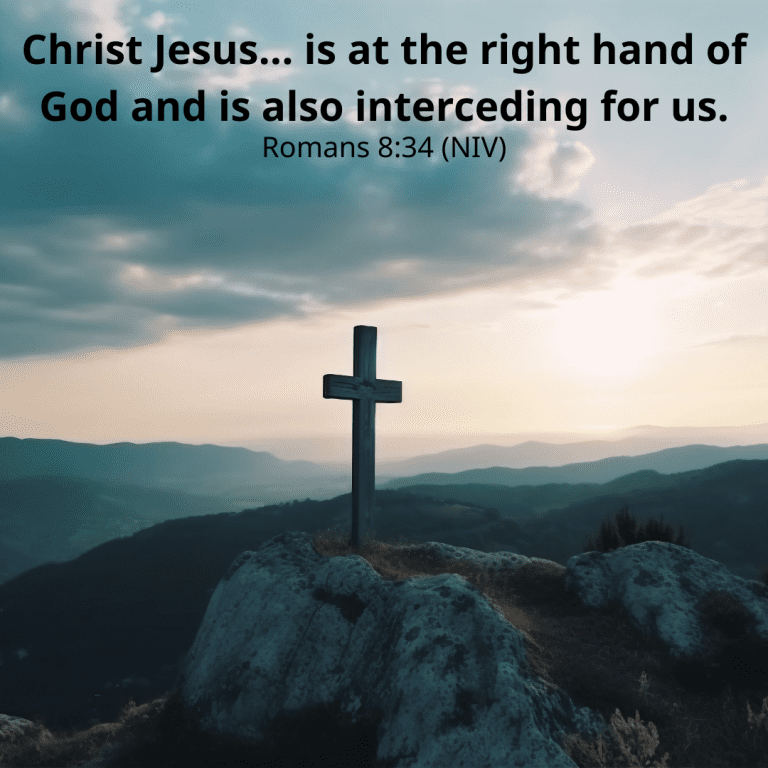
Day 5 – He’s Praying for You
“Christ Jesus… is at the right hand of God and is also interceding for us.” — Romans 8:34 (NIV)
Jesus didn’t ascend to forget about you. He ascended to represent you. Right now, Jesus is sitting next to the Father — and guess what He’s doing? Praying for you.
He knows your struggles. He hears your silent prayers. He sees what you’re not saying out loud. And He’s talking to the Father on your behalf. You’re not alone in your battles — heaven is backing you up.
When life feels heavy, remember this: Jesus is interceding. You’re seen, known, and supported from above.
Day 6 – We’re Waiting for Power
“Stay in the city until you have been clothed with power from on high.” — Luke 24:49 (NIV)
The disciples wanted to go, but Jesus told them to wait. Why? Because what was coming next needed more than good intentions — it needed power.
Sometimes we want to rush ahead with our own plans. But Jesus teaches us that there’s strength in waiting. In that waiting, He prepares us, shapes us, and fills us. And then, when the time is right, He launches us with power we never knew we had.
If you’re in a season of pause right now, don’t panic. God is preparing to pour something out. Get ready.
Day 7 – He’s Coming Back
“This same Jesus… will come back in the same way you have seen him go into heaven.” — Acts 1:11 (NIV)
The Ascension reminds us that Jesus went up, but the story isn’t over. One day, He’s coming back — not as a suffering servant, but as a victorious King. That truth should shift the way we live today.
Knowing He’s coming again means we live with hope, not fear. We treat others with love, not hate. We don’t waste our time, we make it count. He’s coming back, and we want to be found ready.
Let this week stir your heart with hope. Jesus is not done with the world. And He’s not done with you.
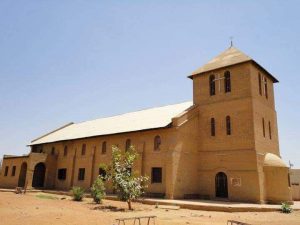
Have you ever wondered if Sudan connects to the ancient stories in the Bible? You may be surprised to learn that the land we call home today has deep ties to both Cush and ancient Egypt—two key regions mentioned in Scripture. Knowing that your country’s history is woven into the Bible can give you a new perspective on your identity and your faith. Let’s explore how Sudan’s biblical connections run through both Cush and Egypt, revealing a heritage that’s been part of God’s story for thousands of years.
A Land of Ancient Power
Upper Egypt refers to the southern part of Egypt, from just south of modern-day Cairo. Ancient Egypt’s southern border shifted during the course of history. South of Egypt we enter the land of Cush, which the Bible associates with modern-day Sudan. The Bible recognizes both Egypt and Cush as powerful regions, and in ancient times, these areas were closely connected through trade, cultural exchange, and even shared rulers.
During certain periods of history, Cushite kings even ruled Egypt, and this blending of cultures has left a lasting impact on both regions. One of the most significant moments in the Bible where this connection is highlighted is through the story of King Tirhakah, a Cushite who ruled Egypt and played a crucial role in the politics of the ancient Near East (Isaiah 37:8-20).
Believers from Cush
One of the most inspiring passages for Sudanese readers is Zephaniah 3:10, where God speaks about a time when His worshipers will come from the land of Cush and beyond.
Zephaniah 3:10 From beyond the rivers of Cush my worshipers, the daughter of my dispersed ones, shall bring my offering.
This shows that the people of Cush, including those from modern-day Sudan, have a special role in God’s plan. The Bible acknowledges the importance of Sudan’s people in worshipping God, and this prophetic vision highlights the fact that Sudan is part of God’s plan for his kingdom.
In this passage, Sudan is more than just a geographical reference—it is a place from where worship and offerings will be brought to God.
A man of faith
The Bible also highlights individuals from the Cush region who had strong faith. One of the most striking stories is that of the Ethiopian eunuch in Acts 8:27-39, who was an important official in the court of Candace (queen) of the Ethiopians. This eunuch was returning from Jerusalem where he had gone to worship, and he was reading from the prophet Isaiah when he met Philip the Evangelist. Philip explained the Scriptures to him, and the eunuch chose to be baptised right away.
Although the passage mentions an Ethiopian, the Greek word may refer to a black man. Cush also means black. Candace may come from the Nubian word for queen. Scholars have different theories on the location of Candace’s country in the region of Sudan and Ethiopia.
This story reminds us that Sudan has a long history of connection to the worship of God. Just as the eunuch eagerly sought to know more about God, Sudanese people today can seek God in the Bible and be inspired to take bold steps in their faith journey.
What Can You Take Away from This?
Sudan’s connection to both ancient Egypt and Cush in the Bible is a reminder of the enduring role your homeland has played in God’s plan. From the powerful kings of Cush who ruled Egypt to the prophetic vision of worshipers coming from beyond the rivers of Cush, the Bible reveals that Sudan’s story is part of God’s greater story.
You are part of a heritage that stretches back to the earliest times recorded in the Bible. The first mention of Cush is already in the description of Eden in Genesis 2:13.
Your land is mentioned in prophecies, historical accounts, and stories of faith. Sudan’s rulers, like Tirhakah, showed strength in times of crisis. Worshipers from Sudan are described as vital in the kingdom of God’s people. And individuals like Candace’s eunuch demonstrated how a personal encounter with the Bible can change your life.
The Bible’s connection to Sudan is not just about the past—it’s about your present and future. God has always had a plan for the people of Sudan, and that plan includes you today.
In Conclusion
Sudan’s biblical heritage through both Egypt and Cush shows that your homeland has always been important in God’s story. From kings and warriors to worshipers and seekers, Sudanese people have played vital roles in the events of the Bible. Sudan is part of a rich Biblical history.
As you explore these biblical passages, let them inspire you to dive deeper into God’s Word. Like Candace’s eunuch, don’t be afraid to ask questions, seek answers, and let the Bible transform your life. Your story is part of God’s story, and the Bible is waiting for you to discover it.
Who Is the Holy Spirit? Discover Your Advocate, Teacher, and Faithful Friend in Christian Life
Understanding who the Holy Spirit is transforms how we live out our faith. He is not just a divine presence but a Comforter, Advocate, Teacher, and Source of power and unity. As we walk with Him daily, we experience His guidance and embrace the life He offers.
Understanding who the Holy Spirit is transforms how we live out our faith. He is not just a divine presence but a Comforter, Advocate, Teacher, and Source of power and unity. As we walk with Him daily, we experience His guidance and embrace the life He offers.
7 Powerful Ways the Holy Spirit Empowers Believers Today
The Holy Spirit is not just an abstract concept or a mystical force; He is a personal and powerful presence in the life of every believer. Understanding His role and allowing Him to actively work in our lives is essential for spiritual growth and victorious Christian living
7 Eye-Opening Faith Lessons from the Early Church That Still Apply Today
Today’s younger generation care deeply about justice and truth. But real boldness comes when we speak God’s truth with love not for likes, but for lives.You were never meant to just attend church. You were meant to be the Church — fiery, fearless, and full of purpose.
The Holy Spirit is not just an abstract concept or a mystical force; He is a personal and powerful presence in the life of every believer. Understanding His role and allowing Him to actively work in our lives is essential for spiritual growth and victorious Christian living
Today’s younger generation care deeply about justice and truth. But real boldness comes when we speak God’s truth with love not for likes, but for lives.You were never meant to just attend church. You were meant to be the Church — fiery, fearless, and full of purpose.
Divine DMs: How God Uses You to Answer Someone’s Silent Prayer
Now imagine someone who had every reason to feel like an outsider. The man in Acts 8 was powerful, wealthy, and educated—but still spiritually hungry, searching for truth on a dusty road. And that’s where God sent Philip. No stage. No crowd. Just one man and one divine appointment that reminds us: the Good News is for everyone—every nation, every status, every story.
Now imagine someone who had every reason to feel like an outsider. The man in Acts 8 was powerful, wealthy, and educated—but still spiritually hungry, searching for truth on a dusty road. And that’s where God sent Philip. No stage. No crowd. Just one man and one divine appointment that reminds us: the Good News is for everyone—every nation, every status, every story.