

Q1: What exactly is a spiritual gift? Is it like a talent?
A:
A spiritual gift is a God-given ability empowered by the Holy Spirit to serve and build up others in the body of Christ.
“There are different kinds of spiritual gifts, but the same Spirit gives them.”
— 1 Corinthians 12:4 GNT
Unlike natural talents, spiritual gifts are not inherited or learned — they are given by the Spirit for Kingdom impact.
Q2: Who gets spiritual gifts — only pastors or “deep” Christians?
A:
No, every believer receives at least one spiritual gift.
“The Spirit’s presence is shown in some way in each person for the good of all.”
— 1 Corinthians 12:7 GNT
If you have received Christ, you’ve also received the Holy Spirit — and with Him, a gift.
Q3: What are some examples of spiritual gifts?
A:
The Bible lists many, including:
- Wisdom
- Knowledge
- Faith
- Healing
- Miraculous powers
- Prophecy
- Discernment
- Speaking in tongues
- Interpretation of tongues
(See 1 Corinthians 12:8–10)
“The Spirit gives one person a message full of wisdom, while to another person the same Spirit gives a message full of knowledge.”
— 1 Corinthians 12:8 GNT
Q4: How do I find out what my spiritual gift is?
A:
Start by seeking God in prayer, observing what energizes you spiritually, and listening to feedback from other believers.
“We have different gifts, according to the grace God has given us.”
— Romans 12:6 GNT
Spiritual gifts often show up where your passion meets someone else’s need.
Q5: I’m shy. What if my gift is something bold like prophecy or evangelism?
A:
God equips the called. He often chooses people who feel unqualified so He gets the glory.
“Instead, God chose what the world considers foolish to shame the wise, and chose what the world considers weak to shame the strong.”
— 1 Corinthians 1:27 GNT
The Holy Spirit gives both the gift and the boldness to walk in it (see Acts 1:8).
Q6: Do I get to choose which gift I want?
A:
Not exactly. The Holy Spirit distributes gifts according to God’s will.
“But it is one and the same Spirit who does all this; as he wishes, he gives a different gift to each person.”
— 1 Corinthians 12:11 GNT
However, we are encouraged to eagerly desire the greater gifts, especially those that build others up (1 Corinthians 12:31).
Q7: What if I misuse my gift or become proud?
A:
Gifts must be used with humility and love. Without love, even the greatest gift becomes meaningless.
“I may be able to speak the languages of human beings and even of angels, but if I have no love, my speech is no more than a noisy gong or a clanging bell.”
— 1 Corinthians 13:1 GNT
Let the fruit of the Spirit guide the use of the gifts (Galatians 5:22–23).
Q8: Can I lose my spiritual gift?
A:
God does not take back His gifts, but we can neglect or fail to develop them.
“Do not neglect the spiritual gift that is in you…”
— 1 Timothy 4:14a GNT
Use it, grow it, and fan it into flame (see 2 Timothy 1:6).
Q9: What if I don’t feel anything? Does that mean I don’t have the Holy Spirit or any gift?
A:
Your feelings don’t define your faith. If you’ve accepted Christ, the Spirit lives in you — and your gift may be waiting to be discovered.
“But you do not live as your human nature tells you to; instead, you live as the Spirit tells you to—if, in fact, God’s Spirit lives in you.”
— Romans 8:9 GNT
Q10: Can spiritual gifts be used outside the church — like at school or online?
A:
Yes! The gifts are for wherever God places you. Church is the training ground — the world is the mission field.
“Each one, as a good manager of God’s different gifts, must use for the good of others the special gift he has received from God.”
— 1 Peter 4:10 GNT
Use your gifts on campus, in your DMs, at home — wherever people need Jesus.
Final Thought
You are not too young, too new, or too ordinary.
If you have the Spirit, you are already equipped. Don’t bury your gift — use it for God’s glory and others’ good.
The Holy Spirit is not just an abstract concept or a mystical force; He is a personal and powerful presence in the life of every believer. Understanding His role and allowing Him to actively work in our lives is essential for spiritual growth and victorious Christian living. In this article, we will delve into the transformative influence of the Holy Spirit, supported by biblical narratives and reflections, and see how He continues to work in the lives of believers today.
1. The Holy Spirit as Our Guide
One of the most profound ways the Holy Spirit works in a believer’s life is by guiding us through the complexities of life. Jesus promised this guidance when He said:
John 16:13 (RSV) – “When the Spirit of truth comes, he will guide you into all the truth; for he will not speak on his own authority, but whatever he hears he will speak, and he will declare to you the things that are to come.”
Consider the story of Philip and the Ethiopian eunuch (Acts 8:26-40). Philip, led by the Spirit, approached the chariot and explained the Scriptures, resulting in the eunuch’s conversion and baptism. This narrative highlights how sensitive obedience to the Spirit’s guidance can lead to profound outcomes.
Today, believers can experience the Holy Spirit’s guidance in everyday decisions—whether in career choices, relationships, or ministry. Many testify of the Spirit’s prompting to reach out to someone in need or speak a word of encouragement at just the right moment.
2. The Spirit Who Empowers
The empowerment of the Holy Spirit is vividly portrayed at Pentecost. After Jesus’ ascension, the disciples were unsure and fearful. But when the Spirit descended upon them, they were transformed into bold witnesses.
Acts 1:8 (RSV) – “But you shall receive power when the Holy Spirit has come upon you; and you shall be my witnesses in Jerusalem and in all Judea and Samaria and to the end of the earth.”
Peter, who once denied Christ, boldly preached, leading to the conversion of about three thousand people (Acts 2:14-41). The Spirit’s power equips ordinary people to perform extraordinary acts of faith.
This empowerment is evident when believers boldly share their faith despite challenges or speak truth in situations where silence seems easier. The Spirit gives us courage to act according to God’s will.
3. The Spirit as Comforter
Life’s challenges can leave us weary and disheartened. The Holy Spirit, however, comes as a Comforter, assuring us of God’s presence in our pain.
John 14:16-17 (RSV) – “And I will pray the Father, and he will give you another Counselor, to be with you forever, even the Spirit of truth.”
When Paul faced persecution and hardship, he found comfort through the Spirit’s inner strengthening (2 Corinthians 1:3-5). This divine comfort enabled him to endure and continue his mission.
In modern life, believers find comfort when overwhelmed by grief, loss, or uncertainty. Through prayer and worship, the Holy Spirit brings peace that surpasses understanding, reminding us that we are never alone.
4. The Spirit of Transformation
Paul emphasizes the transformative work of the Holy Spirit in believers:
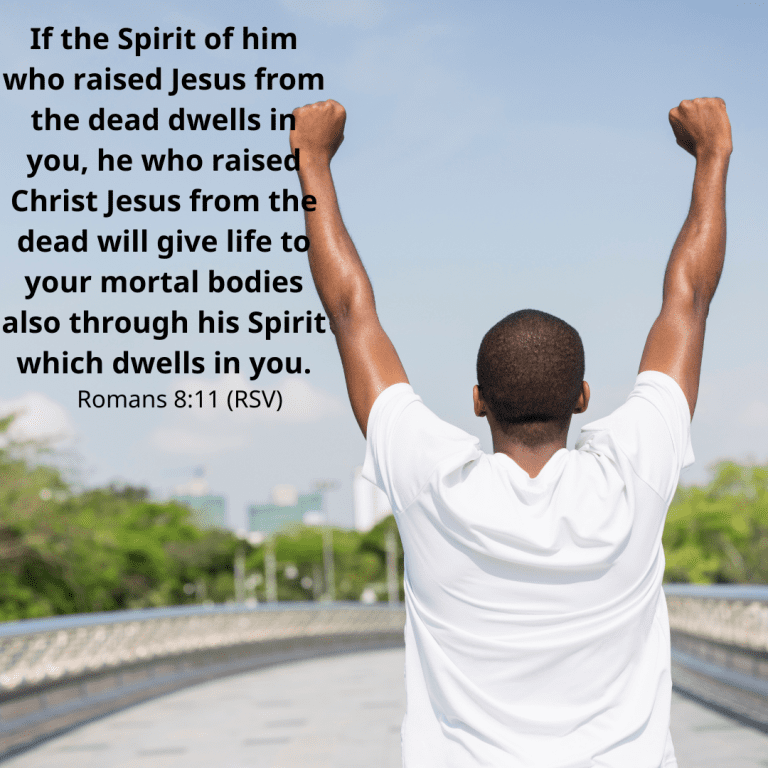
Romans 8:11 (RSV) – “If the Spirit of him who raised Jesus from the dead dwells in you, he who raised Christ Jesus from the dead will give life to your mortal bodies also through his Spirit which dwells in you.”
When the Spirit transforms a believer, old habits, sins, and weaknesses are replaced with new life, marked by the fruit of the Spirit (Galatians 5:22-23). This transformation is not instantaneous but a continual process as we yield to His work.
In today’s context, transformation might involve overcoming addiction, finding hope amidst despair, or growing in patience and love. Believers experience gradual yet profound change as they submit daily to the Spirit’s leading.
5. The Holy Spirit and Fellowship
Unity among believers is one of the key works of the Holy Spirit:
1 Corinthians 12:13 (RSV) – “For by one Spirit we were all baptized into one body—Jews or Greeks, slaves or free—and all were made to drink of one Spirit.”
The early church exemplified this unity. Despite differences in background and social status, they were of one heart and mind (Acts 4:32). The Holy Spirit cultivates a spirit of love and collaboration within the body of Christ.
In today’s diverse church communities, the Spirit continues to break down barriers of race, culture, and background, fostering unity and love among believers. Small groups, communal worship, and service projects often become places where the Spirit knits hearts together.
6. The Spirit of Intercession
One of the profound ways the Holy Spirit helps believers is through intercession. When we face situations where words fail us, the Spirit steps in, praying on our behalf.
Romans 8:26 (RSV) – “Likewise the Spirit helps us in our weakness; for we do not know how to pray as we ought, but the Spirit himself intercedes for us with sighs too deep for words.”
This powerful assurance means that even in moments of despair or confusion, when prayer seems impossible, the Holy Spirit prays for us according to the will of God. Modern believers often experience this in moments of deep worship or crisis when words are inadequate. Trusting that the Spirit intercedes brings comfort and peace.
7. The Spirit as the Giver of Spiritual Gifts
The Holy Spirit equips believers with spiritual gifts to build up the church and serve God effectively. These gifts are diverse, ranging from wisdom and knowledge to healing and prophecy.
1 Corinthians 12:4-7 (RSV) – “Now there are varieties of gifts, but the same Spirit; and there are varieties of service, but the same Lord; and there are varieties of working, but it is the same God who inspires them all in every one. To each is given the manifestation of the Spirit for the common good.”
Believers are encouraged to seek and develop their spiritual gifts, using them to serve others and glorify God. Whether in church leadership, creative ministries, or everyday acts of kindness, the Spirit empowers believers to make a difference.
Living by the Spirit
The Christian life is not merely about following rules but about being led by the Spirit. It requires daily surrender and openness to His leading. As we allow the Spirit to work within us, our lives bear witness to His power and grace. From guiding and comforting to empowering and transforming, the Holy Spirit is actively involved in every aspect of a believer’s journey.
Today, believers can cultivate sensitivity to the Spirit through prayer, meditation on Scripture, and staying connected to a faith community. As we walk in step with the Spirit, we reflect Christ’s love and power in a world in need of hope.

The season of love is a time to reflect on stories of deep, enduring affection. While many love stories focus on romance alone, the story of Priscilla and Aquila in the Bible showcases a love built on faith, purpose, and shared ministry. Their relationship was not just about companionship; it was a divine partnership that impacted the early Church.
Love in Exile: A Journey Together
Priscilla and Aquila first appear in Scripture as Jewish tentmakers who had been forced to leave Rome due to Emperor Claudius’ decree. In Acts 18:2, Paul meets them in Corinth:
“There he met a Jew named Aquila, a native of Pontus, who had recently come from Italy with his wife Priscilla, because Claudius had ordered all Jews to leave Rome. Paul went to see them.” (Acts 18:2, NIV)
Despite their displacement, they remained together, demonstrating resilience through life’s challenges. Their love was not just for each other but for the work God had set before them.
A Love That Serves
Not only were they devoted to one another, but they were also deeply committed to God’s work. When Paul arrived in Corinth, he stayed with them and worked alongside them as a tentmaker (Acts 18:3). Their hospitality and willingness to serve made them an essential part of Paul’s ministry.
“And because he was a tentmaker as they were, he stayed and worked with them.” (Acts 18:3, NIV)
Priscilla and Aquila opened their home, not only to Paul but to many believers, turning it into a hub for ministry. Their love was one that served—both each other and the Church.
A Love That Teaches
One of the most beautiful aspects of their relationship was their shared commitment to discipleship. In Acts 18:24-26, they encountered Apollos, a gifted speaker who lacked a full understanding of the gospel. Instead of criticizing him publicly, they took him aside and taught him more accurately:
“He began to speak boldly in the synagogue. When Priscilla and Aquila heard him, they invited him to their home and explained to him the way of God more adequately.” (Acts 18:26, NIV)
Their love was not selfish—it extended to mentoring and nurturing others in the faith. They worked as a team, showing that ministry can be stronger when done together.
A Love That Risks Everything
Priscilla and Aquila were not only teachers and hosts—they were courageous. In Romans 16:3-4, Paul acknowledges them as fellow workers who risked their lives for him:
“Greet Priscilla and Aquila, my co-workers in Christ Jesus. They risked their lives for me. Not only I but all the churches of the Gentiles are grateful to them.” (Romans 16:3-4, NIV)
Their love was sacrificial, willing to endure hardship and danger for the sake of the gospel. They stood side by side, not just in daily life, but in moments of great risk.
A Love That Builds the Church
Beyond their personal relationship, Priscilla and Aquila were dedicated to strengthening the Church. In 1 Corinthians 16:19, Paul mentions how the church met in their home:
“The churches in the province of Asia send you greetings. Aquila and Priscilla greet you warmly in the Lord, and so does the church that meets at their house.” (1 Corinthians 16:19, NIV)
Their home was not just a place of rest—it was a sanctuary for believers. Together, they created an atmosphere where faith could flourish.
A Love That Lasts
The final mention of them in 2 Timothy 4:19 shows that, years later, they were still serving the Lord:
“Greet Priscilla and Aquila and the household of Onesiphorus.” (2 Timothy 4:19, NIV)
Even in later years, their love for each other and for God’s work remained steadfast.
Conclusion
Priscilla and Aquila’s story is not just about romance, it’s about a partnership that glorifies God. Their love was deeply rooted in faith, service, and mission. This Valentine’s season, may their story inspire us to pursue relationships that are built not just on emotions, but on a shared commitment to something greater.
Would you like to cultivate a love that lasts? Follow their example, serve together, grow together, and keep God at the center of your love story.

Matthew 4:18-20 While walking by the Sea of Galilee, he saw two brothers, Simon (who is called Peter) and Andrew his brother, casting a net into the sea, for they were fishermen. And he said to them, “Follow me, and I will make you fishers of men.” Immediately they left their nets and followed him.
God can call anyone, no matter their background, for His purpose. Paul was a simple fisherman. He was originally from Betsaida, but moved to Capernaum at some point in his life. His father was Jonah, and he had a brother, Andrew. At some point he got married, because he has a mother in law. His wife is never mentioned but 1 Corinthians 9:5 points to his wife travelling with him. Peter didn’t have a high education or elevated social status. But he was chosen by Jesus to be one of the twelve disciples
Question: How would you respond if God asked you to step away from what’s comfortable to follow His calling?

Avoiding stress during exams is essential for maintaining focus, performing well, and staying healthy. Here’s a biblical, practical, and actionable guide to managing stress effectively during exam time:
1. Start with Prayer and Trust in God
- Philippians 4:6-7 – “Do not be anxious about anything, but in every situation, by prayer and petition, with thanksgiving, present your requests to God.”
Tip: Whenever you feel overwhelmed, pause and pray. Surrender your worries to God.
Action:
- Start and end your study sessions with a short prayer.
- Keep a prayer journal where you express your concerns and ask God for peace.
2. Stay Organized with a Study Plan
- 1 Corinthians 14:40 – “But everything should be done in a fitting and orderly way.”
Tip: A well-organized study schedule prevents last-minute cramming and reduces stress.
Action:
- Break your syllabus into manageable chunks, covering a little every day.
- Use tools like a study timetable or to-do list to track progress.
3. Take Care of Your Body
- 1 Corinthians 6:19-20 – “Your body is a temple of the Holy Spirit… Therefore, honor God with your bodies.”
Tip: Eating well, exercising, and sleeping enough will help your brain function better.
Action:
- Exercise: Take short walks or do light stretches between study sessions.
- Sleep: Aim for 7-8 hours of sleep per night to improve concentration.
- Eat Nutritious Foods: Include fruits, vegetables, and water to keep your energy up.
4. Take Breaks and Rest
- Exodus 20:8-10 – “Remember the Sabbath day by keeping it holy…”
Tip: Rest is essential to recharge your brain and avoid burnout.
Action:
- Take 10-15 minute breaks every hour to relax your mind.
- Set aside one day a week to rest and engage in something you enjoy.
5. Avoid Comparison with Others
- Galatians 6:4 – “Each one should test their own actions… without comparing themselves to someone else.”
Tip: Comparing yourself with classmates can lead to unnecessary anxiety. Focus on your progress and efforts.
Action:
- Remind yourself that your journey is unique, and God has a plan for you.
- Celebrate small achievements along the way, like completing a topic or practice test.
6. Practice Deep Breathing and Relaxation Techniques
- Psalm 46:10 – “Be still, and know that I am God.”
Tip: When stress creeps in, breathe deeply and meditate on God’s presence.
Action:
- Deep Breathing: Inhale for 4 seconds, hold for 4 seconds, and exhale for 4 seconds. Repeat several times.
- Play soft, relaxing worship music while you study or during breaks.
7. Stay Positive and Speak Life Over Yourself
- Proverbs 18:21 – “The tongue has the power of life and death…”
Tip: Replace negative thoughts with positive affirmations rooted in Scripture.
Action:
- Speak aloud Scriptures like: “I can do all things through Christ who strengthens me” (Philippians 4:13).
- Avoid saying things like “I will fail” or “This is too hard.” Instead, say, “I am prepared, and God is with me.”
8. Engage in Fellowship with Others
- Ecclesiastes 4:9-10 – “Two are better than one… If one falls down, the other can help him up.”
Tip: Talk to family, friends, or mentors when you feel overwhelmed.
Action:
- Join a study group for encouragement.
- Share your concerns with someone who can pray with you and provide guidance.
9. Limit Distractions and Focus on the Present
- Matthew 6:34 – “Do not worry about tomorrow, for tomorrow will worry about itself.”
Tip: Avoid worrying about the future or dwelling on past mistakes. Stay focused on what you can do today.
Action:
- Set specific times to study without distractions from social media or phone notifications.
- Tackle one subject or task at a time to avoid overwhelm.
10. Trust God with the Outcome
- Proverbs 3:5-6 – “Trust in the Lord with all your heart and lean not on your own understanding…”
Tip: After you’ve done your best, trust God to handle the rest.
Action:
- After each exam, pray and thank God for the strength to finish.
- Avoid overanalyzing your performance, trust that God’s plan is perfect.
Conclusion
Managing stress during exams is about trusting God, planning wisely, taking care of yourself, and staying focused on the present. Remember that success is not just about grades—it’s about learning, growing, and relying on God’s strength. Following this guide will help you stay calm, focused, and productive throughout the exam season. You’ve got this! God is with you every step of the way.

Love and relationships are important aspects of life, especially for younger generations navigating friendships, family dynamics, dating, and social connections. In a world where love is often portrayed in a confusing, fleeting, or superficial way, the Bible offers clear and timeless wisdom on what love truly means and how to build healthy relationships.
Here are seven Bible verses that will help guide you through the complexities of love and relationships.
1. 1 Corinthians 13:4-7 — “Love is patient, love is kind. It does not envy, it does not boast, it is not proud. It does not dishonor others, it is not self-seeking, it is not easily angered, it keeps no record of wrongs. Love does not delight in evil but rejoices with the truth. It always protects, always trusts, always hopes, always perseveres.”
In a world that sometimes focuses on instant gratification and fleeting emotions, the Bible reminds us that love is more about giving than receiving. Love isn’t just a feeling; it’s a choice to act with kindness and humility, even when it’s hard.
2. Matthew 22:37-39 — “Jesus replied: ‘Love the Lord your God with all your heart and with all your soul and with all your mind.’ This is the first and greatest commandment. And the second is like it: ‘Love your neighbor as yourself.’”
Jesus simplifies love and relationships into two commandments: loving God first and then loving others. When your relationships are rooted in love for God, they will naturally reflect a love that values and respects others.
3. Proverbs 17:17 — “A friend loves at all times, and a brother is born for a time of adversity.”
Friendships and community are crucial, especially for the younger generation navigating through life’s challenges. Genuine friends love in every season, not just when it’s easy or convenient. They are there to support you during difficult times, and they offer strength and encouragement when you need it most.
4. 1 John 4:18 — “There is no fear in love. But perfect love drives out fear, because fear has to do with punishment. The one who fears is not made perfect in love.”
Many young people experience anxiety, fear, or insecurity in relationships, whether it’s fear of rejection, fear of not being enough, or fear of vulnerability. But this verse reminds us that real love, the kind of love God gives, casts out fear. In healthy relationships, love should create a sense of safety, not fear or insecurity. When you’re in a relationship that reflects God’s love, you will feel valued and cherished, not afraid or anxious.
5. Ephesians 4:2-3 — “Be completely humble and gentle; be patient, bearing with one another in love. Make every effort to keep the unity of the Spirit through the bond of peace.”
In a world where arguments and conflict are common, these verses from Ephesians encourage us to practice humility, patience, and unity in our relationships. It’s not always easy, but maintaining peace and working toward understanding are key aspects of healthy connections. Love isn’t about always being right; sometimes it’s about listening, understanding, and choosing peace over conflict.
6. Song of Solomon 8:4 — “Do not arouse or awaken love until it so desires.”
For young people, particularly in the context of dating and romantic relationships, this verse offers wisdom about timing and patience. Culture often pressures young people to rush into relationships or equates physical attraction with love. However, the Bible encourages us to wait for the right timing, to allow love to grow naturally and genuinely, without rushing into anything prematurely. This ensures that relationships are based on genuine connection and mutual respect.
7. Romans 12:10 — “Be devoted to one another in love. Honor one another above yourselves.”
Instead of asking, “What can I get out of this relationship?” we are encouraged to honor and respect others, putting their needs ahead of our own. True love is about devotion and commitment, not just convenience or personal gain. When you prioritize honoring others, you build relationships that are strong, meaningful, and lasting.
Conclusion
Navigating love and relationships as a young person can be challenging, especially in a world filled with mixed messages about what love is and how relationships should work. However, these Bible verses provide a clear and countercultural view of love: one that is selfless, patient, kind, and enduring. Love isn’t just about feelings, it’s about action, commitment, and putting others before yourself. When your relationships are rooted in these principles, they will flourish in ways that bring fulfillment, joy, and peace. So, take these truths with you as you navigate love and relationships, always remembering that God’s love is the foundation of all healthy connections.
Navigating the complexities of life can be challenging, especially for young people who are still finding their way. The Bible offers timeless wisdom and guidance that can help shape a fulfilling and purposeful life. Here are some key Biblical tips for young people:
1. Seek Wisdom and Understanding
Proverbs 4:7 – “The beginning of wisdom is this: Get wisdom. Though it cost all you have, get understanding.”
The pursuit of wisdom is highly valued in the Bible. Wisdom helps in making informed decisions, understanding the world better, and living a life that is pleasing to God. Young people are encouraged to seek wisdom and understanding, not only through formal education but also through life experiences and learning from others.
2. Honor Your Parents
Ephesians 6:1-3 – “Children, obey your parents in the Lord, for this is right. ‘Honor your father and mother’—which is the first commandment with a promise—’so that it may go well with you and that you may enjoy long life on the earth.'”
Respecting and honoring parents is a fundamental principle in the Bible. It fosters healthy family relationships and sets a foundation for a respectful attitude towards authority and elders.
3. Guard Your Heart
Proverbs 4:23 – “Above all else, guard your heart, for everything you do flows from it.”
The heart, in Biblical terms, is the center of one’s being, encompassing emotions, desires, and thoughts. Guarding your heart means being mindful of what influences you—your thoughts, feelings, and actions. It involves being cautious about the company you keep, the content you consume, and the activities you engage in.
4. Flee from Temptation
1 Corinthians 10:13 – “No temptation has overtaken you except what is common to mankind. And God is faithful; he will not let you be tempted beyond what you can bear. But when you are tempted, he will also provide a way out so that you can endure it.”
Temptations are a part of life, but the Bible reassures that there is always a way to overcome them. Young people are encouraged to recognize their weaknesses, seek God’s strength, and make conscious efforts to avoid situations that might lead to sin.
5. Develop a Prayerful Life
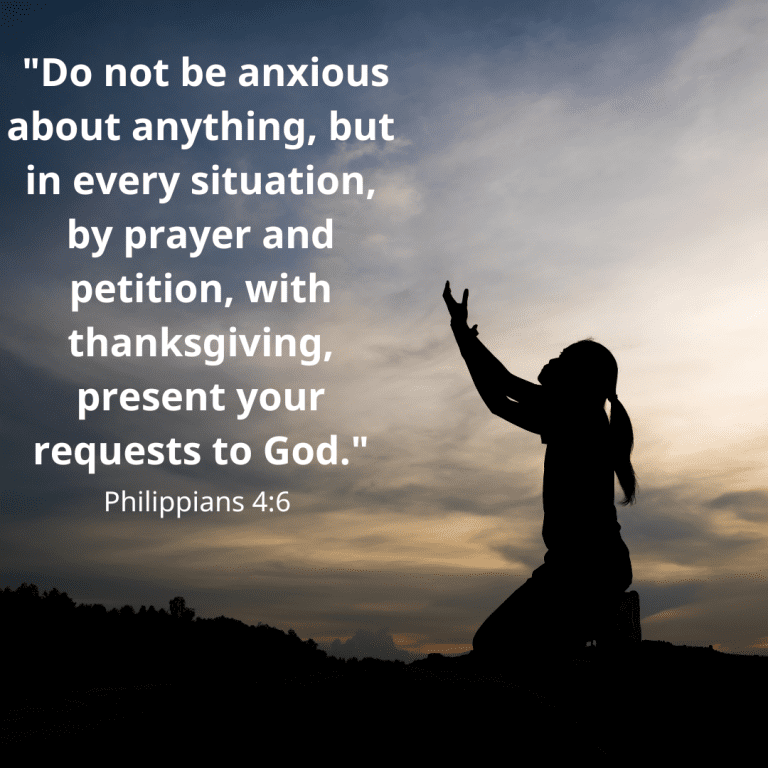
Philippians 4:6 – “Do not be anxious about anything, but in every situation, by prayer and petition, with thanksgiving, present your requests to God.”
Prayer is a powerful tool for maintaining a close relationship with God. It helps in finding peace, gaining strength, and seeking guidance. A prayerful life enables young people to stay connected to their faith and find solace in difficult times.
6. Cultivate Good Friendships
Proverbs 13:20 – “Walk with the wise and become wise, for a companion of fools suffers harm.”
The company you keep significantly influences your character and decisions. The Bible encourages surrounding yourself with wise and good-hearted individuals who uplift and encourage you to grow in faith and virtue.
7. Serve Others
Galatians 5:13 – “You, my brothers and sisters, were called to be free. But do not use your freedom to indulge the flesh; rather, serve one another humbly in love.”
Service to others is a core principle in Christianity. It teaches humility, compassion, and selflessness. Young people are encouraged to look beyond their own needs and contribute positively to the lives of others.
Conclusion
The Bible offers invaluable guidance for young people striving to live meaningful and virtuous lives. By seeking wisdom, honoring parents, guarding their hearts, fleeing from temptation, developing a prayerful life, cultivating good friendships, serving others, living with integrity, trusting in God’s plan, and staying humble, young people can navigate the complexities of life with faith and purpose.

Marriage is the foundation for the Christian family. Husband and wife and by God’s grace blessed with children. Whether you hope to marry one day or are already married it’s good to go to the Bible and learn about marriage.
- Genesis 2:24 Therefore a man shall leave his father and his mother and hold fast to his wife, and they shall become one flesh.
Marriage is mentioned already in creation. Whether you are already married or not, here are Bible verses to guide you to what the Bible says about marriage.
- 1 Corinthians 7:2 But because of the temptation to sexual immorality, each man should have his own wife and each woman her own husband.
There are many kinds of temptations in the world. To be married is to give our love and loyalty to our husband or wife.
- Ephesians 5:25 Husbands, love your wives, as Christ loved the church and gave himself up for her
In a Christian marriage the husband is to love his wife as Christ loved us. This is to love even when it’s not deserved, unconditionally.
- Colossians 3:18-19 Wives, submit to your husbands, as is fitting in the Lord. Husbands, love your wives, and do not be harsh with them.
Love between husband and wife includes for the husband to be gentle and giving himself up for his wife, and for the wife to submit to and respect her husband.
- Exodus 20:14 You shall not commit adultery.
Loyalty and trust are fundamental in all relationships. In marriage that means to forsake all others and not have any other intimate relationships.
- Matthew 5:27-28 You have heard that it was said, ‘You shall not commit adultery.’ But I say to you that everyone who looks at a woman with lustful intent has already committed adultery with her in his heart.
Jesus taught us that it’s not only the act of adultery that is breaking the commandment, but even lustful thoughts.
- Ephesians 4:32 Be kind to one another, tenderhearted, forgiving one another, as God in Christ forgave you.
Although this verse speaks of the love between all Christians, it also applies to husband and wife. Forgive each other and be kind.