

Got questions about marriage, love, and roles of husbands and wives? Here’s what the Bible really says about Christian marriage, respect, submission, and partnership.
Q1: Is marriage about power or partnership?
Short answer: Partnership.
Genesis 1:27
“So God created mankind in his own image… male and female he created them.”
From day one, both man and woman were created in God’s image.
That means equal worth. Equal dignity. Equal value.
Marriage was never designed as a boss-assistant setup.
It was designed as two teammates building life together.
Q2: Does “helper” mean women are inferior?
Short answer: Not even close.
Genesis 2:18
“I will make a helper suitable for him.”
The word helper here is the same word used for God being our helper.
So if helper = inferior, then God is inferior… which makes zero sense.
Also, “suitable for him” means:
equal to, corresponding to, matching him.
Not above. Not below. Right next to.
Q3: Who was meant to lead in marriage?
Short answer: Leadership ≠ control.
Genesis 2:24
“A man leaves his father and mother and is united to his wife.”
God told the man to leave his family and cling to his wife.
That’s emotional leadership.
That’s commitment.
Marriage leadership isn’t about domination.
It’s about responsibility.
Q4: Did God design men to rule over women?
Short answer: No. That came after sin.
Genesis 3:16
“He will rule over you.”
This verse isn’t God’s design.
It’s God describing the damage sin caused.
Male domination isn’t creation order.
It’s fall damage.
Q5: What does “head” really mean in the Bible?
Short answer: Source, not tyrant.
1 Corinthians 11:3
“The head of the woman is man…”
The word head can mean:
- boss
- or source
The whole context of this chapter is origin, not rank.
Man came first.
Woman came from man.
Now man is born from woman.
That’s interdependence, not superiority.
Q6: Is marriage one-sided submission?
Short answer: Nope. It’s mutual.
Ephesians 5:21
“Submit to one another out of reverence for Christ.”
Before Paul even mentions wives or husbands,
he says: submit to one another.
Marriage isn’t one person shrinking.
It’s both people choosing humility.
Q7: What’s the husband’s main responsibility?
Short answer: Love like Jesus.
Ephesians 5:25
“Husbands, love your wives as Christ loved the church.”
This is not soft advice.
This is next-level instruction.
Jesus loved sacrificially.
Jesus loved unconditionally.
Jesus served humbly.
That’s the blueprint for husbands.
So What Does This Mean for Modern Marriage?
For Men
- Lead by serving, not controlling.
- Love without conditions.
- Create emotional and spiritual safety.
- Be the first to sacrifice.
For Women
- Respect isn’t weakness, it’s power.
- Partner, don’t compete.
- Honor his role, just as he honors yours.
- Speak truth with grace.
Disclaimer:
This article is for encouragement only and does not replace pastoral or professional counselling. For personal guidance, please consult your pastor, church leader, or a qualified counsellor.
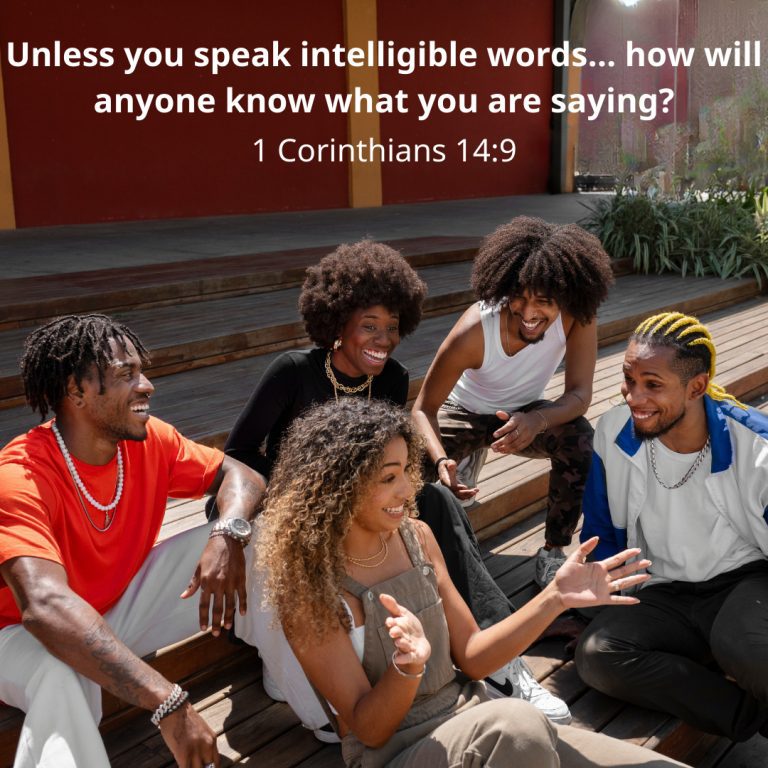
Theme verse: “We hear them declaring the wonders of God in our own tongues!” – Acts 2:11
Picture this: you’re at a massive global festival — music blasting, people in colorful outfits, food stalls with smells from every country. You hear bits of conversation all around you — French, Korean, Shona, Spanish — but none of it really lands with you because it’s not your language. Then suddenly, over the noise, you hear someone speaking your exact dialect — telling a story that feels like it was written for you. Instantly, you feel seen, understood, and connected.
That’s what happened on the Day of Pentecost in Acts 2. The Holy Spirit didn’t just drop a universal language from the sky, He gave the disciples the ability to speak the heart languages of everyone there. It was the first miraculous translation of the Gospel, and it set the tone for how God’s Word would travel through history: personal, accessible, and in every language under heaven.
Here are 7 Bible verses showing how God values every language — and why translation is still His heartbeat today.
1. Acts 2:4 – “All of them were filled with the Holy Spirit and began to speak in other tongues as the Spirit enabled them.”
This moment wasn’t about showing off supernatural skills; it was about connection. Imagine a livestream where the subtitles instantly appear in every viewer’s language without a glitch. That’s the Pentecost miracle. God could have picked one “holy” language and told the world to learn it, but instead, He said, “I’ll come to you where you are.” He knew that the fastest way to someone’s heart is to speak in words they’ve known since childhood — the ones their grandmother used when telling bedtime stories, the ones they use when they cry or pray.
2. Acts 2:11 – “We hear them declaring the wonders of God in our own tongues!”
The crowd didn’t just hear “religious talk.” They heard the wonders of God — in words they didn’t have to translate in their heads. It’s the difference between watching a movie dubbed in your language versus struggling through with broken subtitles. When the message comes in your mother tongue, it feels like it was crafted for you. That day, God wasn’t just talking to people — He was talking with them, in the very vocabulary that shaped their identity.
3. Revelation 7:9 – *”…from every nation, tribe, people and language, standing before the throne…” *
Heaven will not be a one-language zone. It will be the most diverse, colorful gathering ever — every accent, every rhythm, every dialect praising the same God. Translation work today is like a sneak preview of that day. Every time a new Bible translation is completed, it’s another rehearsal for the heavenly choir, making sure every voice can join in without needing someone else to interpret for them.
4. Genesis 11:9 – “That is why it was called Babel — because there the Lord confused the language of the whole world.”
At Babel, language differences pushed people apart. But at Pentecost, God flipped the script — languages became bridges, not barriers. Translation work continues that miracle. It takes something that could divide us and turns it into a point of connection. If Babel was the scattering, Pentecost — and every Bible translation today — is the gathering.
5. Romans 10:14 – “How can they believe in the one of whom they have not heard?”
You can’t believe a message you’ve never understood. That’s why translation is more than a technical process, it’s a lifeline. It’s like getting urgent news in a language you actually comprehend, instead of in one that leaves you guessing. Faith grows when the Gospel comes to you without a language barrier blocking the way.
6. 1 Corinthians 14:9 – “Unless you speak intelligible words… how will anyone know what you are saying?”
Ever been in a group chat where everyone is using inside jokes or slang you don’t know? You feel left out, even if the conversation is meant to include you. God’s Word is too important to be “lost in translation.” That’s why He makes sure it’s not just available, but understandable, so that no one has to scroll past the greatest message ever told because it feels out of reach.
7. Matthew 28:19–20 – *”Go and make disciples of all nations…” *
“All nations” isn’t just geography ,it’s culture, it’s language, it’s the way people think and express themselves. The Great Commission is, at its core, a Great Translation Mission. Jesus’ final command is an open invitation to take His words into every linguistic space.
Final Challenge
God is not a distant voice speaking in a code you have to crack. He’s the one who speaks your slang, your memes, your mother tongue, your unfiltered prayers. This World Translation Day, remember: God doesn’t wait for you to learn His language, He comes speaking yours. And when you share His Word, you’re joining that same mission, making sure no one misses the message because they couldn’t understand it.
-
The 1927 Gospel of Mark in Sudanese Arabic: A Legacy of Its Time
When we think of Bible translations in Sudan, our minds often go to the many languages of the Nuba Mountains and beyond.Yet, nearly a century ago, a bold and unusual experiment was undertaken in Khartoum and Omdurman—a translation that still speaks to the history of Bible mission work in Sudan. The Gospel of Mark in…
-
From Nubia to Now: The Gospel of Mark and the Lord’s Prayer in Nobiin
When you hear the word Nubia, what comes to mind? For many, it’s the golden sands along the Nile, the echoes of pyramids and temples, or the proud heritage of one of Africa’s earliest civilisations. But Nubia is also a land where the Bible has deep roots, stretching back in history. Today, in the middle…
-
From Eden to the Nuba Mountains: The Heiban New Testament
When you open a Bible in the Heiban language, you’re not just holding a translation—you’re stepping into a story that begins at the very dawn of the Scriptures. From Cush to the Nuba Mountains The Bible first mentions the land of Cush in Genesis 2:13, when the river Gihon is said to flow out from…
-
God Speaks My Language: How Faith Connects Across Every Tongue and Culture
Theme verse: “We hear them declaring the wonders of God in our own tongues!” – Acts 2:11 Picture this: you’re at a massive global festival — music blasting, people in colorful outfits, food stalls with smells from every country. You hear bits of conversation all around you — French, Korean, Shona, Spanish — but none…

We live in a world where almost everything is just a click away — opinions, substances, validation, or distractions. For the youth, the pressure to experiment, fit in, or numb out is massive. From parties to pills, vaping to pornography, hookup culture to hustler mindsets, there’s this silent rule that says, “Do what you want, no one cares.”
But you know what? God cares. And deep down, so do you. Here’s how you can stand firm and thrive in a culture that keeps telling you to let go.
1. 1 Corinthians 10:13 — “No temptation has overtaken you except what is common to mankind…”
You’re not alone in this.
Whether it’s the pressure to try drugs, get high to escape stress, or be someone you’re not just to fit in, you’re not weird or weak for struggling. Everyone faces temptation. The verse promises that God will always provide a way out. Sometimes that “way out” is a friend’s text, a parent’s question, or just that inner voice saying “Don’t do it.”
Story: Thomas tried weed at 16 because everyone at the party was doing it. He thought he’d be cooler, braver. But instead, he ended up anxious and ashamed. Years later, he discovered this verse and realized temptation didn’t define him, God had always offered a better choice.
2. Romans 12:2 — “Do not conform to the pattern of this world…”
The world screams, “Normalize it!”
God whispers, “Renew your mind.”
Peer pressure often starts with small things: music, jokes, drinks, risky DMs. But one compromise leads to another. This verse reminds us not to copy what the world says is okay. Transformation begins in the mind. What you feed your thoughts with — that’s what shapes your life.
Story: Margaret stopped following certain pages on Instagram — they weren’t evil, just misleading. After a month of feeding her mind differently, she felt lighter, freer, and more confident in who God said she was.
3. James 4:7 — “Submit yourselves, then, to God. Resist the devil, and he will flee from you.”
You have authority.
Temptation isn’t just a feeling — it’s spiritual warfare. You don’t fight it alone. Submitting to God isn’t weakness; it’s your superpower. The moment you decide to stand firm, hell trembles.
Story: Mike kept falling into late-night habits online. But once he started praying before going to bed and installing accountability apps, the grip lessened. When you resist consistently, the temptation doesn’t stick around.
4. Proverbs 1:10 — “My son, if sinful men entice you, do not give in to them.”
Not all friendships are safe.
Sometimes it’s not the drugs or the drinking — it’s the friend group behind it. God calls us to courage — to walk away from those leading us astray. It’s better to lose fake friends than to lose yourself.
Story: Jonathan left his crew after realizing they were slowly dragging him into a life he didn’t want. It hurt at first. But a few months later, he found real friends at church who uplifted him, not trapped him.
5. Galatians 5:1 — “It is for freedom that Christ has set us free…”
Jesus didn’t die for you to live in chains.
Addiction is real — whether it’s substances, screens, sex, or approval. But freedom is not just possible — it’s promised. You’re not stuck. God’s power can break cycles that feel permanent.
Story: Grace was addicted to pills. She didn’t think prayer or therapy would work — until she tried both. Healing didn’t happen overnight, but every day, she felt the chains loosen.
6. 2 Timothy 2:22 — “Flee the evil desires of youth and pursue righteousness…”
Run to something better.
Sometimes we focus too much on what to avoid and forget what we should chase: purpose, peace, community, God. You’re not just saying no to temptation — you’re saying yes to something way better.
Story: Trish stopped clubbing every weekend. Not because someone forced her, but because she found passion in leading youth worship. Her “no” gave birth to a bigger “yes.”
7. Psalm 119:9 — “How can a young person stay on the path of purity? By living according to your word.”
The Bible is your map.
In a culture where boundaries are blurred, God’s Word becomes a GPS for purity, purpose, and peace. The more you read it, the more you recognize the lies you’ve been believing. Scripture rewires your heart.
Story: Morris began with one verse a day. Just one. A month later, he felt like he was finally walking in light after years of being lost in fog.
Final Thoughts: You Were Born to Stand Out
This “anything goes” generation will try to cancel your convictions, mock your morals, and twist your truth. But God called you to be different — not to judge, but to shine.
Temptation will always knock. But with God’s Word in your heart, community by your side, and the Spirit guiding your steps, you don’t have to open that door.
You are stronger than the pressure.
You are not alone.
You are chosen.
Struggling with more than just temptation? Discover how faith can help you overcome addiction. There’s hope beyond the habit. Learn how God’s power can help you overcome addiction.
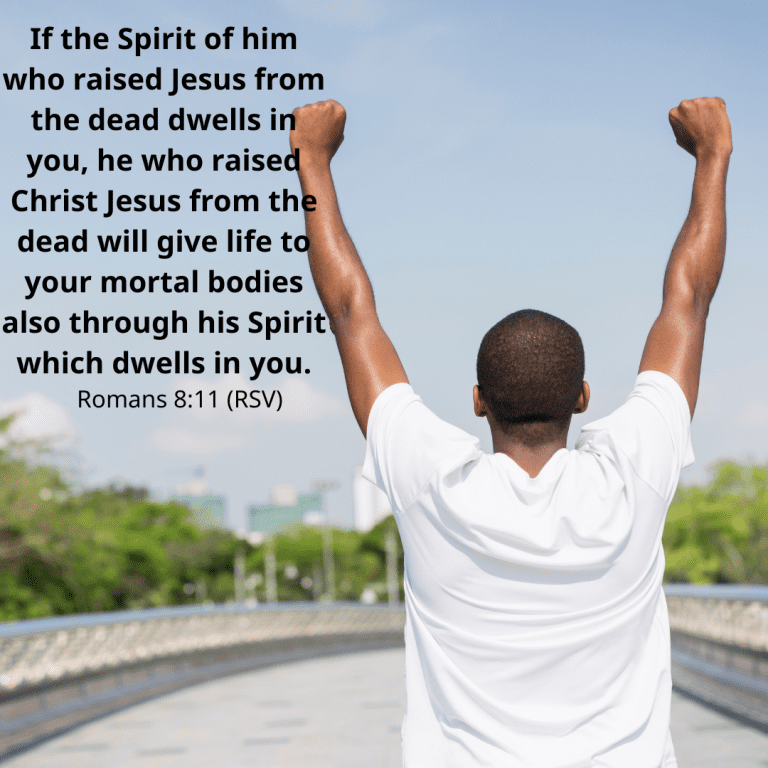
The Holy Spirit is not just an abstract concept or a mystical force; He is a personal and powerful presence in the life of every believer. Understanding His role and allowing Him to actively work in our lives is essential for spiritual growth and victorious Christian living. In this article, we will delve into the transformative influence of the Holy Spirit, supported by biblical narratives and reflections, and see how He continues to work in the lives of believers today.
1. The Holy Spirit as Our Guide
One of the most profound ways the Holy Spirit works in a believer’s life is by guiding us through the complexities of life. Jesus promised this guidance when He said:
John 16:13 (RSV) – “When the Spirit of truth comes, he will guide you into all the truth; for he will not speak on his own authority, but whatever he hears he will speak, and he will declare to you the things that are to come.”
Consider the story of Philip and the Ethiopian eunuch (Acts 8:26-40). Philip, led by the Spirit, approached the chariot and explained the Scriptures, resulting in the eunuch’s conversion and baptism. This narrative highlights how sensitive obedience to the Spirit’s guidance can lead to profound outcomes.
Today, believers can experience the Holy Spirit’s guidance in everyday decisions—whether in career choices, relationships, or ministry. Many testify of the Spirit’s prompting to reach out to someone in need or speak a word of encouragement at just the right moment.
2. The Spirit Who Empowers
The empowerment of the Holy Spirit is vividly portrayed at Pentecost. After Jesus’ ascension, the disciples were unsure and fearful. But when the Spirit descended upon them, they were transformed into bold witnesses.
Acts 1:8 (RSV) – “But you shall receive power when the Holy Spirit has come upon you; and you shall be my witnesses in Jerusalem and in all Judea and Samaria and to the end of the earth.”
Peter, who once denied Christ, boldly preached, leading to the conversion of about three thousand people (Acts 2:14-41). The Spirit’s power equips ordinary people to perform extraordinary acts of faith.
This empowerment is evident when believers boldly share their faith despite challenges or speak truth in situations where silence seems easier. The Spirit gives us courage to act according to God’s will.
3. The Spirit as Comforter
Life’s challenges can leave us weary and disheartened. The Holy Spirit, however, comes as a Comforter, assuring us of God’s presence in our pain.
John 14:16-17 (RSV) – “And I will pray the Father, and he will give you another Counselor, to be with you forever, even the Spirit of truth.”
When Paul faced persecution and hardship, he found comfort through the Spirit’s inner strengthening (2 Corinthians 1:3-5). This divine comfort enabled him to endure and continue his mission.
In modern life, believers find comfort when overwhelmed by grief, loss, or uncertainty. Through prayer and worship, the Holy Spirit brings peace that surpasses understanding, reminding us that we are never alone.
4. The Spirit of Transformation
Paul emphasizes the transformative work of the Holy Spirit in believers:
Romans 8:11 (RSV) – “If the Spirit of him who raised Jesus from the dead dwells in you, he who raised Christ Jesus from the dead will give life to your mortal bodies also through his Spirit which dwells in you.”
When the Spirit transforms a believer, old habits, sins, and weaknesses are replaced with new life, marked by the fruit of the Spirit (Galatians 5:22-23). This transformation is not instantaneous but a continual process as we yield to His work.
In today’s context, transformation might involve overcoming addiction, finding hope amidst despair, or growing in patience and love. Believers experience gradual yet profound change as they submit daily to the Spirit’s leading.
5. The Holy Spirit and Fellowship
Unity among believers is one of the key works of the Holy Spirit:
1 Corinthians 12:13 (RSV) – “For by one Spirit we were all baptized into one body—Jews or Greeks, slaves or free—and all were made to drink of one Spirit.”
The early church exemplified this unity. Despite differences in background and social status, they were of one heart and mind (Acts 4:32). The Holy Spirit cultivates a spirit of love and collaboration within the body of Christ.
In today’s diverse church communities, the Spirit continues to break down barriers of race, culture, and background, fostering unity and love among believers. Small groups, communal worship, and service projects often become places where the Spirit knits hearts together.
6. The Spirit of Intercession
One of the profound ways the Holy Spirit helps believers is through intercession. When we face situations where words fail us, the Spirit steps in, praying on our behalf.
Romans 8:26 (RSV) – “Likewise the Spirit helps us in our weakness; for we do not know how to pray as we ought, but the Spirit himself intercedes for us with sighs too deep for words.”
This powerful assurance means that even in moments of despair or confusion, when prayer seems impossible, the Holy Spirit prays for us according to the will of God. Modern believers often experience this in moments of deep worship or crisis when words are inadequate. Trusting that the Spirit intercedes brings comfort and peace.
7. The Spirit as the Giver of Spiritual Gifts
The Holy Spirit equips believers with spiritual gifts to build up the church and serve God effectively. These gifts are diverse, ranging from wisdom and knowledge to healing and prophecy.
1 Corinthians 12:4-7 (RSV) – “Now there are varieties of gifts, but the same Spirit; and there are varieties of service, but the same Lord; and there are varieties of working, but it is the same God who inspires them all in every one. To each is given the manifestation of the Spirit for the common good.”
Believers are encouraged to seek and develop their spiritual gifts, using them to serve others and glorify God. Whether in church leadership, creative ministries, or everyday acts of kindness, the Spirit empowers believers to make a difference.
Living by the Spirit
The Christian life is not merely about following rules but about being led by the Spirit. It requires daily surrender and openness to His leading. As we allow the Spirit to work within us, our lives bear witness to His power and grace. From guiding and comforting to empowering and transforming, the Holy Spirit is actively involved in every aspect of a believer’s journey.
Today, believers can cultivate sensitivity to the Spirit through prayer, meditation on Scripture, and staying connected to a faith community. As we walk in step with the Spirit, we reflect Christ’s love and power in a world in need of hope.
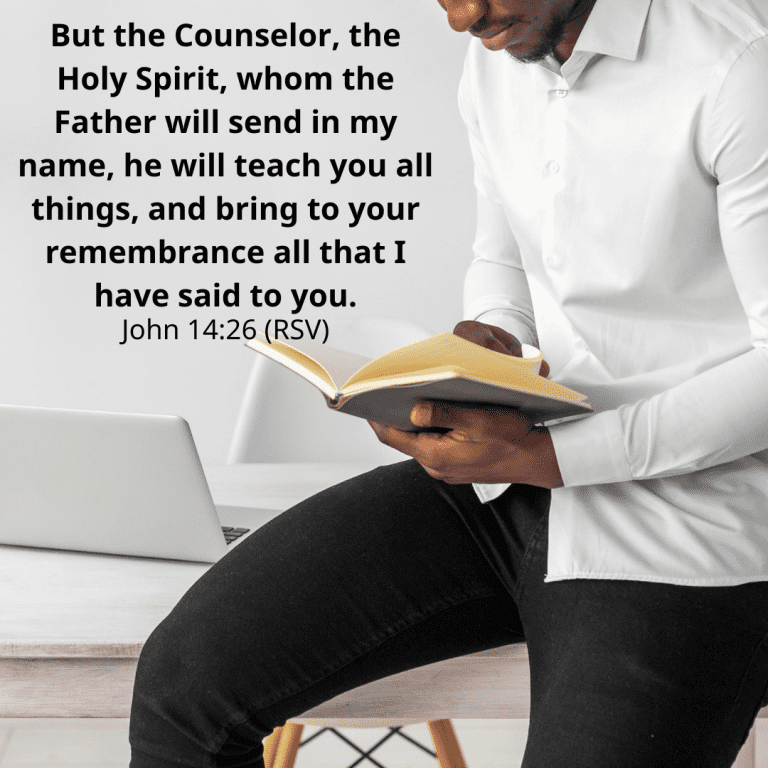
The Holy Spirit is a vital part of the Christian faith, yet many believers struggle to understand who He truly is and what role He plays in their lives. In this article, we will explore the identity of the Holy Spirit using seven powerful Bible verses to help deepen our understanding.
1. The Holy Spirit as Comforter and Advocate
John 14:16-17 (RSV) – “And I will pray the Father, and he will give you another Counselor, to be with you for ever, even the Spirit of truth, whom the world cannot receive, because it neither sees him nor knows him; you know him, for he dwells with you, and will be in you.”
Jesus promised His disciples that the Holy Spirit would come as an Advocate—someone who stands by us, guiding and comforting. The Holy Spirit is not just a distant force but a constant presence who supports and defends believers.
2. The Spirit of Truth
John 16:13 (RSV) – “When the Spirit of truth comes, he will guide you into all the truth; for he will not speak on his own authority, but whatever he hears he will speak, and he will declare to you the things that are to come.”
The Holy Spirit is referred to as the Spirit of Truth because He leads us into a deeper understanding of God’s Word and His will. This guiding role helps believers discern right from wrong and stay aligned with God’s purposes.
3. The Giver of Power
Acts 1:8 (RSV) – “But you shall receive power when the Holy Spirit has come upon you; and you shall be my witnesses in Jerusalem and in all Judea and Samaria and to the end of the earth.”
One of the most significant roles of the Holy Spirit is empowering believers to be witnesses for Christ. Through His power, we are not only transformed internally but also equipped to spread the message of the Gospel with boldness.
4. The Divine Teacher
John 14:26 (RSV) – “But the Counselor, the Holy Spirit, whom the Father will send in my name, he will teach you all things, and bring to your remembrance all that I have said to you.”
The Holy Spirit is our Teacher, helping us understand and remember the teachings of Jesus. This guidance is essential as we grow in faith and navigate life’s challenges.
5. The Spirit Who Gives Life
Romans 8:11 (RSV) – “If the Spirit of him who raised Jesus from the dead dwells in you, he who raised Christ Jesus from the dead will give life to your mortal bodies also through his Spirit which dwells in you.”
The same power that raised Christ from the dead lives in believers, breathing life into our mortal bodies. This resurrection power not only brings physical renewal but also spiritual vitality.
6. The Seal of Belonging
Ephesians 1:13 (RSV) – “In him you also, who have heard the word of truth, the gospel of your salvation, and have believed in him, were sealed with the promised Holy Spirit.”
The Holy Spirit marks us as belonging to God. This seal is a guarantee of our inheritance in Christ and serves as a constant reminder that we are His.
7. The Spirit Who Unites
1 Corinthians 12:13 (RSV) – “For by one Spirit we were all baptized into one body—Jews or Greeks, slaves or free—and all were made to drink of one Spirit.”
The Holy Spirit unites believers into one body, transcending racial, social, and cultural differences. Through the Spirit, we become one in Christ, fostering unity within the church.
Embracing the Holy Spirit
Understanding who the Holy Spirit is transforms how we live out our faith. He is not just a divine presence but a Comforter, Advocate, Teacher, and Source of power and unity. As we walk with Him daily, we experience His guidance and embrace the life He offers.
May we continually seek a deeper relationship with the Holy Spirit, allowing His influence to shape every aspect of our lives.
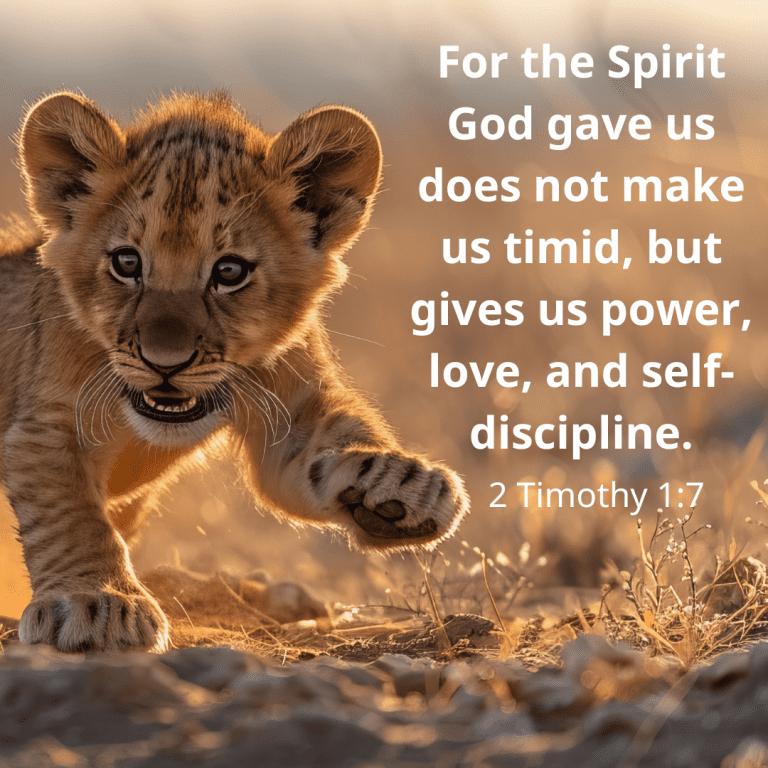
Discipline. It’s a word that can sound rigid or intimidating, yet it’s the secret ingredient to achieving your goals and living a purposeful life. As we step into this new year, let’s explore how biblical wisdom can shape our understanding of discipline and help us thrive in every area of life. Here are seven powerful Bible verses that can guide you to embrace discipline and build a life worth living.
1. Hebrews 12:11
“No discipline seems pleasant at the time, but painful. Later on, however, it produces a harvest of righteousness and peace for those who have been trained by it.”
Discipline isn’t easy, and let’s be real, most of us would rather binge-watch our favorite shows than stick to a workout plan or study for exams. But think of discipline as planting seeds. The effort you put in now even when it feels tough will lead to a life full of peace, stability, and purpose. Start by asking yourself, What seeds am I planting today?
2. Proverbs 25:28
“Like a city whose walls are broken through is a person who lacks self-control.”
Imagine a city without walls, completely vulnerable to attacks. That’s what life feels like without discipline. Self-control acts as a shield, protecting your mind, time, and energy from distractions and harmful influences. This year, rebuild those walls by setting boundaries, whether it’s limiting screen time, managing your finances, or saying “no” to toxic habits.
3. 1 Corinthians 9:25
“Everyone who competes in the games goes into strict training. They do it to get a crown that will not last, but we do it to get a crown that will last forever.”
Athletes don’t just show up on game day and hope for the best; they train hard every single day. Think of your goals as your personal championship. Whether it’s excelling in your career, strengthening your faith, or building relationships, discipline is the training ground that prepares you for success. What’s your eternal crown, and how are you working toward it?
4. Proverbs 12:1
“Whoever loves discipline loves knowledge, but whoever hates correction is stupid.”
Harsh? Maybe. True? Absolutely. Learning from mistakes and being open to correction is essential for growth. When a mentor, teacher, or friend offers constructive criticism, don’t dismiss it. Instead, use it as an opportunity to refine yourself. This year, adopt a growth mindset that embraces learning, even when it’s uncomfortable.
5. 2 Timothy 1:7
“For the Spirit God gave us does not make us timid, but gives us power, love, and self-discipline.”
Discipline isn’t something you have to muster up on your own; it’s a gift from God. Through His Spirit, you have the power to conquer procrastination, overcome fear, and stick to your commitments. When you feel overwhelmed or tempted to quit, tap into the strength God has already placed within you.
6. Galatians 6:9
“Let us not become weary in doing good, for at the proper time we will reap a harvest if we do not give up.”
Ever feel like your efforts are pointless? Maybe you’ve been working hard, but the results aren’t visible yet. Don’t lose heart. Discipline is about consistency, not instant gratification. Whether it’s staying faithful in prayer, working on your side hustle, or investing in relationships, your perseverance will pay off. Keep going; your harvest is coming.
7. Psalm 119:105
“Your word is a lamp for my feet, a light on my path.”
Discipline is easier when you have a clear direction. Let God’s Word be your guide this year. Start a habit of reading the Bible daily, even if it’s just a verse or two. Allow Scripture to shape your choices and priorities, illuminating the path toward your purpose.
Bringing It All Together
Discipline isn’t about being perfect; it’s about being intentional. It’s about taking small, consistent steps that lead to big changes over time. Whether you’re setting fitness goals, working on your faith, or pursuing career dreams, these verses remind us that discipline is both a gift and a responsibility.
This year, challenge yourself to embrace discipline as an act of worship and a step toward becoming the person God created you to be. Your future self will thank you.
Addictions come in many shapes and forms, whether it’s lust, alcohol, substances, gambling, gaming, or even excessive use of your mobile phone and social media. There is professional help to get as well as counselling from your priest or pastor.
Also, read the Bible and lay your addiction before God in prayer. Here are some passages from the Word of God to reflect upon.
- James 1:14-15 But each person is tempted when he is lured and enticed by his own desire. Then desire when it has conceived gives birth to sin, and sin when it is fully grown brings forth death.
We all have weaknesses within us that can make us fall and lead to an addiction. Acknowledging this, and admitting that you struggle with addiction is an important step to be free from it.
- 1 John 2:16 For all that is in the world—the desires of the flesh and the desires of the eyes and pride of life—is not from the Father but is from the world.
Addictions don’t come from God, but from the world and our desires, lusts and pride. We can rely on God wanting us to be free from any addiction.
- 1 Corinthians 10:13 No temptation has overtaken you that is not common to man. God is faithful, and he will not let you be tempted beyond your ability, but with the temptation he will also provide the way of escape, that you may be able to endure it.
You may feel that you can’t break your addiction. But the Bible tells us that God can. God will provide the way of escape. Turn to God, turn from your addiction. Let God fill you with his presence.
- 1 Corinthians 6:12 “All things are lawful for me,” but not all things are helpful. “All things are lawful for me,” but I will not be dominated by anything.
Addiction is many times when something takes control over you. Those things that are not helpful in your life and dominate your thoughts and desires you may need to cut out of your life.
- 1 Peter 2:11 Beloved, I urge you as sojourners and exiles to abstain from the passions of the flesh, which wage war against your soul.
Addictions come from this world and not from God. In the end, addictions replace God as the number one in our lives. It’s not just about addictions, but also about our souls.
- Matthew 6:13 And lead us not into temptation, but deliver us from evil.
Lay your struggles before God. Ask for God’s protection and deliverance.
- John 8:36 So if the Son sets you free, you will be free indeed.
This is the promise of Jesus Christ, that when he sets us free, it is real freedom.
This article is not intended as a replacement for medical or therapeutic help or treatment for addiction, but a complement and inspiration to those who battle addiction.
Q1: What exactly is a spiritual gift? Is it like a talent?
A:
A spiritual gift is a God-given ability empowered by the Holy Spirit to serve and build up others in the body of Christ.
“There are different kinds of spiritual gifts, but the same Spirit gives them.”
— 1 Corinthians 12:4 GNT
Unlike natural talents, spiritual gifts are not inherited or learned — they are given by the Spirit for Kingdom impact.
Q2: Who gets spiritual gifts — only pastors or “deep” Christians?
A:
No, every believer receives at least one spiritual gift.
“The Spirit’s presence is shown in some way in each person for the good of all.”
— 1 Corinthians 12:7 GNT
If you have received Christ, you’ve also received the Holy Spirit — and with Him, a gift.
Q3: What are some examples of spiritual gifts?
A:
The Bible lists many, including:
- Wisdom
- Knowledge
- Faith
- Healing
- Miraculous powers
- Prophecy
- Discernment
- Speaking in tongues
- Interpretation of tongues
(See 1 Corinthians 12:8–10)
“The Spirit gives one person a message full of wisdom, while to another person the same Spirit gives a message full of knowledge.”
— 1 Corinthians 12:8 GNT
Q4: How do I find out what my spiritual gift is?
A:
Start by seeking God in prayer, observing what energizes you spiritually, and listening to feedback from other believers.
“We have different gifts, according to the grace God has given us.”
— Romans 12:6 GNT
Spiritual gifts often show up where your passion meets someone else’s need.
Q5: I’m shy. What if my gift is something bold like prophecy or evangelism?
A:
God equips the called. He often chooses people who feel unqualified so He gets the glory.
“Instead, God chose what the world considers foolish to shame the wise, and chose what the world considers weak to shame the strong.”
— 1 Corinthians 1:27 GNT
The Holy Spirit gives both the gift and the boldness to walk in it (see Acts 1:8).
Q6: Do I get to choose which gift I want?
A:
Not exactly. The Holy Spirit distributes gifts according to God’s will.
“But it is one and the same Spirit who does all this; as he wishes, he gives a different gift to each person.”
— 1 Corinthians 12:11 GNT
However, we are encouraged to eagerly desire the greater gifts, especially those that build others up (1 Corinthians 12:31).
Q7: What if I misuse my gift or become proud?
A:
Gifts must be used with humility and love. Without love, even the greatest gift becomes meaningless.
“I may be able to speak the languages of human beings and even of angels, but if I have no love, my speech is no more than a noisy gong or a clanging bell.”
— 1 Corinthians 13:1 GNT
Let the fruit of the Spirit guide the use of the gifts (Galatians 5:22–23).
Q8: Can I lose my spiritual gift?
A:
God does not take back His gifts, but we can neglect or fail to develop them.
“Do not neglect the spiritual gift that is in you…”
— 1 Timothy 4:14a GNT
Use it, grow it, and fan it into flame (see 2 Timothy 1:6).
Q9: What if I don’t feel anything? Does that mean I don’t have the Holy Spirit or any gift?
A:
Your feelings don’t define your faith. If you’ve accepted Christ, the Spirit lives in you — and your gift may be waiting to be discovered.
“But you do not live as your human nature tells you to; instead, you live as the Spirit tells you to—if, in fact, God’s Spirit lives in you.”
— Romans 8:9 GNT
Q10: Can spiritual gifts be used outside the church — like at school or online?
A:
Yes! The gifts are for wherever God places you. Church is the training ground — the world is the mission field.
“Each one, as a good manager of God’s different gifts, must use for the good of others the special gift he has received from God.”
— 1 Peter 4:10 GNT
Use your gifts on campus, in your DMs, at home — wherever people need Jesus.
Final Thought
You are not too young, too new, or too ordinary.
If you have the Spirit, you are already equipped. Don’t bury your gift — use it for God’s glory and others’ good.
Unlocking Spiritual Gifts: Questions and Answers About the Holy Spirit
Have you ever asked, “Is my gift just a talent or is it something more?” In this Q&A, we dive into what spiritual gifts really are not just skills you're born with, but God-given abilities powered by the Holy Spirit to make a real difference. Take a moment to reflect: What has God placed in you for the good of others?
Have you ever asked, “Is my gift just a talent or is it something more?” In this Q&A, we dive into what spiritual gifts really are not just skills you're born with, but God-given abilities powered by the Holy Spirit to make a real difference. Take a moment to reflect: What has God placed in you for the good of others?